Many people have old silverware at home but don’t know if it’s valuable or not. This confusion leads to missed opportunities or mistaken assumptions.
Yes, real silver cutlery can be worth something, especially if it’s sterling silver, antique, or from a reputable brand. But you need to know how to identify it first.
Some silverware is just plated metal with no real value. Others are solid silver and could be worth hundreds of dollars. So how do you know what you have? Let me help you figure it out.
Table of Contents
How can you tell if cutlery is real silver?
Many families inherit cutlery sets and wonder if they’re actually made of silver or just silver-colored metal. It’s easy to assume, but that can be misleading.
You can tell if cutlery is real silver by checking for hallmarks, testing the metal, and observing tarnishing patterns.
Understanding the signs: What to look for
There are a few reliable methods to identify real silver. Let’s break them down.
Hallmarks
Look for stamps like “925,” “Sterling,” or images such as a lion passant (common in British silver). These are strong indicators of genuine silver content.
| Marking | Meaning | Common Location |
|---|---|---|
| 925 | 92.5% pure silver (sterling) | Back of handle/blade/stem |
| Sterling | Indicates solid silver | Usually under the handle |
| EPNS | Electro Plated Nickel Silver | Indicates plated, not solid |
| No mark | Likely not real silver |
Hallmarks are one of the easiest ways to start. But not all pieces have them clearly visible.
Tarnishing
Real silver tarnishes over time due to chemical reactions with sulfur in the air. This tarnish is a dull, dark film that you can polish off. If your cutlery never tarnishes, it’s probably not real silver.
Magnet test
Silver is not magnetic. If a magnet sticks to the cutlery, it’s not solid silver. But be careful—this test only rules out silver; it doesn’t confirm it.
Sound test
Tap the item lightly. Real silver often has a soft, bell-like ring. Plated or fake metals tend to sound dull or tinny.
Acid test (Advanced)
This test uses nitric acid to test for silver content. It’s reliable but should be done with caution. It’s best left to professionals if you’re unsure.
Together, these methods can help you figure out if you’ve got the real thing or not. Don’t rely on just one test—cross-check whenever possible.
How do I know if silver is real?
It’s frustrating to guess if silver is authentic or not, especially when looks can be deceiving. You want answers without damaging your piece.
To know if silver is real, look for proper markings, run a magnet test, and check tarnishing behavior.
Go beyond appearance
Silver can look different depending on use and age. Here’s how to confirm if it’s genuine:
Authenticity checklist
| Method | What It Tells You | Easy to Use? |
|---|---|---|
| Marking Check | Real silver has clear stamps | Yes |
| Magnet Test | Silver is non-magnetic | Yes |
| Tarnish Behavior | Silver tarnishes in air over time | Yes |
| Ice Test | Silver conducts heat very well | Yes |
| Acid Test | Tests for silver content chemically | No (use with caution) |
Ice test
Place an ice cube on the silver item. Real silver conducts heat quickly. The ice should melt faster than on ceramic or stainless steel.
Weight and feel
Silver is denser than many base metals. It feels heavier for its size. It also warms quickly in your hand.
Knowing this, you can feel more confident when evaluating old or unknown silverware. Keep these tools in mind when looking at potential purchases or family heirlooms.
Can you get solid silver cutlery?
Many people assume all silver cutlery is solid silver. But the reality is more nuanced. Some pieces are only silver-plated.
Yes, you can get solid silver cutlery, typically marked as ‘sterling silver’ or ‘925’, indicating 92.5% silver content.
Know what “solid” really means
Solid silver is not 100% pure—it’s usually sterling silver, which is 92.5% silver mixed with 7.5% copper for strength.
Types of Silverware
My experience
| Type | Silver Content | Durability | Typical Value |
|---|---|---|---|
| Sterling Silver | 92.5% Silver | Medium | High |
| Coin Silver | ~90% Silver | Medium | Medium-High |
| Fine Silver (999) | 99.9% Silver | Low | Very High |
| Silver Plated | 0.1–2% Silver | High | Low |
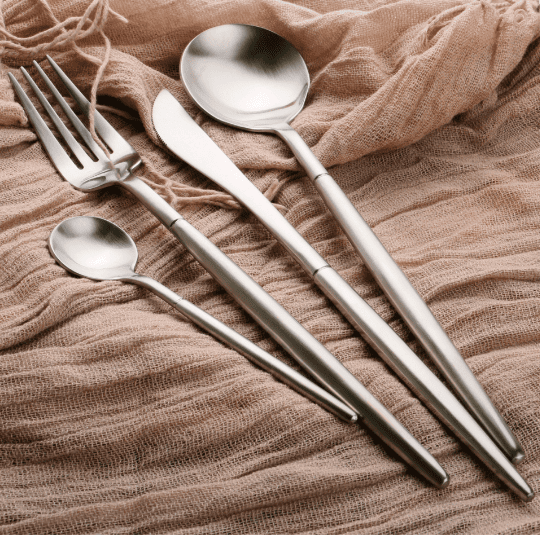
I once helped a Turkish client verify a huge batch of hotel-style cutlery. Most of it was plated. But one batch, unexpectedly, turned out to be solid sterling—saving her from selling it too cheap.
Solid silver is heavier and more valuable but also softer. It’s less common today in daily-use cutlery but still found in high-end or vintage sets.
How can you tell if silver flatware is antique?
Old silver flatware often looks similar to newer pieces. Without proper knowledge, it’s easy to miss important details.
To tell if silver flatware is antique, check the hallmarks, design style, weight, and manufacturing technique.
Age and value go hand in hand
Antique silver usually means it’s 100+ years old. Here’s how to spot them:
Characteristics of Antique Silver
| Feature | Antique Indicator |
|---|---|
| Hallmark Style | Older fonts, unique country marks |
| Pattern | Classic, ornate, less standardized |
| Weight | Often heavier due to solid construction |
| Craftsmanship | Hand-forged or less symmetrical |
Dating with hallmarks
Use online resources to match hallmarks with known historic periods. British hallmarks, for example, are extremely detailed. They include a date letter, city mark, and duty mark.
Signs of wear
Antiques often have uneven wear—especially on fork tines or knife handles. Machine-made newer pieces don’t wear the same way.
Understanding these signs helps you value not just the silver content, but the historical craftsmanship and collectability.
How to tell the difference between sterling silver and silver plated flatware?
This is a question I get asked a lot. Many people confuse the two because they look the same at first glance.
Sterling silver is solid throughout, while silver-plated flatware has a thin layer of silver over a base metal.
Spot the differences with confidence
Even professionals can get fooled. Here’s how I compare them side by side:
Comparison Table
| Feature | Sterling Silver | Silver Plated |
|---|---|---|
| Markings | “Sterling”, “925” | “EPNS”, “Silverplate” |
| Weight | Heavier | Lighter |
| Color Aging | Even tarnish | Wears to base metal |
| Resale Value | High | Low |
Testing deeper
If there’s no hallmark, consider doing a scratch test in a hidden area and applying a silver testing solution. But this may damage the piece, so use caution.
The easiest way is still to trust the marking and the weight. Sterling silver just feels more solid. Over time, you’ll get better at recognizing it by sight and touch.
Is it worth selling silver cutlery?
You might wonder if it’s better to sell your silver cutlery or keep it. That depends on its type, condition, and your goals.
Yes, if it’s sterling silver or antique, it can be worth selling. Plated items usually don’t fetch much.
Selling decisions: What you need to know
Value Factors
| Factor | Impact on Value |
|---|---|
| Material (Sterling vs Plated) | Huge difference |
| Age (Antique) | Adds collectible value |
| Brand | Premium brands = more value |
| Weight | More silver = more value |
If you’re downsizing or need cash, selling can make sense. But know what you have first. Don’t let someone undervalue your cutlery just because it’s “old.”
Does silver plated cutlery have any value?
Many people have drawers full of silver-plated pieces but aren’t sure if they’re worth anything.
Silver plated cutlery usually has minimal resale value unless it’s from a well-known brand or antique set.
When is it valuable?
Exceptions to the rule
| Case | Possible Value |
|---|---|
| Antique plating | Some collectible interest |
| Luxury brand (Christofle, etc.) | Brand-driven value |
| Large matching sets | Can be sold as tableware |
If the set is incomplete, scratched, or tarnished beyond polishing, it’s usually not worth selling. It might be better used for decoration or repurposing.
How to sell real silver silverware?
If you know your cutlery is sterling, you probably want to get the best price possible. The market for silver is active—but you need to be strategic.
You can sell real silver silverware to antique dealers, online marketplaces, or silver refiners after confirming its authenticity and value.
Selling smart: Step-by-step
| Step | Description |
|---|---|
| Verify Authenticity | Hallmarks, weight, and tests |
| Weigh Your Items | Silver is priced per gram or ounce |
| Research Market Rates | Check silver spot prices |
| Get Multiple Offers | Compare dealers, online buyers |
| Choose Your Path | Collector sale for higher returns or Scrap sale for fast cash |
I always advise clients to clean the silver lightly before showing it. Not polishing—just removing heavy tarnish. It makes a big difference in presentation.
How can you tell if silver flatware is real?
This may sound repetitive, but the market is full of confusion around “real” silver. People are unsure how to trust what they see.
You can tell if silver flatware is real by checking for hallmarks, weight, and tarnish. Sterling silver will always have proper stamps.
Real means sterling
There’s no shortcut here. Real silver means either sterling or another high-silver alloy. Everything else is just plating.
Always confirm with at least two methods before assuming. The biggest mistake is treating plated items like solid silver—or vice versa.
What is the best brand of sterling silver flatware?
Not all brands are created equal. Some have earned reputations for craftsmanship, design, and material consistency.
The best brands include names like Christofle, Tiffany & Co., Wallace, and Gorham. They are known for quality sterling silver flatware.
Know the top players
| Brand | Country | Notable Traits |
|---|---|---|
| Christofle | France | Elegant French styling |
| Tiffany & Co. | USA | Iconic American designs |
| Wallace | USA | Durable and classic |
| Gorham | USA | Antique collectible |
| Georg Jensen | Denmark | Modern Scandinavian look |
These brands often carry high resale value. Even their plated products can be valuable due to brand recognition. If you have branded pieces, check before selling.
How much does silver cutlery cost?
Prices vary widely depending on the silver content, brand, age, and condition.
Sterling silver cutlery can cost from $50 to over $500 per piece. Plated items are usually under $10 per piece.
Pricing in perspective
| Type | Price Range (Per Piece) |
|---|---|
| Silver Plated | $1 – $10 |
| Modern Sterling | $50 – $150 |
| Antique Sterling | $100 – $500+ |
| Premium Brand Sets | $1000+ |
Always weigh and appraise your cutlery. One time, a small 24-piece set I examined turned out to be worth over $2,000—just because of the brand and purity.
What is nickel silver cutlery?
This term confuses many people. The name sounds fancy but can be misleading.
Nickel silver is not real silver. It’s an alloy of copper, nickel, and zinc with a silver-like appearance.
A silver imposter
Nickel silver is also known as German silver. It’s durable, resists corrosion, and is cheap to produce.
But it’s purely aesthetic. It contains zero silver content and has no intrinsic material value.
Many old or hotel-style sets are made of nickel silver. They’re great for everyday use but not for investment.
What is sterling silver cutlery worth?
This depends on silver weight, brand, and market rates.
Sterling silver cutlery is worth its weight in silver, plus added value for brand, age, or design.
Real-life example
A 100g sterling spoon is worth about $80 at today’s silver price. But if it’s a rare design, it could sell for $200.
Always check current silver prices and talk to a specialist if needed.
How to store silver cutlery?
Storage affects both the look and value of your silver. Improper storage leads to tarnish and scratches.
Store silver cutlery in anti-tarnish cloth or airtight containers, away from humidity and rubber.
Storage tips that protect value
| Do | Don’t |
|---|---|
| Use anti-tarnish rolls | Wrap in plastic or foil |
| Store in dry area | Keep near rubber |
| Clean before storage | Store dirty |
I always tell customers: treat silver like a luxury item. It rewards care with lasting beauty.
How to identify silver cutlery
This wraps up many of the earlier points but is still worth emphasizing.
Identify silver cutlery by checking hallmarks, weight, tarnish, and material response to heat and magnets.
Final checklist
Keep a magnifying glass, small magnet, and digital scale handy. Once you get used to spotting the details, you’ll never be fooled again.
Real silver cutlery is often more valuable than it looks. Learn to identify it properly so you don’t miss out.