Selecting the right cutlery for your business can be overwhelming with so many options available. But it doesn’t have to be! Let’s break it down together.
Choosing the right cutlery for your business means understanding your customers’ needs, materials, and functionality. Whether you’re offering premium or budget-friendly options, there’s a perfect match for every brand.
Now that we’ve touched on the importance of selecting the right cutlery, let’s dive deeper into the factors you should consider when making this important decision for your business.
Table of Contents

What Are the Key Factors in Choosing Cutlery for Your Brand?
You may wonder, what exactly should you look for when choosing cutlery? Let’s explore the key factors that can guide your decision.
Key factors like design, material, durability, and target market all play a crucial role in selecting the right cutlery. Let’s take a closer look at each one.
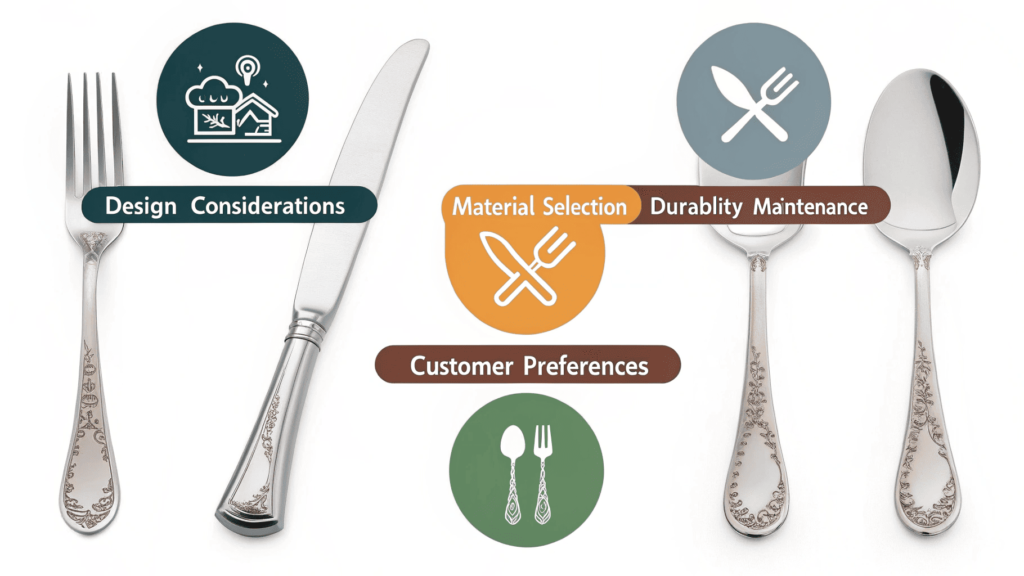
When selecting cutlery, you must consider several factors that will impact both the look and functionality of the product. Understanding the core elements is essential for any business in the cutlery industry, especially when you’re aiming to meet both aesthetic and practical requirements. Here’s a closer look:
Design Considerations
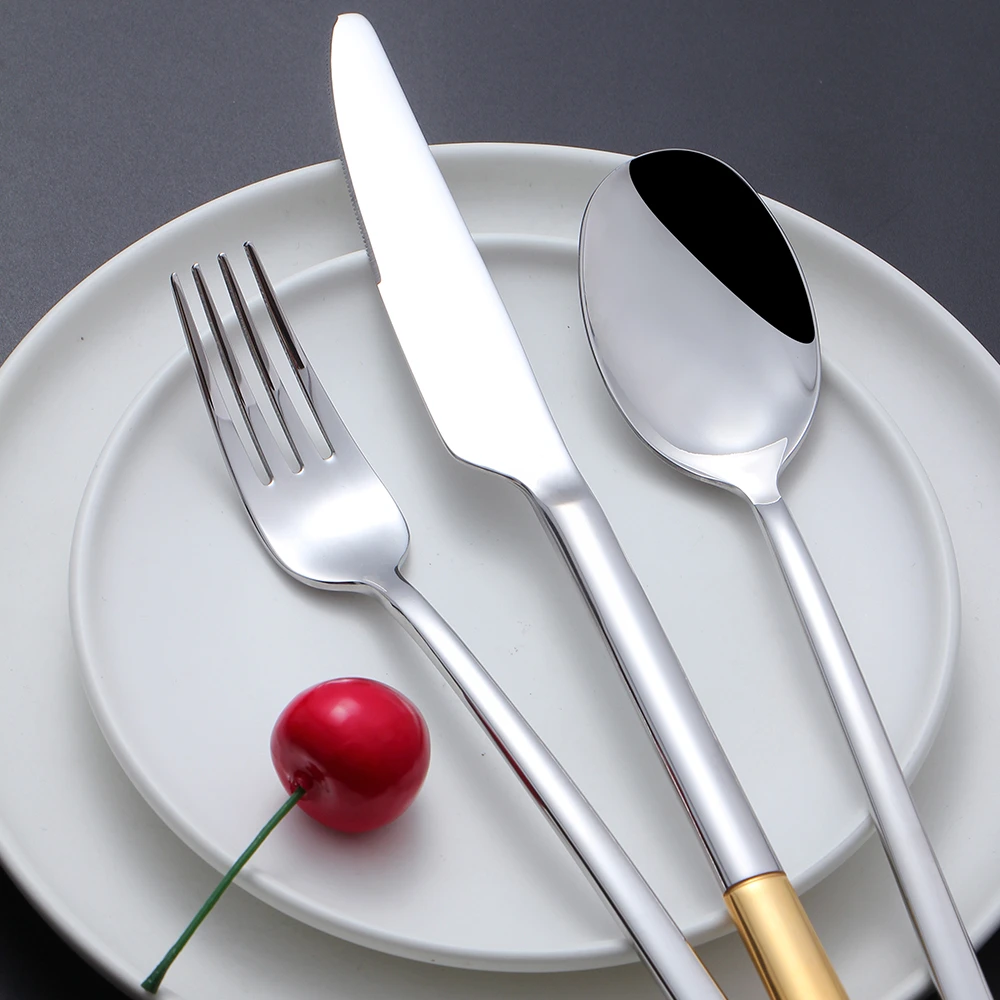
The design of your cutlery is a reflection of your brand. It speaks volumes about the quality of your products and your attention to detail. Customers often choose cutlery based on the style that complements their dining experience. Whether you’re offering sleek, modern designs or traditional styles, the design must appeal to your target audience.
Material Selection
Materials play a significant role in durability, appearance, and functionality. Stainless steel is the most commonly used material for cutlery due to its strength, resistance to corrosion, and ease of cleaning. However, there are other options like titanium or plastic, each serving a different market segment. For premium products, high-quality stainless steel or silver-plated designs are ideal. On the other hand, budget-conscious customers may prefer durable plastic options or simpler stainless steel designs.
Durability and Maintenance
A cutlery set’s durability affects its lifecycle, making it an essential factor for your business. Stainless steel, for instance, is a highly durable option, resistant to rust and scratches. Additionally, you should ensure the cutlery is easy to maintain, with products that can withstand regular use and frequent washing.
Customer Preferences
Understanding your customers’ needs is key. Are they looking for something practical or stylish? Do they prioritize eco-friendly options or cutting-edge technology? For example, some customers may be drawn to products that offer sustainability features, such as recycled or biodegradable materials.
Here’s a quick table comparing some common materials for cutlery:
| Material | Durability | Corrosion Resistance | Aesthetic Appeal | Ideal For |
|---|---|---|---|---|
| Stainless Steel | High | Excellent | Sleek and Modern | Everyday use, premium sets |
| Titanium | Very High | Excellent | Lightweight | Luxury items, premium |
| Plastic | Low | Low | Varies | Budget-friendly, disposable |
| Silver | Medium | High | Elegant | Special occasions, luxury |
How Do You Ensure the Quality of Your Cutlery?
Ensuring the quality of your cutlery can make or break your brand reputation. But how do you make sure your products stand out in terms of quality?
Quality assurance is key to building trust with your customers. By choosing reliable manufacturers and conducting thorough quality checks, you can ensure that your cutlery meets high standards.
Ensuring cutlery quality involves a series of steps that can significantly impact the success of your business. By focusing on the right production methods, inspections, and certifications, you ensure that your products maintain a high standard from start to finish.
Partnering with Reliable Manufacturers
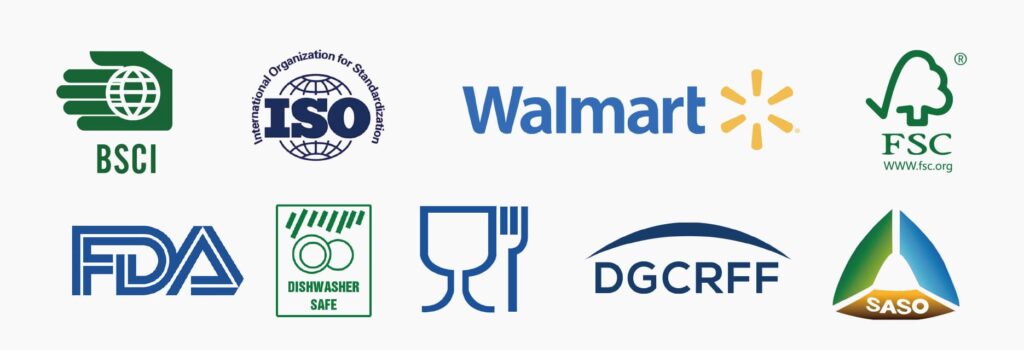
Working with reputable manufacturers is the first step in guaranteeing quality. A trustworthy supplier ensures that the materials are top-notch and the manufacturing process adheres to industry standards. Look for manufacturers that hold certifications like ISO, LFGB, and FDA to make sure your cutlery meets international standards.
Quality Control Measures
Implementing strict quality control measures is essential. from inspecting raw materials to the final product.
Should you focus on when choosing cutlery for your brand?
It’s not just about style—it’s about quality, durability, and matching the needs of your customers.
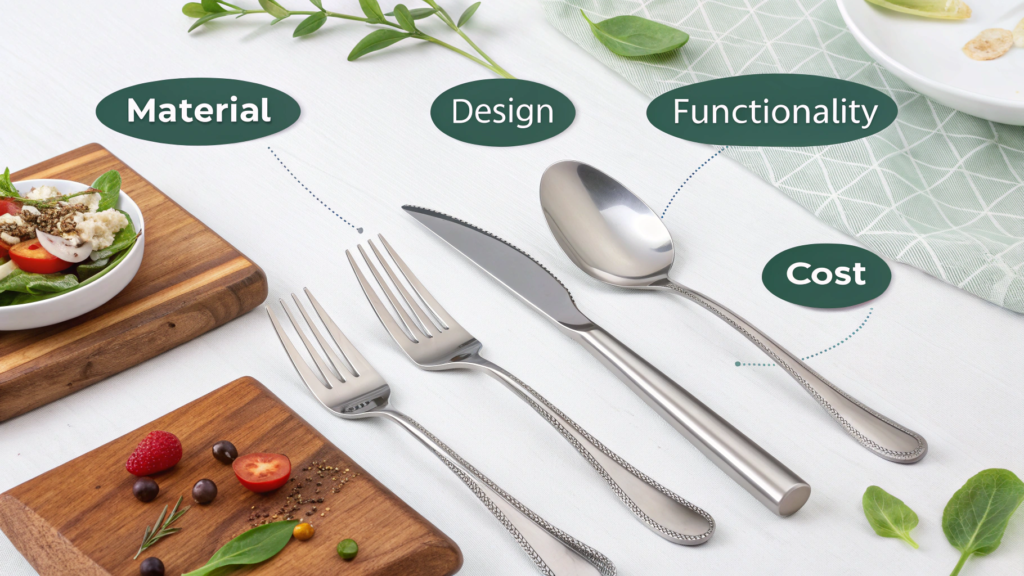
The key factors include material, design, functionality, and cost. Understanding these elements will help you align your cutlery choices with your brand’s identity and your customers’ expectations.
When selecting cutlery for your brand, it’s essential to break down the decision-making process. Let’s look at these key factors more closely:
Material Selection: Why It Matters
Material is often the first thing people consider when selecting cutlery. Whether you’re dealing with stainless steel, titanium, or plastic, each material has its strengths and weaknesses.
| Material | Durability | Corrosion Resistance | Aesthetic Appeal | Ideal For |
|---|---|---|---|---|
| Stainless Steel | High | Excellent | Sleek and Modern | Everyday use, premium sets |
| Titanium | Very High | Excellent | Lightweight | Luxury items, premium |
| Plastic | Low | Low | Varies | Budget-friendly, disposable |
| Silver | Medium | High | Elegant | Special occasions, luxury |
Understanding the pros and cons of each material helps you make the right choice based on your business goals. If your target market is luxury, you may lean toward titanium or high-quality stainless steel. However, if cost is a concern for bulk sales, plastic may be more appropriate.
Design and Functionality: Balancing Aesthetics with Purpose
Design is important, but it should not overshadow functionality. When selecting cutlery, consider how it fits with your brand and the practical needs of your customers. Will your customers need knives that are sharp and precise, or do they require more versatile pieces for various uses?
Functionality in design also means paying attention to ergonomics. A knife with an uncomfortable grip or a spoon that’s too heavy can detract from the dining experience. Additionally, durability matters: how easily will your cutlery wear over time? What will your customers expect in terms of ease of cleaning and maintenance?
Cost Considerations: Finding the Balance
Price is a critical factor for many businesses. When selecting cutlery, you must find a balance between cost and quality. High-quality materials and sophisticated designs can come at a premium, which may not be ideal for brands targeting budget-conscious customers. However, sacrificing quality for cost can result in unhappy customers and damage to your brand’s reputation. It’s essential to strike a balance and know your target audience’s price range.
How Do You Align Your Cutlery Selection with Your Brand Identity?
Your cutlery is an extension of your brand. So how do you make sure it aligns with the message you want to convey? Let’s explore how your brand identity plays a role.
Aligning your cutlery selection with your brand identity involves considering the style, quality, and target market. Your choices should reflect the values and aesthetics of your business to make a lasting impact.
When you think about your brand, what comes to mind? Is it luxury, affordability, innovation, or tradition? The cutlery you choose should reflect these values. Here’s how you can align your cutlery selection with your brand identity:
Style and Aesthetics: The Visual Impact of Cutlery
Your cutlery can convey a lot about your brand without you saying a word. For a high-end restaurant, sleek, elegant, and contemporary designs may be the way to go. For a more casual brand, fun, vibrant, and playful designs may be better suited. Your cutlery should speak to the visual style of your brand, whether that means modern, minimalist, or bold.
Quality Assurance: Reflecting Your Brand's Commitment to Excellence
Choosing high-quality materials and designs shows your customers that you care about the overall experience. If your brand promotes a high standard of quality and excellence, your cutlery selection should match that message.
Target Audience: Catering to Their Preferences
Understand the preferences of your target audience. Are they eco-conscious, looking for sustainable, biodegradable options? Or do they prefer durable, long-lasting materials? By considering your audience’s values, you can choose cutlery that not only fits their needs but also reinforces the message you want to send.
Selecting the right cutlery is more than just a functional choice—it’s an opportunity to reflect your brand’s identity. By carefully considering materials, design, functionality, and cost, you can create a cutlery line that aligns with your business goals.