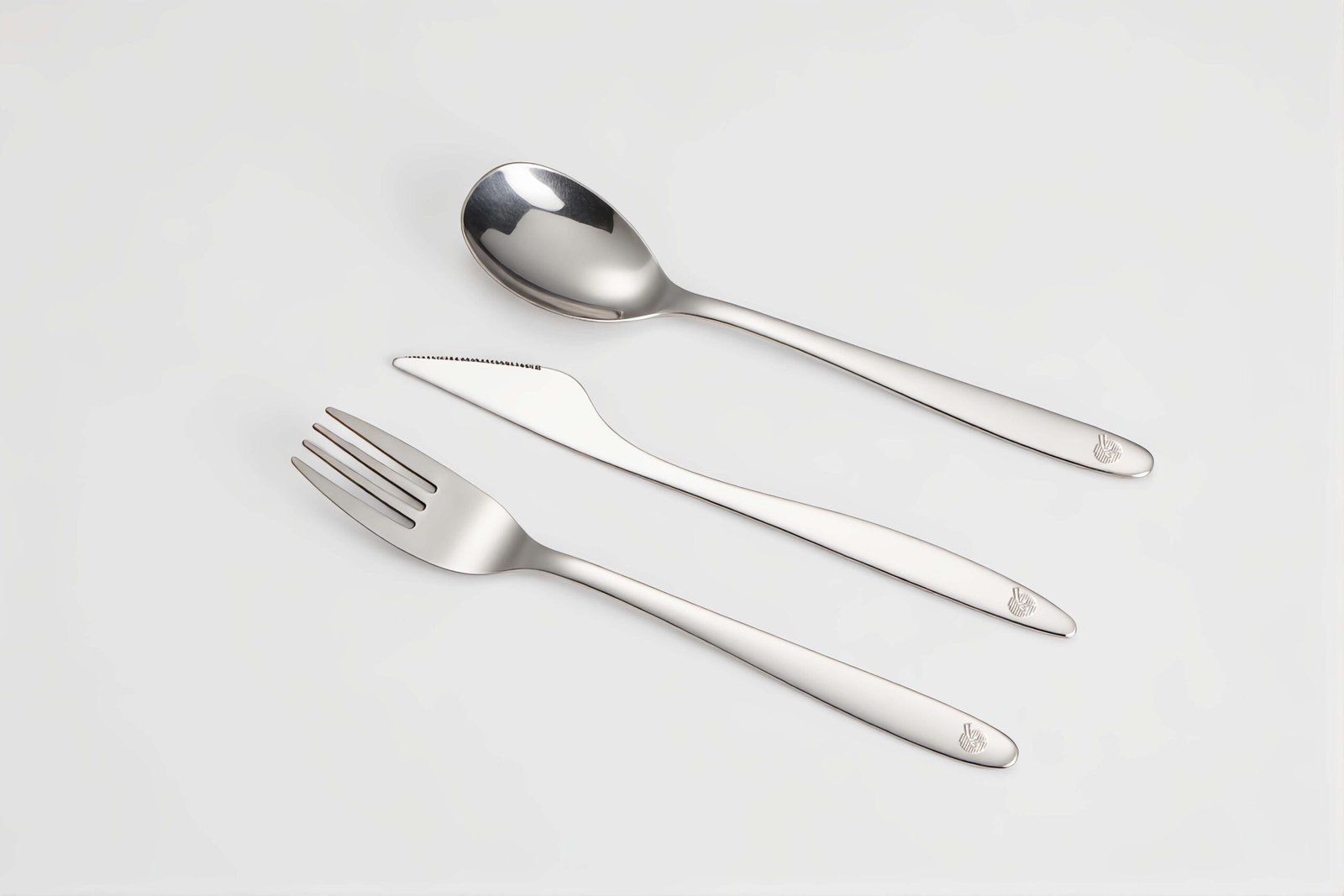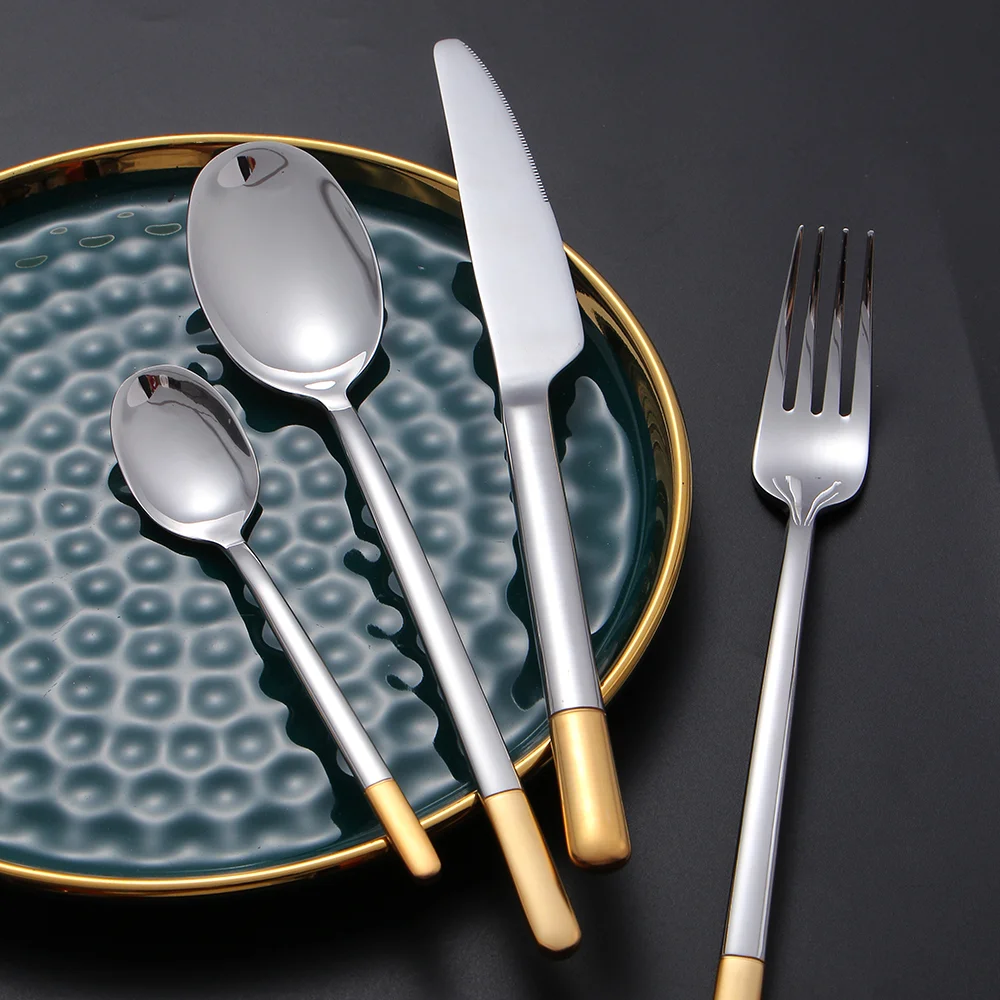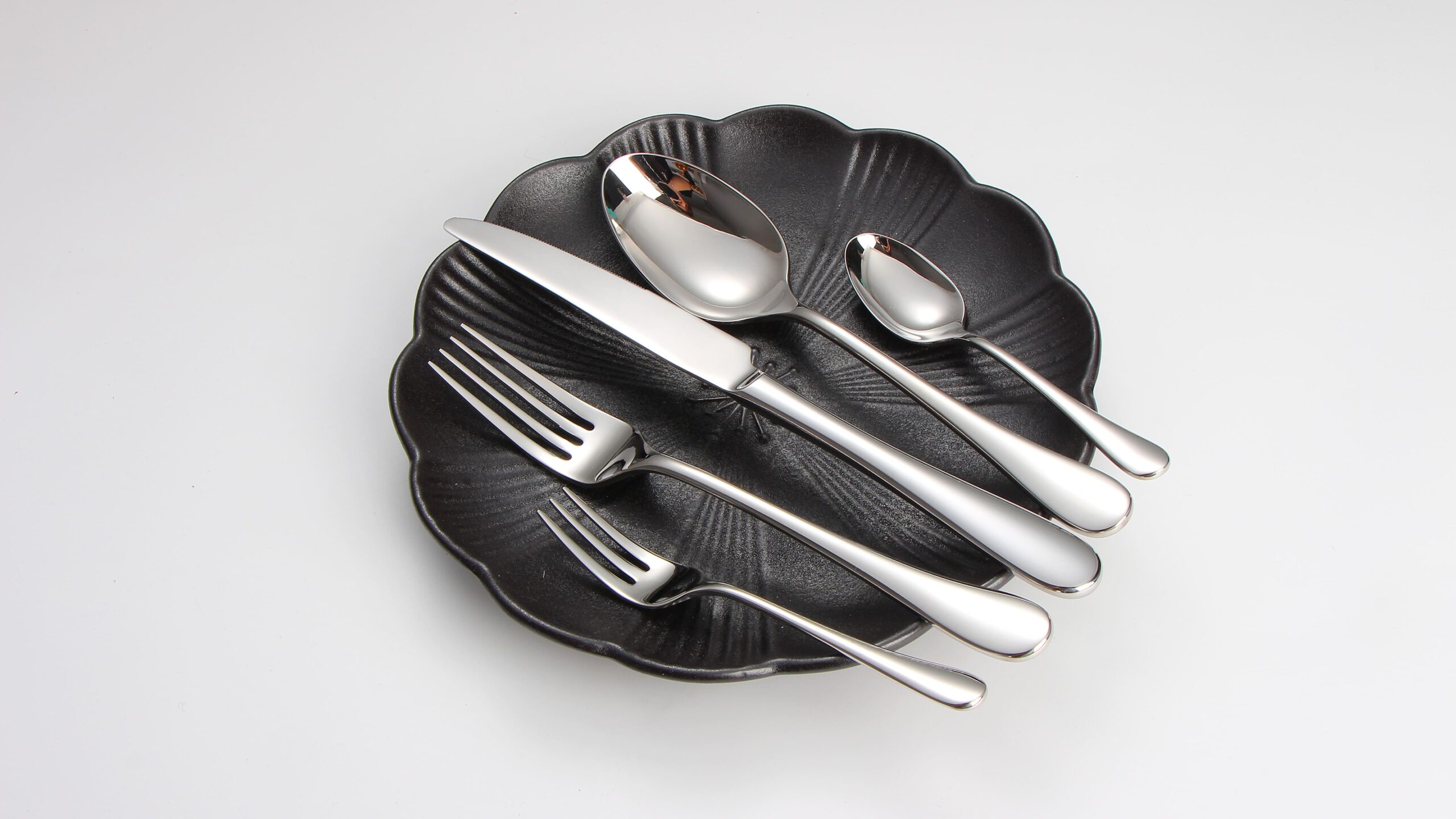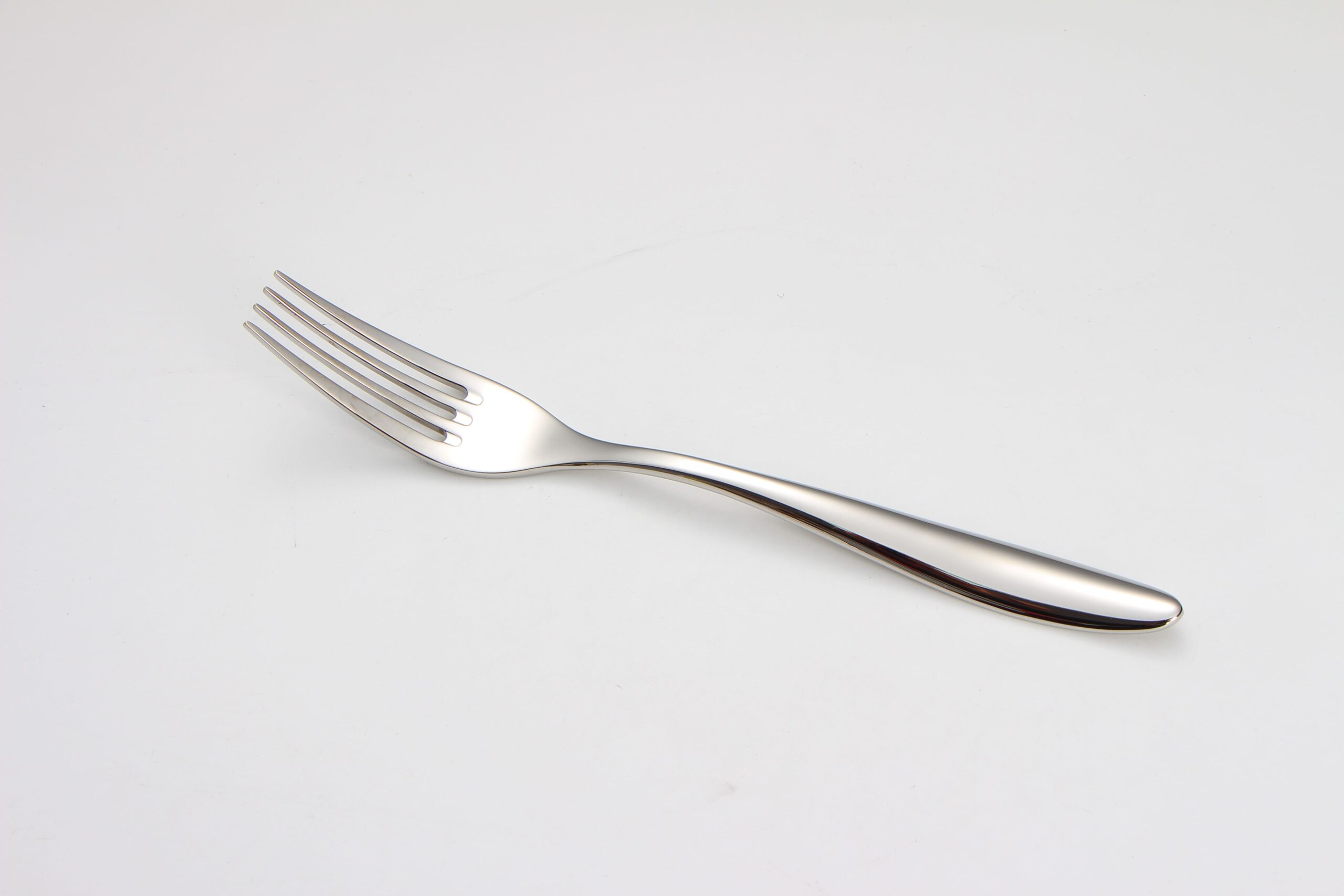
Tremors can make eating a struggle, leaving people feeling helpless. But adaptive utensils can change that. What tools work best for those with shaky hands? Let’s find out.
Adaptive cutlery for tremors is designed to reduce physical strain and improve control. These utensils feature ergonomic handles, anti-shake technology, and special weight distribution to help individuals eat with more ease.
If you or someone you care for suffers from tremors, understanding the right tools can help make mealtime less stressful. Let’s look deeper into how adaptive cutlery works and what options are available for people with hand tremors.
Table of Contents
What is the adaptive equipment for eating with tremors?
Dealing with tremors at mealtime can be frustrating. Luckily, there’s adaptive equipment specifically designed to help people with shaky hands eat more comfortably.
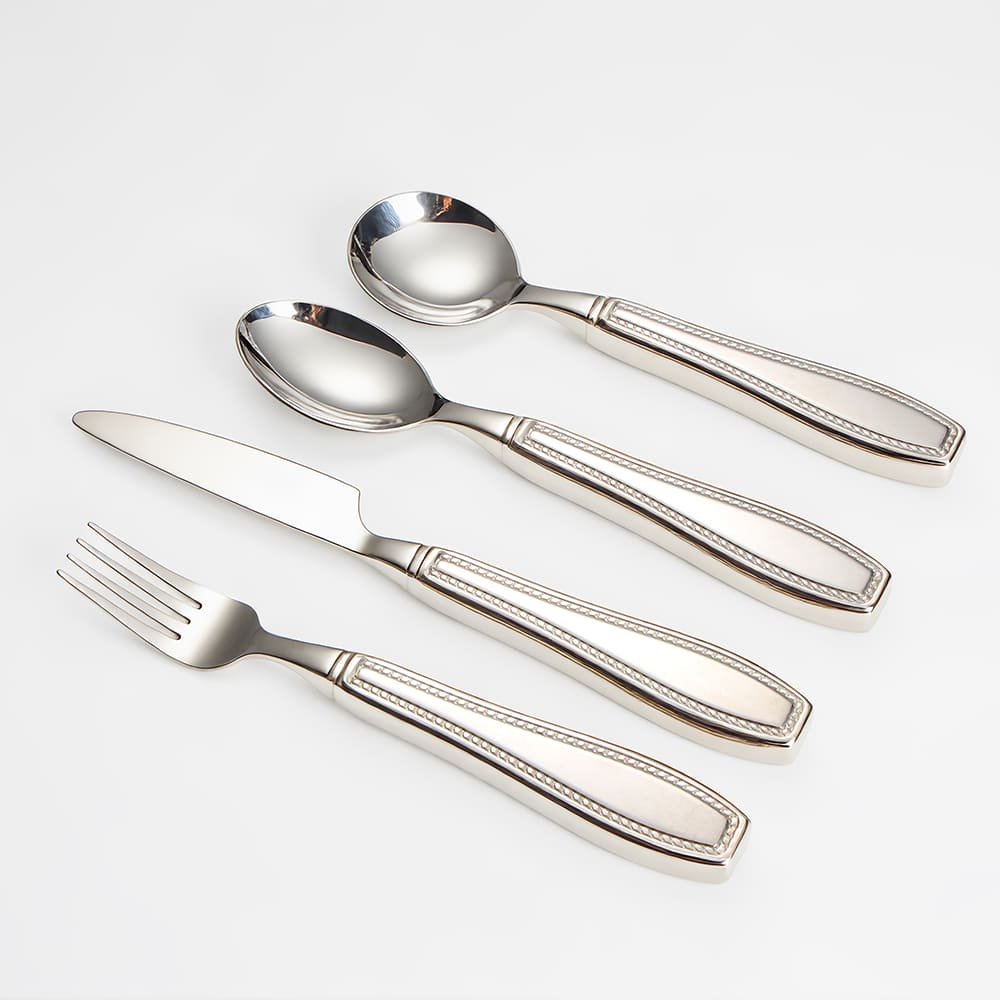
Adaptive equipment for eating with tremors includes specially designed utensils like weighted cutlery, utensils with larger handles, and self-leveling spoons. These tools provide better grip and control for individuals with hand tremors.
When it comes to adaptive equipment for tremors, the main goal is to improve stability and reduce physical strain during meals. Adaptive cutlery typically addresses issues related to grip strength, control, and stability. Some examples of adaptive utensils designed for tremors include:
1. Weighted Cutlery
Weighted utensils are a popular choice for people with tremors. The added weight helps stabilize the hand, making it easier to hold and control the utensil while eating. This is especially helpful for individuals with conditions like Parkinson’s disease, where hand tremors can make eating difficult. The extra weight slows down the shaking, allowing for a more controlled and accurate eating experience.
2. Ergonomic Handles
Ergonomic handles are designed to be easier to grip, especially for people who experience hand tremors. These handles are typically larger and made from soft materials, reducing strain and providing a better, more comfortable hold. The softer texture ensures that the user doesn’t have to apply too much pressure, which can be especially helpful for individuals with arthritis or other conditions that affect grip strength.
3. Self-Leveling Spoons
A self-leveling spoon is a remarkable invention for individuals with tremors. This spoon is designed with a mechanism that keeps the food level, regardless of how the user tilts or shakes their hand. The design helps reduce spills and prevents the food from spilling over the edge, making mealtime much more enjoyable.
| Feature | Why It Matters | Ideal For |
|---|---|---|
| Weighted Cutlery | Stabilizes hand movements, making it easier to control | Tremors, Parkinson’s disease |
| Ergonomic Handles | Improves grip, reduces strain and discomfort | Limited grip strength, arthritis |
| Self-Leveling Spoons | Keeps food level to prevent spills and mess | Tremors, Parkinson’s disease |
What Utensils Are Best for Parkinson's Hand Tremors?
Parkinson’s disease can cause debilitating hand tremors that make it difficult to eat. But are there specific utensils that work better for those affected by Parkinson’s? Let’s explore the best options.
For Parkinson’s hand tremors, utensils that offer extra weight, grip, and control are the most effective. Weighted utensils, ergonomic handles, and self-stabilizing spoons help to reduce tremors and provide more control during meals.
Parkinson’s disease often comes with the challenge of hand tremors, which can disrupt everyday tasks like eating. Specialized utensils for Parkinson’s patients are designed to improve control, reduce tremors, and promote independence at mealtime.
1. Weighted Utensils
One of the most effective types of adaptive utensils for Parkinson’s hand tremors is weighted cutlery. These utensils help by stabilizing the hand and slowing down the tremors. The weight can counteract some of the shaking caused by Parkinson’s disease, making it easier for users to scoop food and bring it to their mouth without spilling or missing their target.
2. Ergonomic Design
Ergonomically designed handles are another excellent choice for Parkinson’s patients. These handles are thicker, softer, and larger, making them easier to grip. The added surface area reduces the effort required to hold the utensil and provides more control, which is crucial for people experiencing tremors.
3. Self-Leveling Spoons
A self-leveling spoon is especially helpful for Parkinson’s patients. The unique design allows the spoon to stay level, even if the hand shakes, reducing the chance of food spilling and improving the overall eating experience.
| Feature | How It Helps | Ideal For |
|---|---|---|
| Weighted Utensils | Reduces tremors by stabilizing hand movements | Parkinson’s disease, essential tremor |
| Ergonomic Design | Provides a better grip and more control | Parkinson’s disease, arthritis |
| Self-Leveling Spoons | Keeps the spoon level to prevent spills and mess | Parkinson’s disease, severe tremors |
What is the Adaptive Spoon for Shaking Hands?
A spoon designed specifically for shaking hands can be a game-changer at mealtime. But how does it work, and what makes it different from a regular spoon?
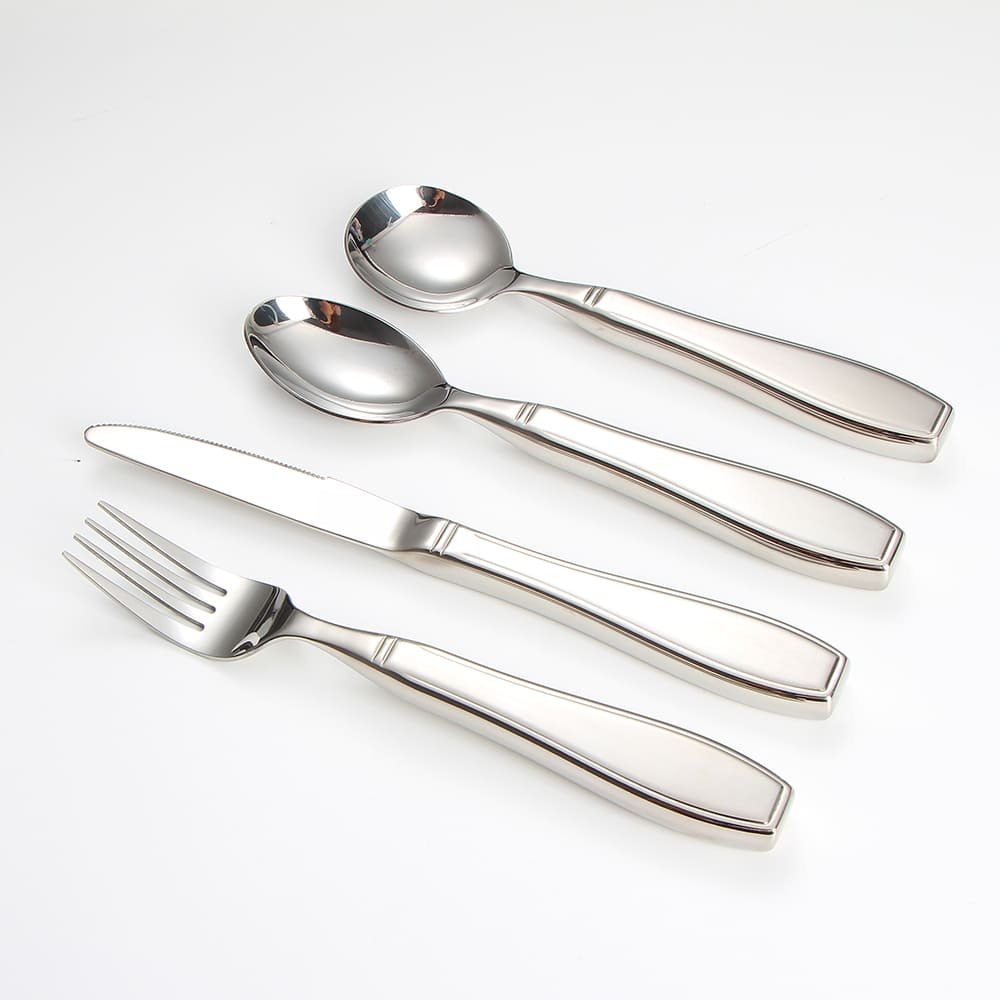
The adaptive spoon for shaking hands features a self-stabilizing design that helps to keep the spoon level. This reduces spills and allows users to eat with more control, even with hand tremors.
An adaptive spoon for shaking hands is specially designed to help people who struggle with hand tremors, such as those affected by Parkinson’s disease, essential tremors, or other conditions that impact hand stability. These spoons are built with a mechanism that keeps the food level despite hand shaking, reducing the risk of spills and making it easier to get food from the plate to the mouth.
1. Self-Stabilizing Mechanism
The core feature of an adaptive spoon is its self-leveling mechanism. This mechanism ensures that the spoon remains level, regardless of how much the hand shakes. The spoon pivots in such a way that it compensates for hand movements, preventing food from spilling over the edge and allowing for smoother eating.
2. Ergonomic Handle
In addition to the self-leveling mechanism, these spoons typically feature ergonomic handles that make it easier for users to grip. Larger, softer handles provide better control, especially for individuals with limited grip strength or dexterity.
| Feature | Why It Matters | Ideal For |
|---|---|---|
| Self-Stabilizing Mechanism | Keeps food level to prevent spills | Shaky hands, tremors |
| Ergonomic Handle | Eases grip, reduces strain | Limited grip strength, arthritis |
What Is the 5:2:1 Rule for Parkinson's?
The 5:2:1 rule is a strategy for managing Parkinson’s symptoms. How does it work, and how does it relate to adaptive cutlery?
The 5:2:1 rule refers to a diet strategy for people with Parkinson’s disease that involves five servings of fruits and vegetables, two servings of lean protein, and one serving of whole grains per day. While this isn’t directly about cutlery, adaptive utensils can make following such a diet easier.
While the 5:2:1 rule is a dietary guideline for Parkinson’s patients, it highlights the importance of making mealtime easier for people with hand tremors. The adaptive utensils discussed above help individuals with Parkinson’s disease maintain independence while sticking to a healthy diet. By using weighted, ergonomic, and self-leveling cutlery, patients can focus on eating without the added difficulty of managing their tremors.
| Rule | What It Means | How Adaptive Utensils Help |
|---|---|---|
| 5 Servings of Fruits and Vegetables | Ensures a diet rich in essential nutrients | Adaptive utensils allow easier eating of fruits/vegetables |
| 2 Servings of Lean Protein | Promotes muscle health and maintenance | Specially designed spoons and forks make it easier to eat protein-rich foods |
| 1 Serving of Whole Grains | Provides sustained energy throughout the day | Adaptive utensils help with cutting and scooping foods like grains |
What Are Adaptive Eating Utensils?
Adaptive eating utensils are changing the way people with physical challenges experience mealtime. But what exactly are they, and how do they help?
Adaptive eating utensils are specially designed tools that help people with physical disabilities, such as tremors or limited hand strength, eat more independently. These utensils feature ergonomically designed handles, weights, and self-stabilizing mechanisms for easier use.
Adaptive eating utensils are designed to make eating easier for individuals with physical limitations, such as hand tremors, arthritis, or stroke recovery. These utensils often feature larger handles, weighted designs, and self-stabilizing mechanisms that improve grip, reduce tremors, and ensure food stays level. Their goal is to promote independence during meals, allowing individuals to enjoy their food without assistance.
| Feature | Why It Matters | Ideal For |
|---|---|---|
| Ergonomically Designed Handles | Improve grip and comfort | Tremors, arthritis, limited hand strength |
| Weighted Design | Stabilizes hand movements | Parkinson’s disease, essential tremor |
| Self-Stabilizing Mechanism | Keeps food level, reducing spills | Shaky hands, tremors |
What Is the Self-Leveling Spoon for Tremors?
A self-leveling spoon could be the solution to shaky hands at mealtime. But what exactly makes this spoon so effective for people with tremors?
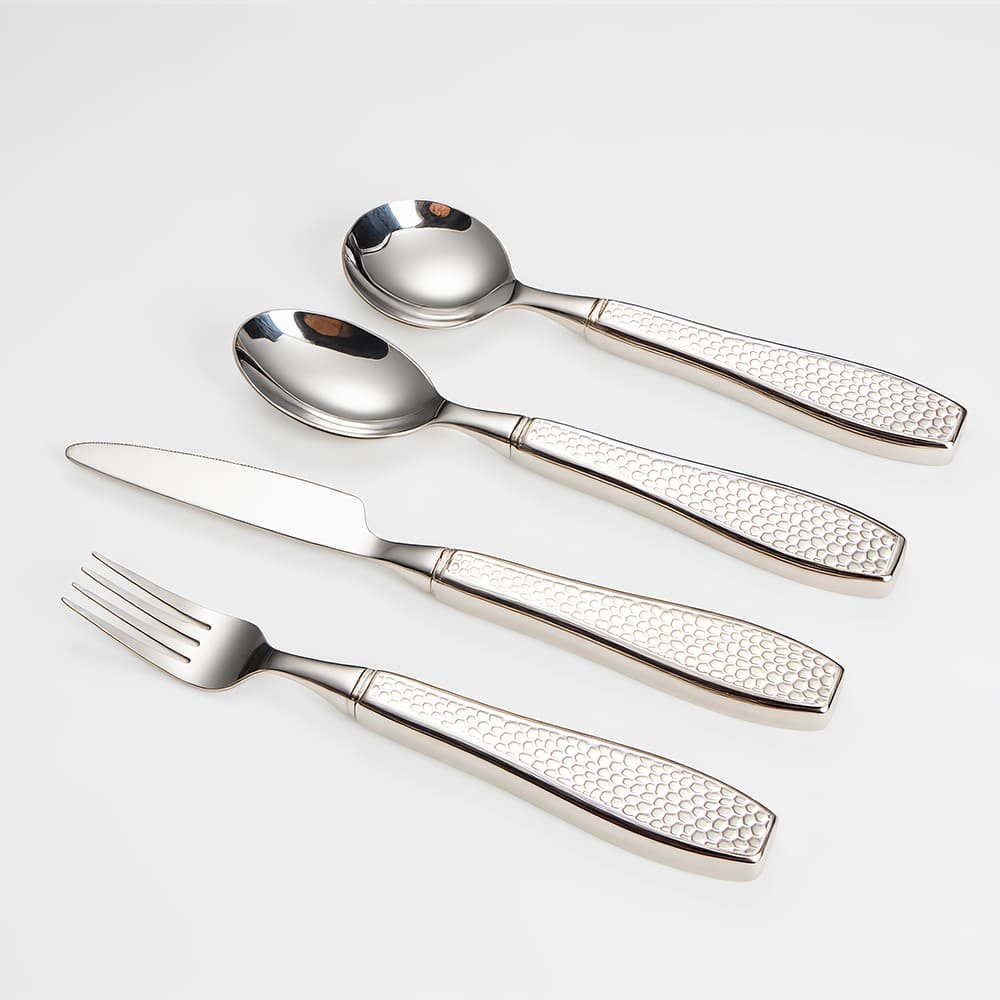
A self-leveling spoon adjusts its angle to keep food level despite hand tremors, reducing spills and making it easier to eat independently.
The self-leveling spoon is a revolutionary adaptive tool that allows people with hand tremors to eat more easily. By using a special mechanism that stabilizes the spoon, it keeps the food at a consistent level no matter how much the hand shakes. This not only helps reduce spills but also increases the independence and dignity of individuals with tremors, as they no longer have to rely on others for help.
| Feature | Why It Matters | Ideal For |
|---|---|---|
| Self-Leveling Mechanism | Keeps the food level to prevent spills | Tremors, Parkinson’s disease |
| Ergonomic Handle | Easier to grip and control | Arthritis, limited hand strength |
What Cutlery Is Good for Shaking Hands?
Shaky hands shouldn’t stop anyone from enjoying a meal. But which cutlery is best for people with this challenge?
Cutlery designed for shaking hands includes ergonomic handles, weighted utensils, and self-leveling spoons that provide better control and minimize spills.
Cutlery for shaking hands aims to reduce the strain and difficulty of eating for individuals with hand tremors. Adaptive utensils, such as weighted forks and spoons with ergonomic handles, help stabilize the hand, reducing the impact of tremors. Self-leveling spoons are especially helpful for people who experience frequent shaking during meals, ensuring that food remains level and easy to eat.
| Feature | Why It Matters | Ideal For |
|---|---|---|
| Ergonomic Handles | Reduces strain and improves control | Tremors, arthritis |
| Weighted Utensils | Stabilizes hand movements, reducing shaking | Parkinson’s disease, essential tremor |
| Self-Leveling Spoons | Keeps food level to prevent spills | Tremors, Parkinson’s disease |
Adaptive utensils play a key role in helping individuals with hand tremors eat independently. With the right tools, such as weighted cutlery and self-leveling spoons, eating can become a more enjoyable and dignified experience.