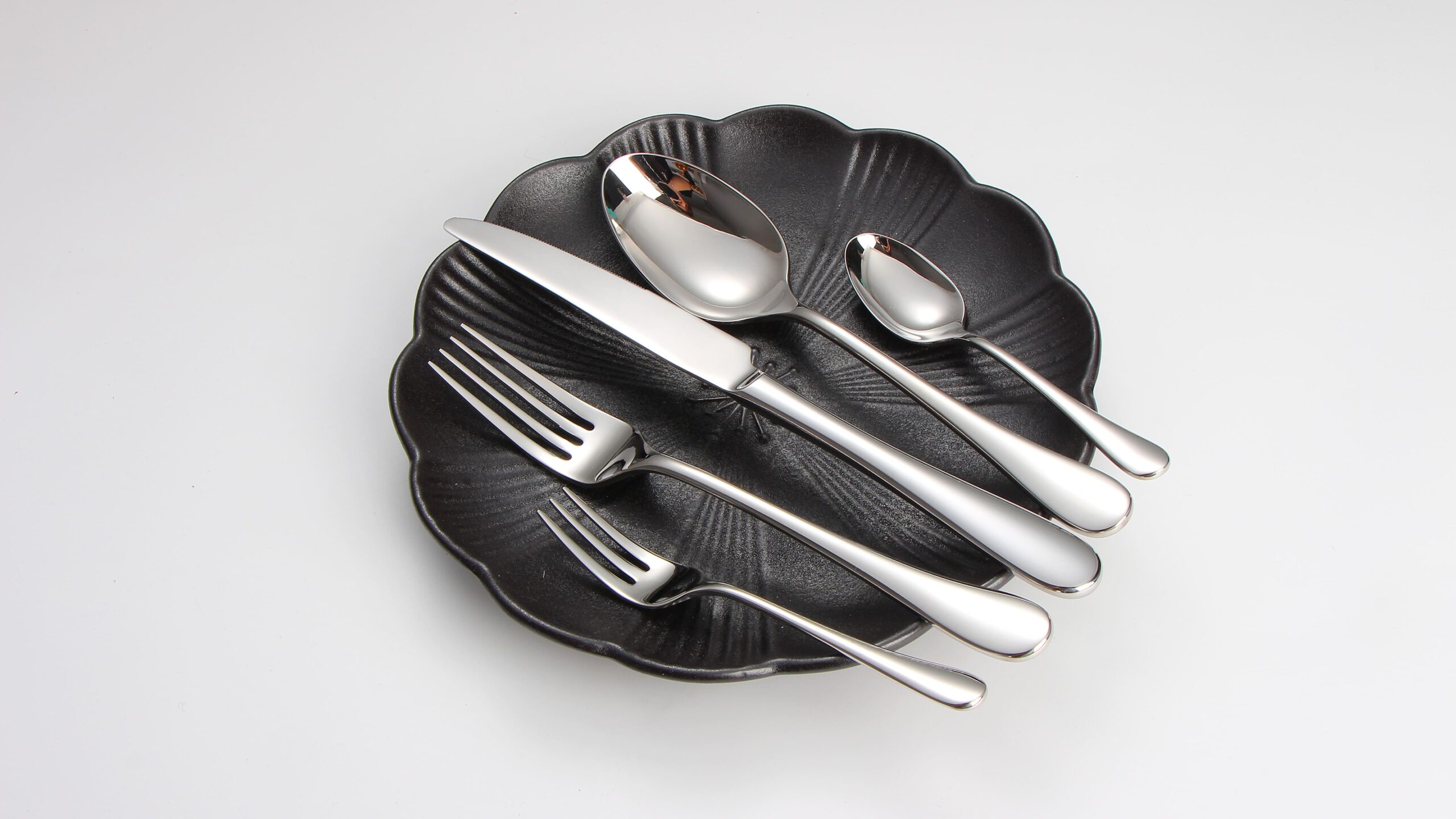
In the highly competitive aviation industry, [every gram of weight and every millimeter of space matters](https://www.sciencedirect.com/science/article/pii/S136192092030715X)[^1]. Airline cutlery is not just a tool for dining; it is a critical component of the passenger experience, a reflection of the airline’s brand identity, and a precision-engineered product that must meet rigorous safety and logistical standards.
As a professional B2B manufacturer with 13 years of experience and a track record of serving over 1,000 global brands, Brilliant presents this comprehensive guide for procurement officers and airline distributors on how to navigate the complex process of custom cutlery development.
1. The Concept Phase: Beyond Aesthetics
Customization begins with a clear understanding of the airline’s unique environment. Unlike household or hotel flatware, airline cutlery must balance brand aesthetics with extreme functionality.
Our ID Design & 3D Prototyping Process
The biggest risk in B2B procurement is the “expectation gap” between a 2D drawing and the final mass-produced item. At Brilliant, we bridge this gap through:
CAD Precision Design: We create detailed industrial designs that account for [center of gravity (for tray stability)](https://en.wikipedia.org/wiki/Center_of_mass)[^2] and ergonomic handling in confined spaces.
Rapid 3D Prototyping: Before sinking costs into expensive steel molds, we provide 3D-printed samples. This allows procurement teams to physically test the “hand feel,” stackability, and weight before moving to the tooling stage.
2. Technical Standards: The “Aviation-Specific” Requirements
This is where general cutlery suppliers often fail. To surpass standard market offerings, airline cutlery must adhere to four critical pillars:
A. Weight Optimization (The Fuel Factor)
Every extra gram increases fuel consumption. We specialize in Lightweight Engineering, utilizing tapered designs and specific material thicknesses (often [18/0 or 13/0 stainless steel](https://en.wikipedia.org/wiki/Stainless_steel)[^3]) to reduce weight without compromising structural integrity.

B. High-Density Stackability
Galley space is at a premium. Our custom designs focus on “nesting” capabilities—ensuring that 100 sets of cutlery take up the absolute minimum volume in airline trolleys.
C. Industrial Durability & Safety
Dishwasher Resistance: Airline cutlery undergoes [thousands of high-temperature industrial wash cycles](https://www.faa.gov/sites/faa.gov/files/about/initiatives/maintenance_hf/training_tools/HF_Guide.pdf)[^4]. Our products feature specialized polishing and material treatments to prevent corrosion.
Safety Edges: We implement strict deburring processes to ensure all edges are rounded and safe for use in turbulent conditions, complying with [international aviation safety regulations](https://www.icao.int/safety/airnavigation/cabin-safety)[^5].
D. Compliance and Certification
Trust is built on verification. Brilliant is a [BSCI-certified factory](https://www.amfori.org/amfori-bsci/)[^6], and all our airline products meet [LFGB, FDA, and DGCCRF standards](https://www.fda.gov/food/food-ingredients-packaging/food-packaging-other-substances-come-contact-food-information-consumers)[^7], ensuring global compliance for international carriers.
3. From Tooling to Mass Production: The Factory Advantage
With over 100 employees and a dedicated sales team of 10+, Brilliant operates as a high-volume OEM/ODM powerhouse.
Step-by-Step Manufacturing Workflow:
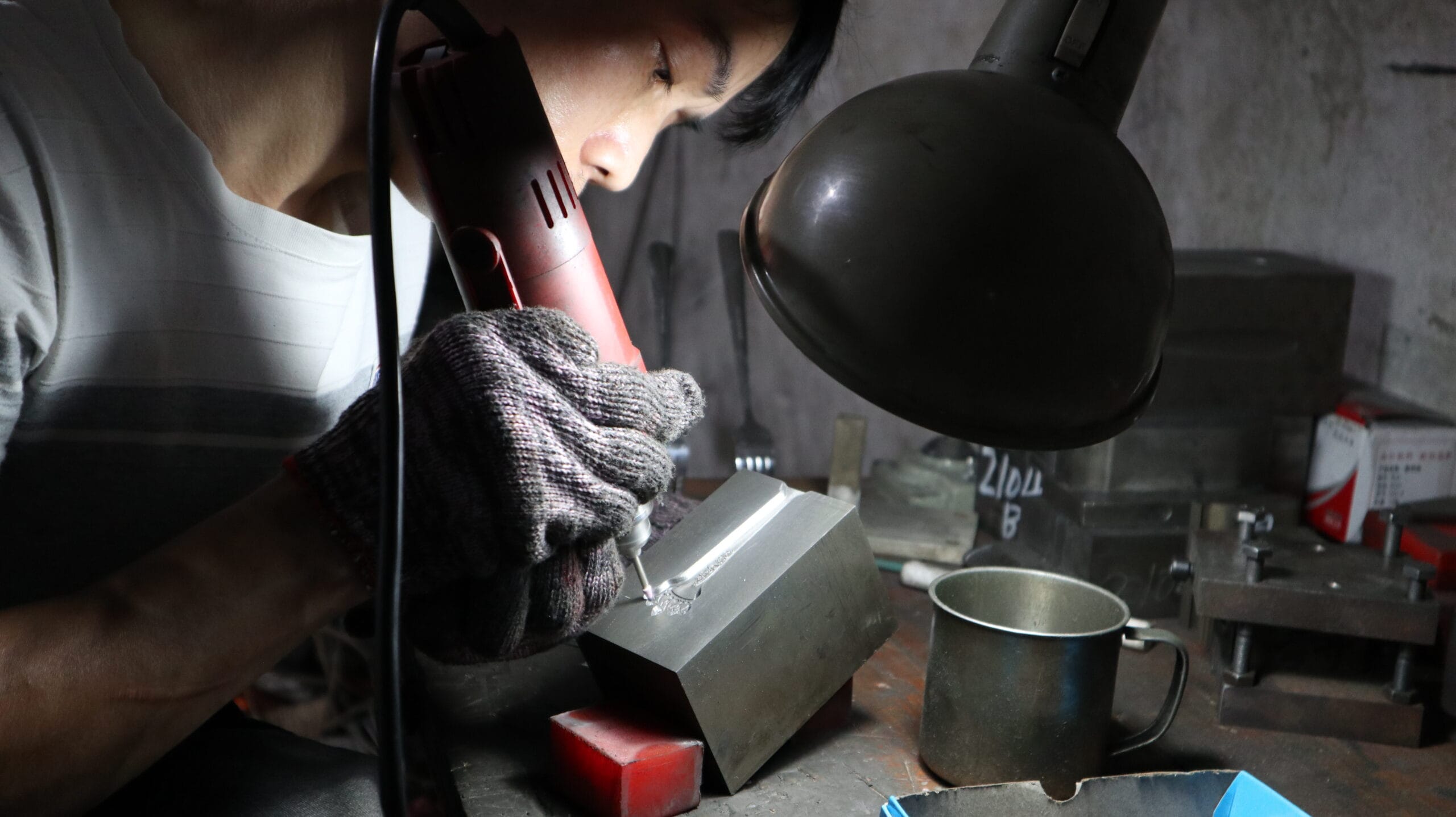
Tooling & Mold Development: Our in-house engineering team creates high-precision molds based on the approved 3D prototype.
Material Sourcing: We select premium stainless steel (or eco-friendly bamboo/wood handles) based on the project’s budget and weight requirements.
[Automated Forging & Polishing](https://www.villeroy-boch.com/r/kitchen/kitchen-cleaning/cleaning-dinnerware/cleaning-and-caring-for-flatware/cutlery-polishing/)[^8]: Utilizing advanced technology to ensure consistency across millions of units.
Quality Control (QC): A multi-stage inspection process checking for weight variance, polishing brightness, and dimensional accuracy.
Custom Packaging: Providing bulk airline-ready packaging that facilitates easy loading into meal trays.
4. Why Choose Brilliant for Airline Procurement?
While many trading companies offer “custom cutlery,” few possess the 13-year manufacturing DNA required for complex airline projects.
Wholesale & Large-Volume Focus: We are built for B2B. We understand the logistics of shipping to North America, Europe, Australia, and beyond.
One-Stop Solution: From the initial ID design to shipment, we handle the entire supply chain, including integrated kitchenware and specialized packaging.
Proven Track Record: Having served over 1,000 brands, we understand the compliance needs of large-scale importers and procurement officers.
5. Conclusion: Elevate Your In-Flight Service
Customizing airline cutlery is a journey from 3D innovation to large-scale industrial execution. By choosing a partner that understands the technical nuances of aviation—weight, space, and safety—you ensure a seamless experience for both your crew and your passengers.
Are you ready to develop your next generation of airline flatware?
Contact Our Expert Team
Email: wendy@art-brilliant.com
Phone/WhatsApp: +86 13528451862
Website: www.brilliantinnovate.com
Address: Building 117, First Industry Zone, Guowei Road, Liantang, Luohu District, Shenzhen, China.
Brilliant: Your Factory-Level Partner for Global Cutlery Excellence.
—
[^1]: “Fuel Estimation in Air Transportation: Modeling global fuel …”, https://www.sciencedirect.com/science/article/pii/S136192092030715X. Studies in aerospace engineering demonstrate that reducing aircraft weight directly impacts fuel efficiency, with estimates suggesting that every kilogram of weight reduction can save significant fuel costs over an aircraft’s operational lifetime, though exact savings vary by aircraft type and route profile. Evidence role: statistic; source type: research. Supports: The relationship between aircraft weight and fuel consumption in commercial aviation. Scope note: Specific fuel savings per gram vary significantly based on aircraft model, flight distance, and operational conditions
[^2]: “Center of mass – Wikipedia”, https://en.wikipedia.org/wiki/Center_of_mass. In classical mechanics, an object’s center of gravity determines its stability; objects with lower centers of gravity and wider bases are more resistant to tipping, a principle applicable to any supported object including tableware on trays. Evidence role: mechanism; source type: encyclopedia. Supports: The physical principle by which center of gravity affects object stability.
[^3]: “Stainless steel – Wikipedia”, https://en.wikipedia.org/wiki/Stainless_steel. Stainless steel grade notation uses a ratio format where the first number indicates chromium percentage and the second indicates nickel percentage; 18/0 contains approximately 18% chromium with minimal nickel, while 13/0 contains approximately 13% chromium, with lower nickel content generally resulting in lighter weight and lower cost compared to 18/8 or 18/10 grades. Evidence role: definition; source type: education. Supports: The meaning and composition of stainless steel grade notation. Scope note: Exact compositions may vary by manufacturer and regional standards
[^4]: “[PDF] Human Factors Guide for Aviation Maintenance and Inspection”, https://www.faa.gov/sites/faa.gov/files/about/initiatives/maintenance_hf/training_tools/HF_Guide.pdf. Commercial aviation catering operations typically employ high-temperature industrial dishwashing systems that subject reusable service items to repeated cycles at elevated temperatures to meet food safety standards, though specific cycle counts depend on airline service frequency and equipment rotation schedules. Evidence role: general_support; source type: institution. Supports: The intensive washing requirements for airline service items. Scope note: Actual cycle counts vary significantly based on airline operations, route frequency, and inventory size
[^5]: “Cabin Safety – ICAO”, https://www.icao.int/safety/airnavigation/cabin-safety. Aviation regulatory bodies such as the FAA and EASA establish safety standards for cabin equipment and passenger service items to minimize injury risk during flight operations, though specific requirements for cutlery design may be addressed through general safety principles rather than dedicated cutlery standards. Evidence role: general_support; source type: government. Supports: Regulatory oversight of airline cabin safety equipment. Scope note: Specific regulations for cutlery design may be incorporated into broader cabin safety requirements rather than existing as standalone cutlery-specific rules
[^6]: “amfori BSCI – Business Social Compliance Initiative”, https://www.amfori.org/amfori-bsci/. The Business Social Compliance Initiative (BSCI) is a European business-driven initiative that supports retailers and importers in monitoring and improving social compliance in their supply chains through a standardized audit system covering working conditions, labor rights, and ethical business practices. Evidence role: definition; source type: institution. Supports: The nature and purpose of BSCI certification.
[^7]: “Food Packaging & Other Substances that Come in Contact with Food”, https://www.fda.gov/food/food-ingredients-packaging/food-packaging-other-substances-come-contact-food-information-consumers. LFGB (Lebensmittel- und Futtermittelgesetzbuch) is Germany’s food and feed code regulating food contact materials, FDA (U.S. Food and Drug Administration) establishes food contact substance regulations for the United States, and DGCCRF (Direction Générale de la Concurrence, de la Consommation et de la Répression des Fraudes) is France’s agency overseeing consumer safety and food contact compliance, each establishing requirements for materials intended to contact food. Evidence role: definition; source type: government. Supports: The regulatory frameworks governing food contact materials in major markets.
[^8]: “Polishing cutlery: Tips & tricks – Villeroy & Boch”, https://www.villeroy-boch.com/r/kitchen/kitchen-cleaning/cleaning-dinnerware/cleaning-and-caring-for-flatware/cutlery-polishing/. Industrial cutlery manufacturing typically employs forging or stamping processes to shape stainless steel blanks into utensil forms, followed by multi-stage polishing operations that progressively refine surface finish; automation of these processes enables consistent quality and high-volume production in modern facilities. Evidence role: mechanism; source type: education. Supports: The manufacturing processes used in industrial cutlery production. Scope note: Specific manufacturing methods vary by manufacturer, product grade, and production scale