Struggling to understand US safety standards for children’s cutlery? A single failed inspection can lead to costly recalls, damaging your brand’s reputation. Know the rules to ensure every shipment is compliant.
**Exporting children’s cutlery to the US requires strict compliance with [16 CFR 1500.48/49 physical safety tests](https://www.ecfr.gov/current/title-16/chapter-II/subchapter-C/part-1500/section-1500.49). This means no sharp points or edges. We ensure this by rounding fork tines ([R-angle > 0.5mm](https://www.researchgate.net/publication/381003618_Effectiveness_of_action_observation_treatment_based_on_pathological_model_in_hemiplegic_children_a_randomized-controlled_trial)) and using special testers to guarantee no micro-burrs, preventing recall risks.**

Meeting these standards isn’t just about a single sample passing a test; it’s about guaranteeing consistency across thousands of units. As a manufacturer, I’ve seen how overlooking these details can lead to disaster for importers. But what exactly do these standards mean in practice, and how do we ensure every single piece is safe? Let’s break it down further, starting with the most basic physical requirement: edge rounding.
## What Are the Critical Edge-Rounding Standards for OEM Children’s Flatware?
Designing OEM children’s flatware? A sharp edge is a major safety hazard and a liability for your brand. One incident can lead to customer complaints, recalls, and lasting brand damage.
**For OEM children’s flatware, the most critical standard is ensuring all edges are perfectly smooth and rounded. The R-angle, or corner radius, must be at least 0.5mm. This is a key requirement in standards like [EN 14372](https://www.researchgate.net/publication/331410191_Screening_analysis_of_RoHS_directive_hazardous_substances_phthalate_esters_and_bromodiphenyl_ethers_by_novel_mass_spectrometry_using_soft_ionization) and prevents any possibility of cuts.**
### Deeper Dive: The Science of Safe Edges
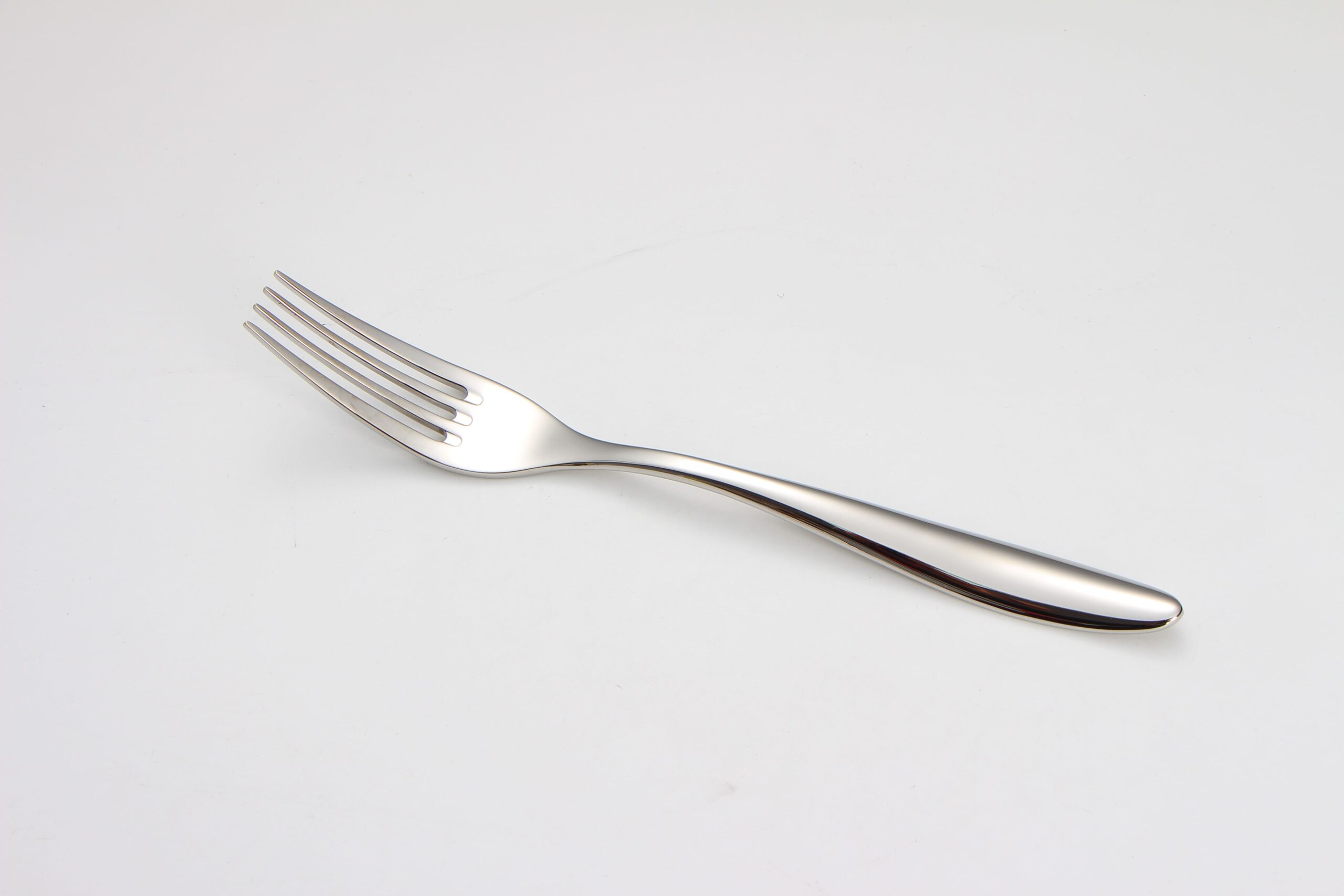
When we produce children’s cutlery, physical safety is our number one priority. A child’s skin is delicate, and their motor skills are still developing. This is why standards like [EN 14372](https://www.researchgate.net/publication/331410191_Screening_analysis_of_RoHS_directive_hazardous_substances_phthalate_esters_and_bromodiphenyl_ethers_by_novel_mass_spectrometry_using_soft_ionization) (a European standard widely respected globally) are so strict about edges and corners. The “R-angle” refers to the radius of a curve, and a measurement of ≥0.5mm ensures there is no sharp corner that could potentially scrape or cut a child.
To achieve this consistently on a mass scale, we don’t just stamp the metal and hope for the best. We use a two-step process. First is **vibratory polishing**, where the newly formed cutlery pieces are tumbled with abrasive media to smooth out all surfaces and remove burrs. After that, we perform a specific **edge-rounding** process to create that perfect, safe profile on every single edge. This applies not just to the fork tines, but to the bowl of the spoon and the entire handle.
| Feature | Unsafe Cutlery | Our Safe Cutlery |
| :— | :— | :— |
| **Fork Tines** | Sharp, pointed tips | Rounded tips, R-angle ≥0.5mm |
| **Spoon Edge** | Thin, stamped edge | Smooth, polished, and thickened |
| **Handle Edges**| Sharp, unfinished seams | Fully deburred and rounded |
| **Manufacturing** | Single-step stamping | Stamping + Vibratory Polishing + Edge Rounding |
This meticulous approach is the only way to guarantee that every piece in a shipment of thousands is as safe as the first.
## What is the standard set up of cutleries?
Planning a new cutlery line for your brand? The definition of a “standard” set can be confusing and varies widely by market. Choosing the wrong combination can lead to poor sales and unsold inventory.
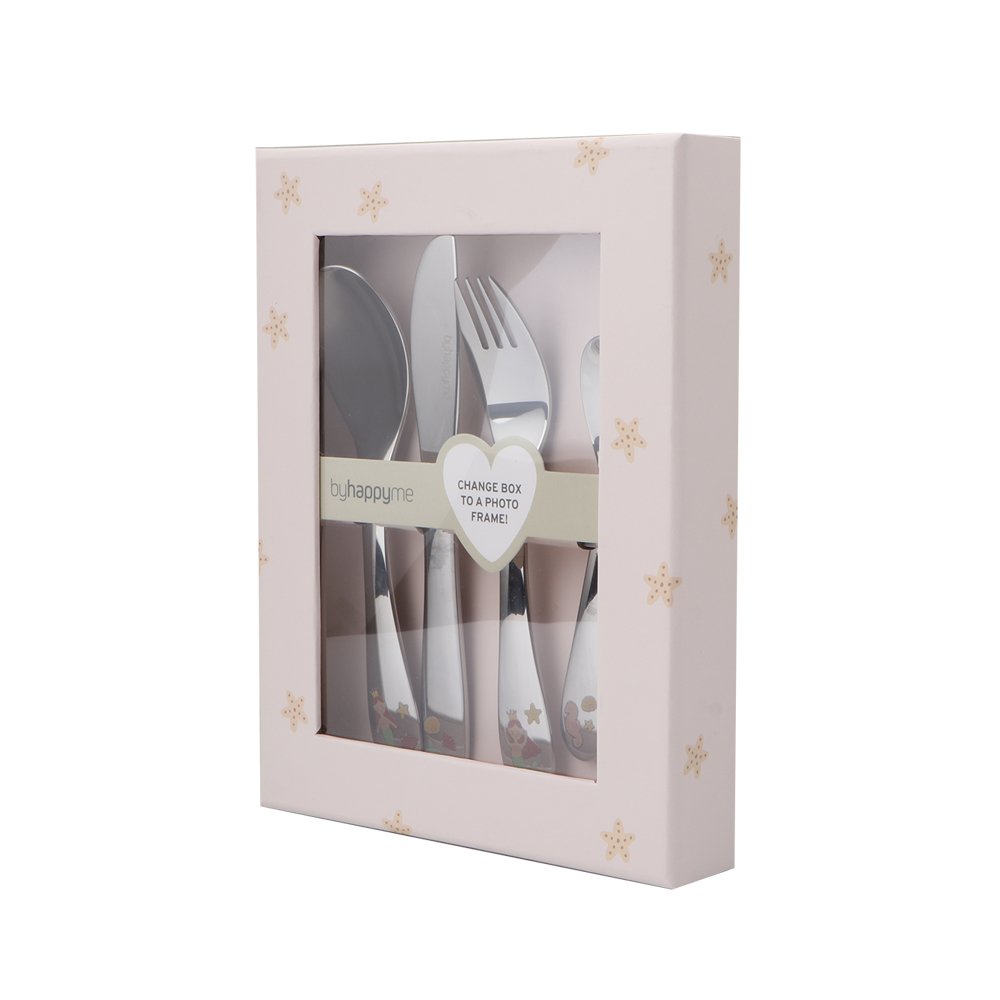
**A standard adult place setting typically includes a dinner fork, knife, and spoon. For children, the set is often simpler, containing just a small fork and spoon. However, the ideal “standard” for your brand truly depends on your target market, age group, and price point.**
### Deeper Dive: Defining the Right Set for Your Brand
When a client asks me “what’s standard?”, my first question is always “for who?”. The traditional American 5-piece place setting (dinner fork, salad fork, dinner knife, soup spoon, teaspoon) is perfect for a formal dinnerware brand but completely wrong for other applications. As an OEM/ODM partner, a key part of my job is helping clients navigate this decision to maximize their sales potential.
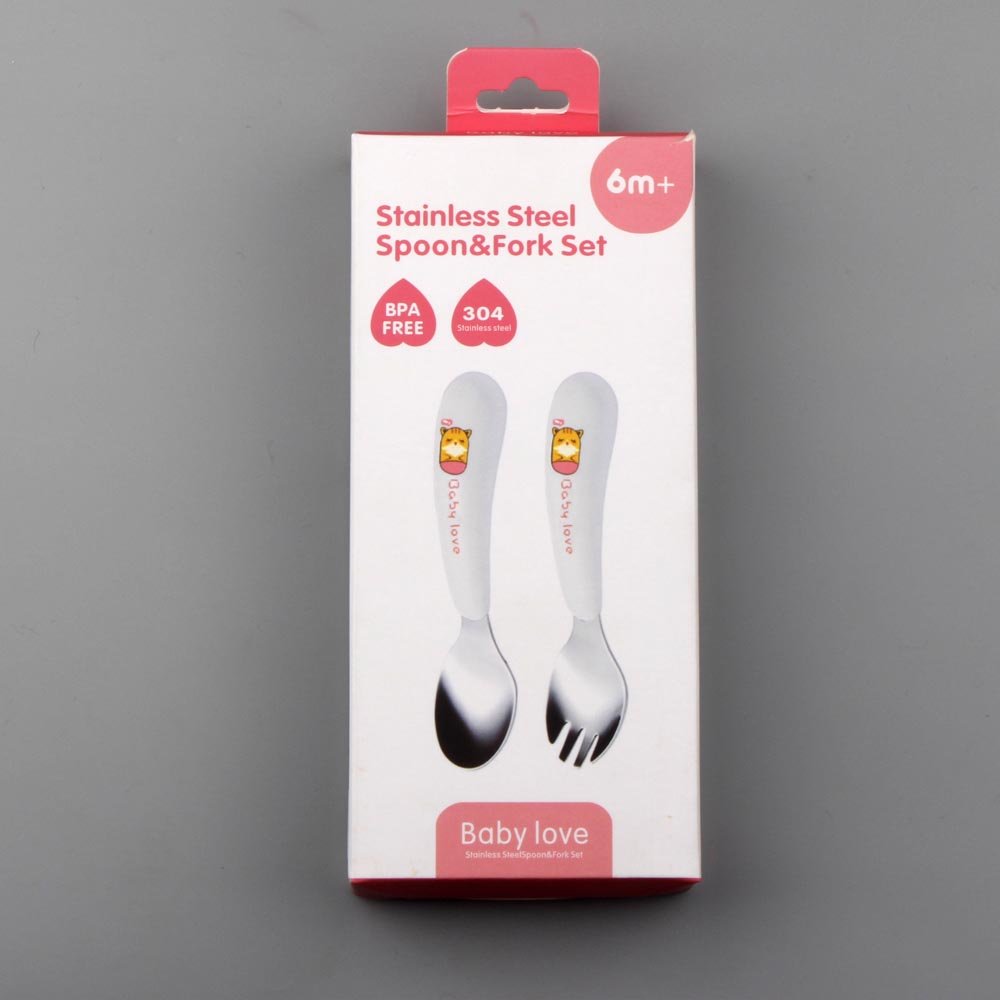
For children’s cutlery, the configuration is especially important and depends heavily on the target age.
* **Toddlers (1-3 years):** A simple 2-piece set with a short, wide-handled spoon and fork is the standard. Safety and ergonomics are the only concerns.
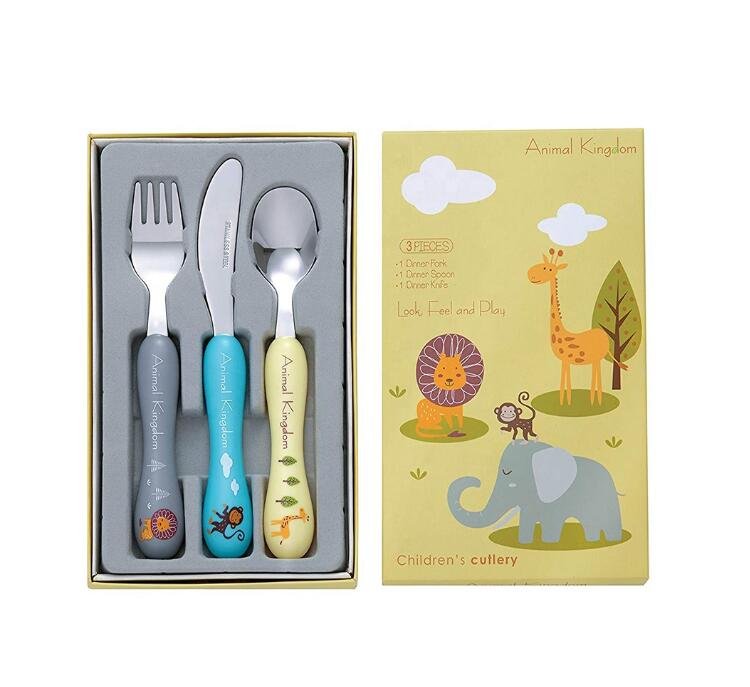
* **Preschoolers (3-5 years):** You can introduce a 3-piece set that includes a child-safe knife with a rounded tip and a non-serrated blade. This helps them learn to use a full place setting.
* **Older Kids (5+ years):** The set can look more like a smaller version of an adult set, but still must adhere to all safety standards for sharpness and materials.
Here’s a quick guide we use to help clients decide:
| Set Type | Included Pieces | Target User / Market | Key Focus |
| :— | :— | :— | :— |
| **Toddler Starter Set** | 1 Spoon, 1 Fork | 1-3 years, Baby Brands | Ergonomics, Safety |
| **Kids’ Dinner Set** | 1 Spoon, 1 Fork, 1 Knife | 3-5 years, Mass Retail | Learning, Durability |
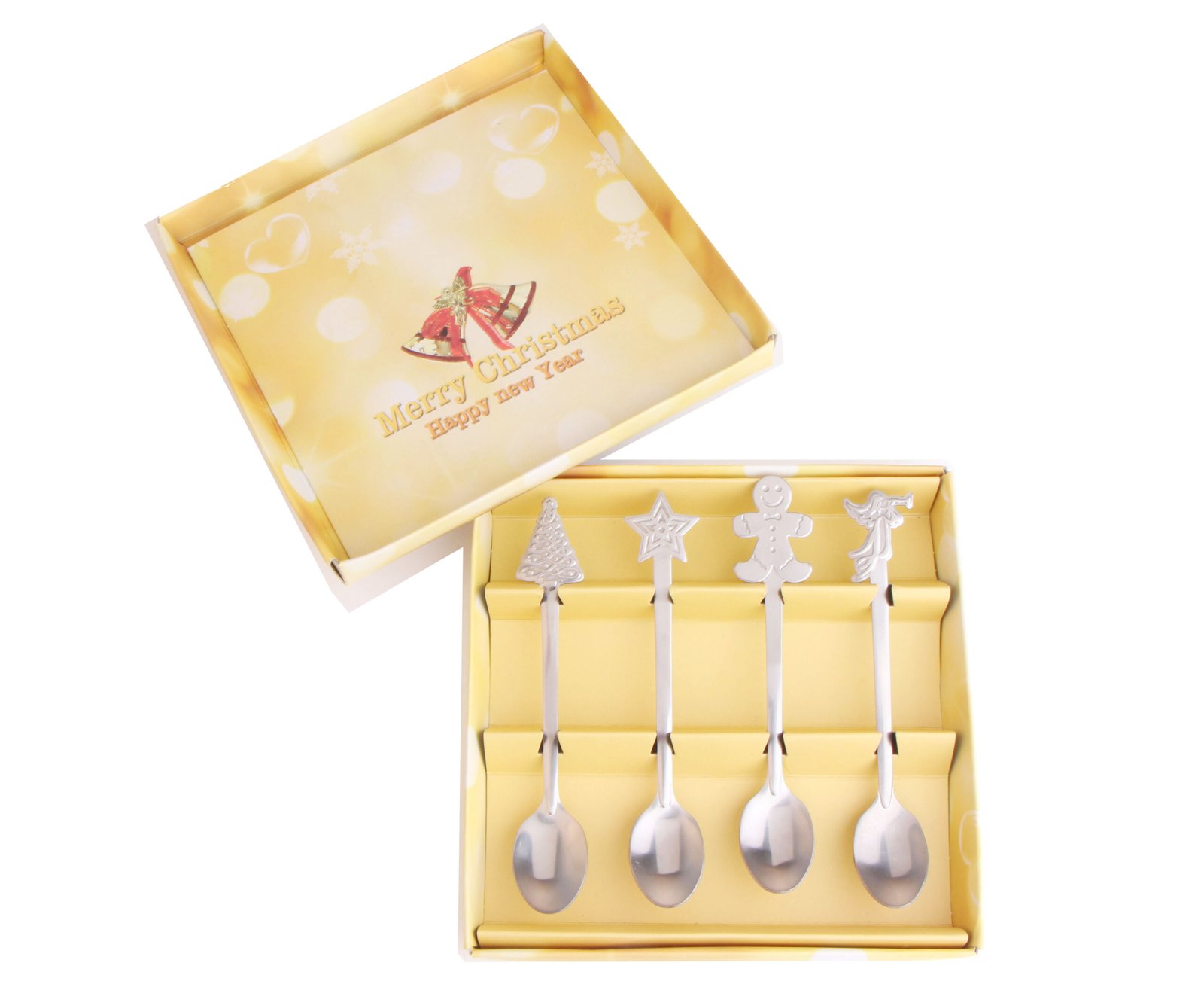
| **Youth Gift Set** | 4-piece set + Case | 5+ years, Gift Market | Aesthetics, Personalization |
By analyzing the target customer and market, we can create a “standard” set that is perfectly tailored to your brand’s success.
## What is the best stainless steel ratio for flatware?
Choosing the right stainless steel for your flatware line? The numbers like 18/10 and 18/8 can be confusing. Making the wrong choice can lead to customer complaints about rust, bending, or a lack of shine.
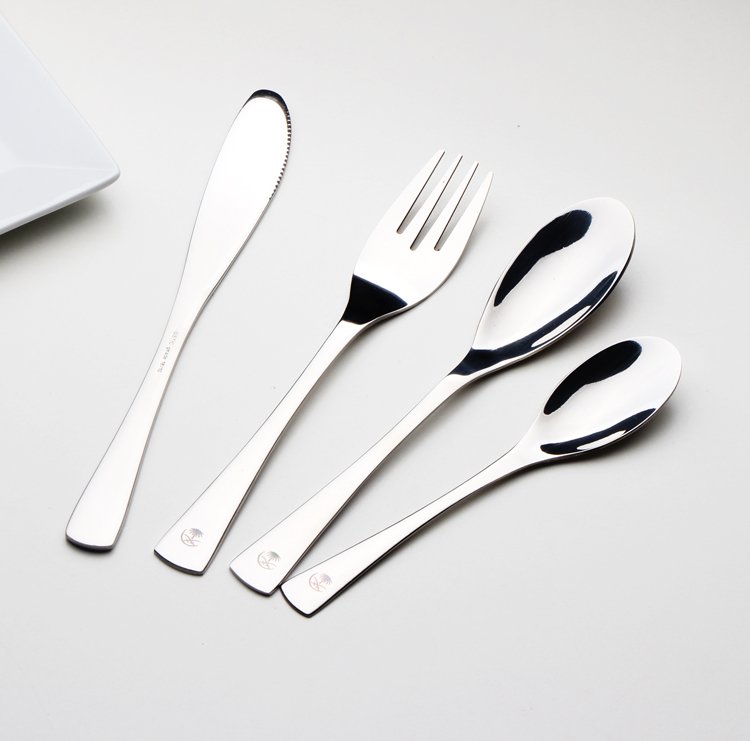
**The best stainless steel for high-quality flatware is 18/10. It contains 18% chromium for rust resistance and 10% nickel for a brilliant shine and durability. For a balance of quality and cost, 18/8 is also an excellent and very common choice.**
### Deeper Dive: Decoding the Numbers for Your Brand
The numbers in “18/10” are not arbitrary; they are the key to the flatware’s performance and appearance. As a manufacturer, I guide my clients through these choices to match their product with their brand identity and price point.
Here’s what the numbers mean:
* **The first number (18%):** This represents the amount of **Chromium**. Chromium is the magic ingredient that makes steel “stainless.” It reacts with oxygen to form a thin, invisible layer on the surface that protects the iron in the steel from rusting.
* **The second number (10%, 8%, or 0%):** This is the percentage of **Nickel**. Nickel is a premium additive. It significantly boosts corrosion resistance, especially against acidic foods. More importantly, it gives the steel a beautiful silver-like luster and a warmer feel. It also adds hardness and durability.
Here is how we advise our B2B clients:
| Ratio | Composition | Key Benefits | Best For Your Brand If… |
| :— | :— | :— | :— |
| **18/10** | 18% Chromium, 10% Nickel | Highest rust resistance, superior shine, weighty feel | You are a premium brand, targeting high-end retail, hotels, or the wedding market. |
| **18/8** | 18% Chromium, 8% Nickel | Excellent rust resistance, good shine, industry standard | You need high-quality for daily use, airlines, or large-scale distribution with a good balance of cost and quality. |
| **18/0** | 18% Chromium, 0% Nickel | Budget-friendly, magnetic, decent rust resistance | You are competing on price, targeting the economy sector, or need magnetic flatware for certain sorting systems. |
For children’s cutlery, we almost always recommend 18/10 or 18/8. The enhanced durability and corrosion resistance are essential for a product that will be used and washed frequently.
## What is the standard for sharp edges?
Exporting to the US? The [Consumer Product Safety Commission (CPSC)](https://en.wikipedia.org/wiki/Neodymium_magnet) has strict, non-negotiable rules against sharp points and edges on children’s products. One failed spot-check can trigger a full recall, costing you a fortune.
**The US standard is defined by 16 CFR 1500.48 (sharp points) and 1500.49 (sharp edges). These regulations use specific testing devices to mechanically simulate a child’s finger to determine if an edge or point on a product poses a laceration or puncture hazard.**
### Deeper Dive: How We Guarantee Compliance in Mass Production
Passing these tests is not about luck; it’s about process control. Many factories only think about testing at the end, when they send a few samples to a lab. We integrate these tests directly into our production line.
Here’s a look at the actual tests and how we design for them:
1. **16 CFR 1500.48 (Sharp Point Test):** The official test uses a Sharp Point Tester. It’s a tool with a small rectangular opening. If the tip of an object, like a fork tine, can fit into the opening and depress a sensor inside, it is classified as a hazardous sharp point. We use a **[centrifugal rounding process](https://en.wikipedia.org/wiki/Goniometer)** that precisely shapes our fork tines with an R-angle greater than 0.5mm, making it physically impossible for them to fail this test.
2. **16 CFR 1500.49 (Sharp Edge Test):** This test uses a Sharp Edge Tester, which has a steel mandrel wrapped in a special pressure-sensitive tape. The tool is scraped along the edge of the product with a specific force. If the tape is cut, it’s a hazardous sharp edge. Our two-step polishing and rounding process ensures that every edge—from the handle to the spoon bowl—is smooth enough to pass this test every time.
By using these testing devices ourselves for quality control during production, we ensure **high consistency across the entire batch**. This is the technical foundation that allows us to avoid CPSC recalls and build long-term trust with our B2B clients. It’s a guarantee of safety that protects not only the end-user but also our client’s brand and business.
## Navigating CPSIA and REACH for Wholesale Children’s Flatware Sets?
Sourcing children’s flatware for the US or EU? Chemical compliance with CPSIA and REACH is non-negotiable. A single batch that fails testing for lead or other chemicals can result in total financial loss and legal trouble.
**To comply with CPSIA (US) and REACH (EU), you must control hazardous substances. The secret isn’t just testing a final sample, but ensuring material consistency from the very start. We do this by tracking the steel’s “[furnace number](https://en.wikipedia.org/wiki/Mercury_(element))” and screening all coated parts with an [XRF analyzer](https://www.researchgate.net/publication/315045318_Toxic_Substances_in_Toys_Products_for_Children_and_Care_of_Them_in_Belarus).**
### Deeper Dive: Proactive Control is Better Than Reactive Testing
The core difficulty in compliance is not getting one sample to pass a lab test. The real challenge is ensuring that every single one of the 50,000 pieces in your shipment is also compliant. A spot-check failure by customs can lead to the entire shipment being seized and destroyed.
Here’s how we solve this problem at the source:
* **CPSIA (Consumer Product Safety Improvement Act):** This US law is extremely strict on lead and phthalate content in children’s products.
* **REACH (Registration, Evaluation, Authorisation and Restriction of Chemicals):** This EU regulation governs a long list of Substances of Very High Concern (SVHCs).
To guarantee compliance, we focus on batch stability.
1. **Traceability with “Original Furnace Number”:** When we order raw stainless steel, we lock in and record the “[furnace number](https://en.wikipedia.org/wiki/Mercury_(element)).” This is the unique batch identifier from the steel mill. It ensures that the chemical composition of the raw material is known and consistent for the entire production run.
2. **In-House XRF Screening:** For any product that has a plastic handle, paint, or colored coating, we don’t take chances. We use an **XRF (X-ray fluorescence) spectrometer** to conduct initial screening on all incoming raw materials. This powerful tool instantly tells us if there are traces of lead, cadmium, or other restricted heavy metals, ensuring we catch any issues before production even begins.
This level of material control helped a German client of ours dominate their market. They wanted custom-printed handles, but were worried about the print scratching off or containing harmful chemicals. We spent eight months perfecting a [high-temperature sublimation process](https://en.wikipedia.org/wiki/Ultra-high_vacuum) using Korean decal technology. The result was a design that could not be scratched off even with a knife and survived over 200 dishwasher cycles without fading. Because we controlled the entire process, from the steel’s [furnace number](https://en.wikipedia.org/wiki/Mercury_(element)) to the chemical safety of the inks, we delivered a product that was both incredibly durable and fully compliant. This innovation gave their brand a powerful competitive advantage in the high-end children’s gift market.
## Conclusion
Ensuring children’s cutlery safety requires more than a final lab report. It demands strict, proactive control over physical sharpness and material chemistry right from the start to build a compliant brand.