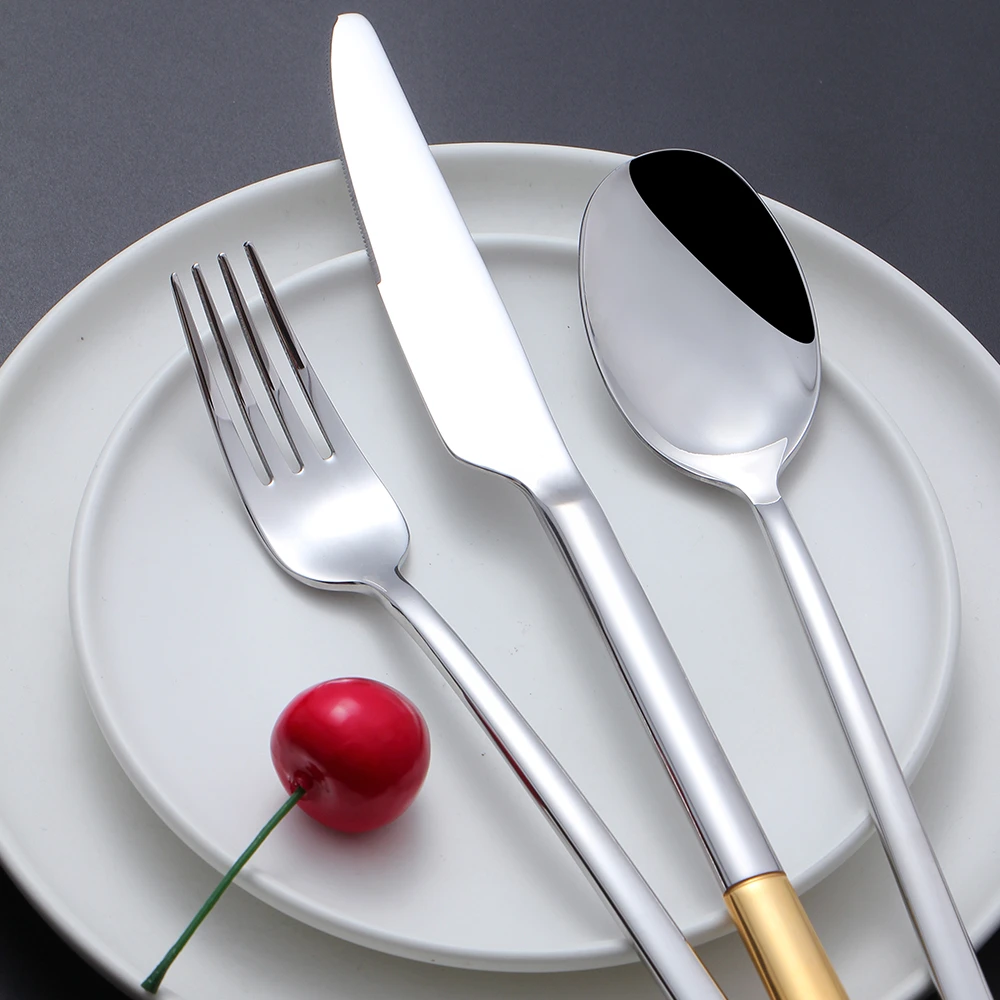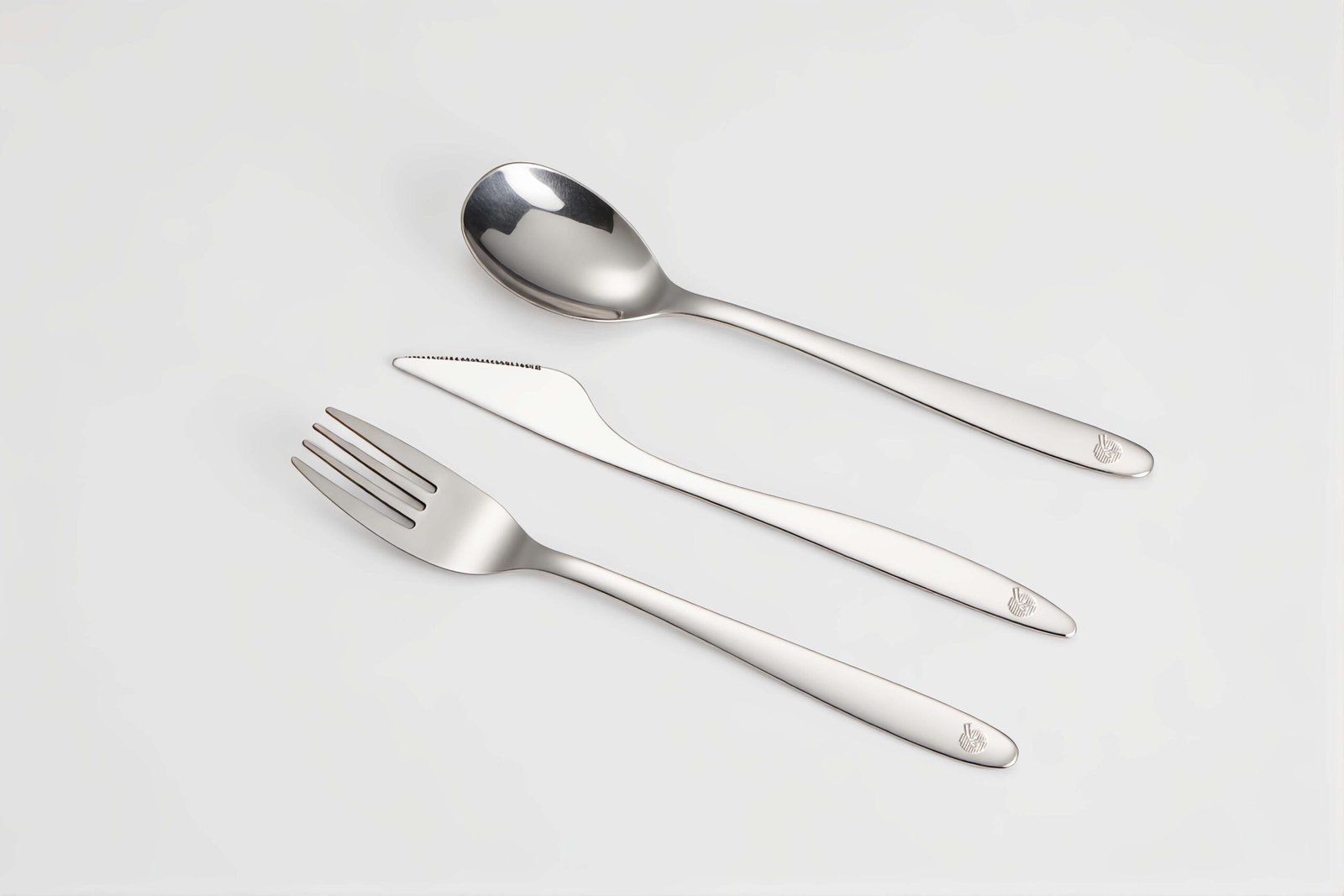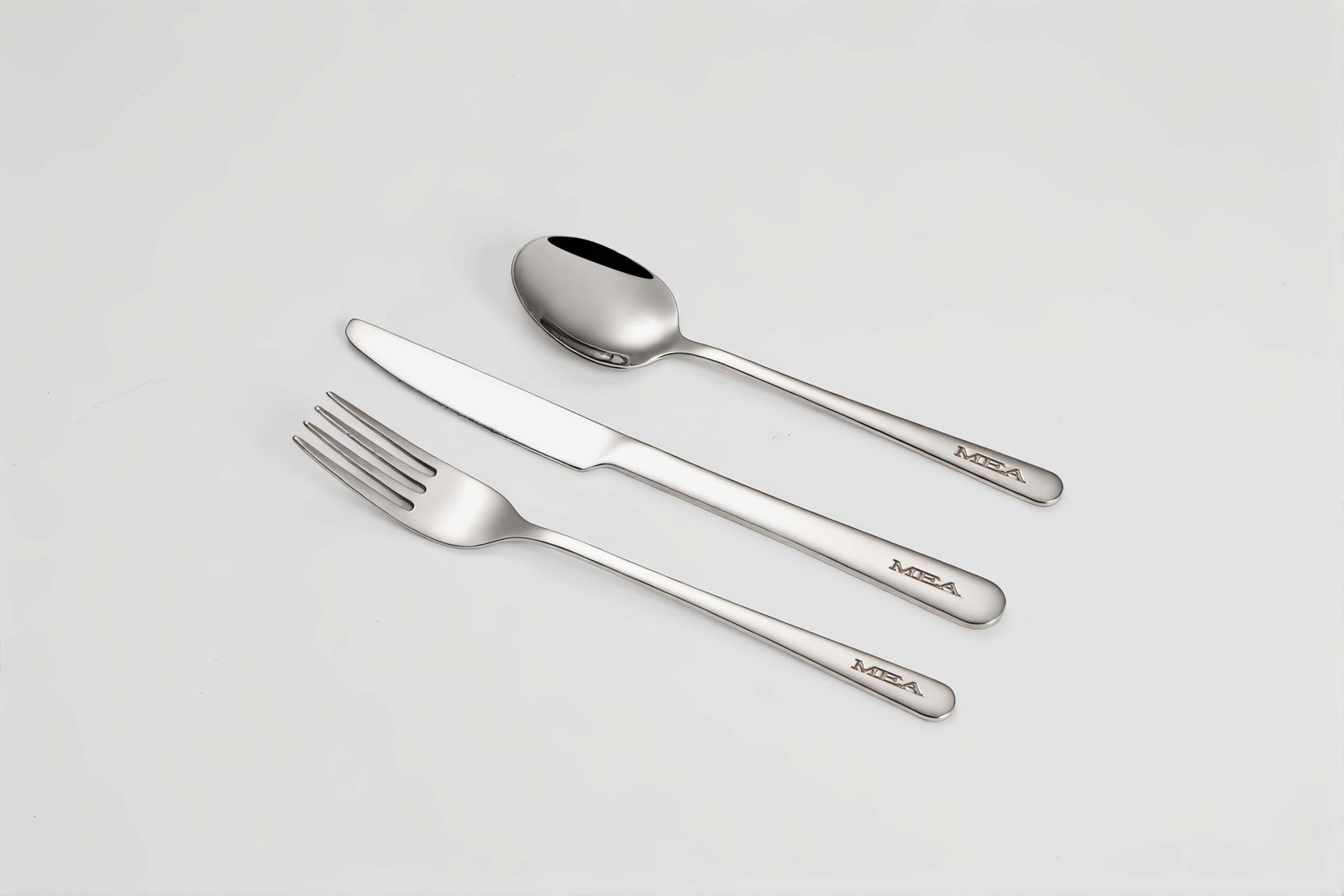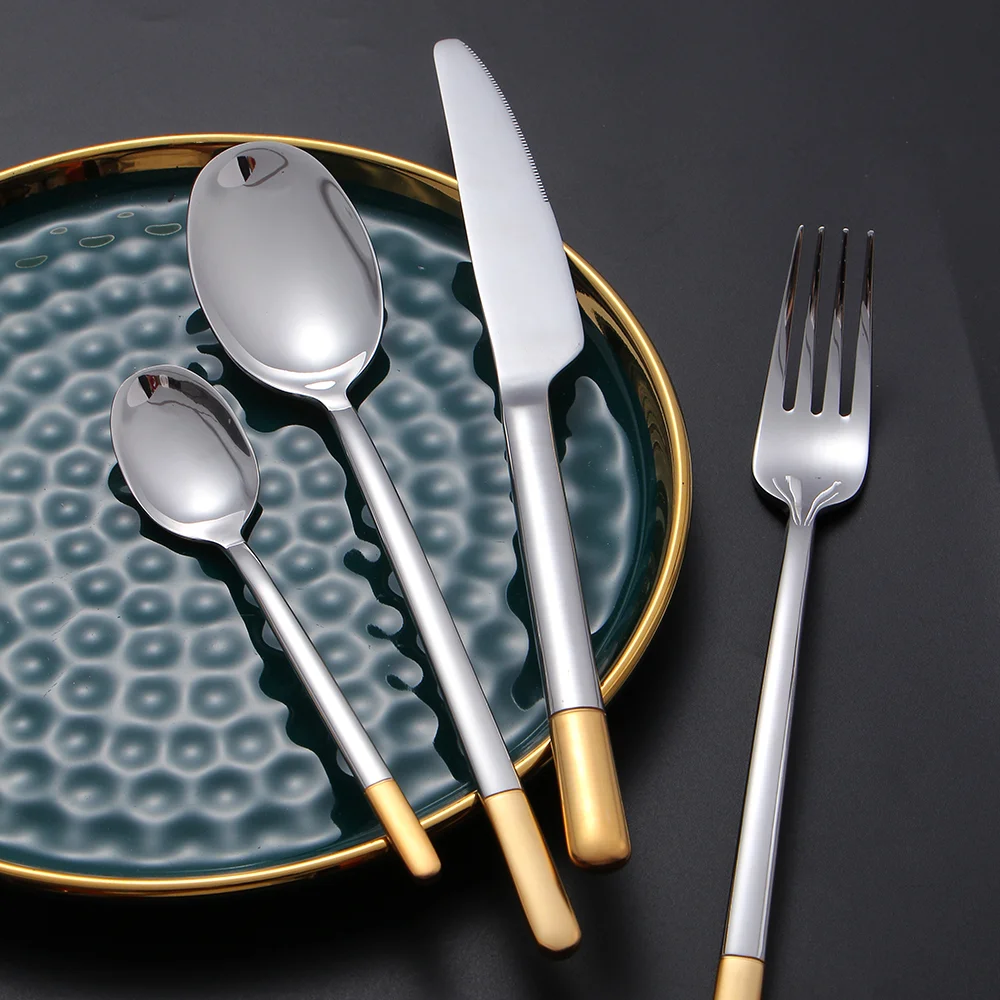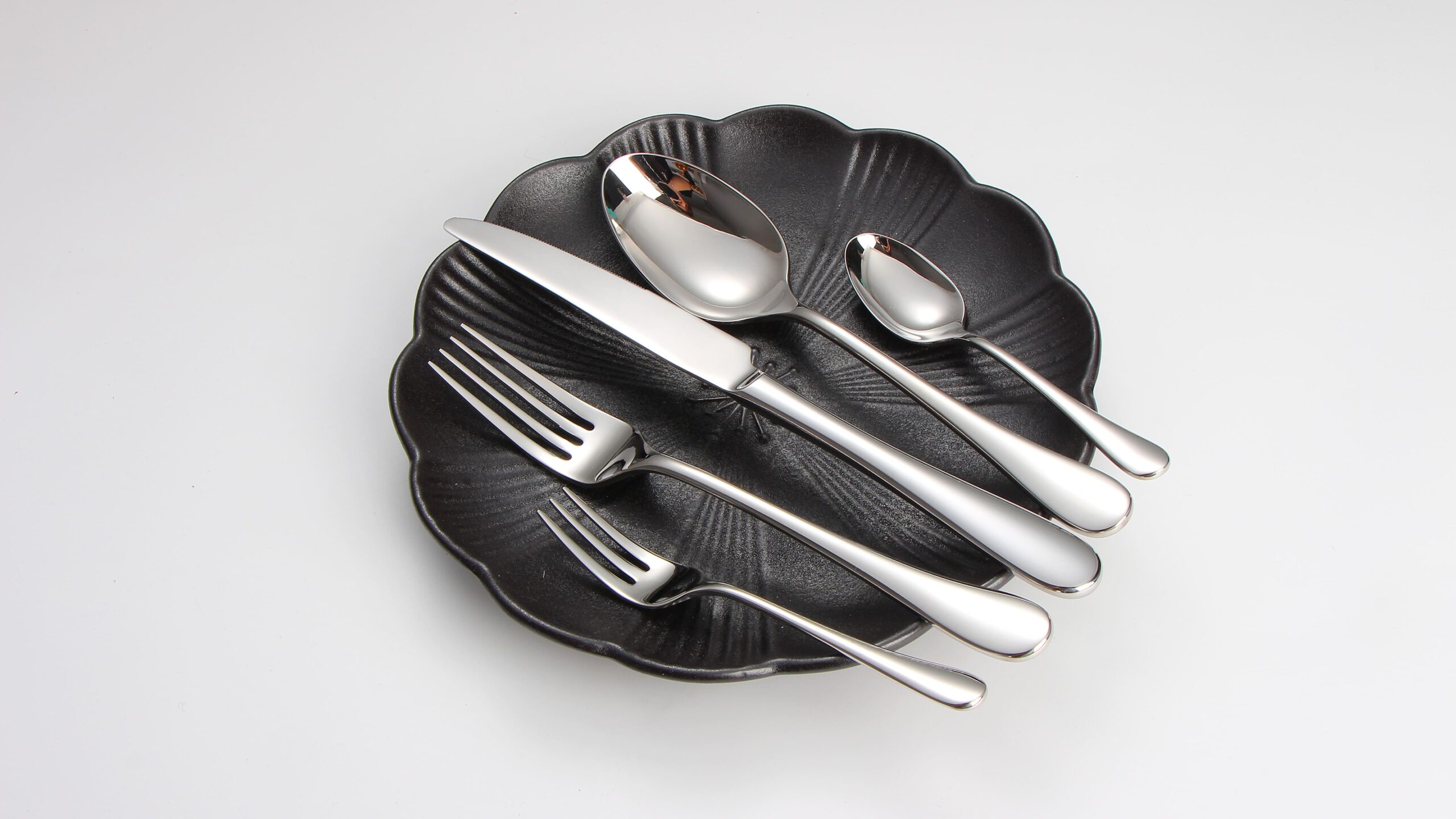
Struggling to tell if a fork is truly high-quality? The secret isn’t in the overall shine, but in a hidden detail that many manufacturers completely overlook.
**Polishing the area “between the tines” is the ultimate quality benchmark because it’s a difficult blind spot. Low-end forks leave rough stamping marks here that trap food and bacteria. Premium forks receive extra, meticulous polishing in this area to ensure perfect hygiene and a truly flawless finish.**
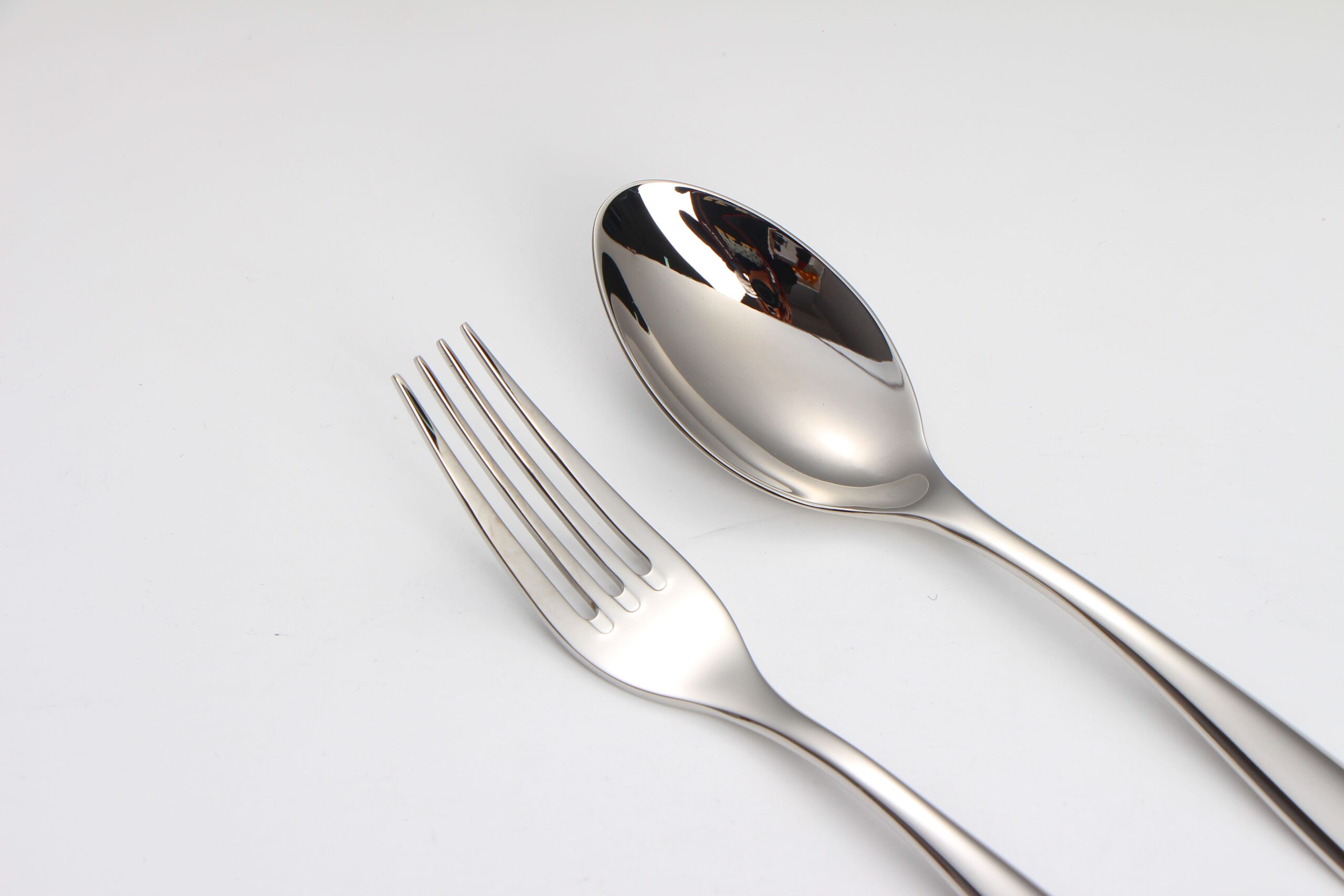
I’ve inspected thousands of forks in my career, and the first place I look is always between the tines. This tiny, hidden surface tells you everything you need to know about a manufacturer’s commitment to quality. It’s a small detail, but it separates the acceptable from the exceptional. Understanding this, and other nuances of polishing, is key to sourcing flatware that truly represents your brand’s standards. Let’s look deeper into what makes a perfect polish.
## What is the Difference Between Machine Polishing and Hand Polishing in High-End Flatware?
Are you trying to decide between machine and hand polishing for your flatware? The wrong choice can result in a finish that looks cheap and feels inconsistent across a batch.
**The key difference is precision. Machine polishing is fast and cost-effective but can create subtle distortions or “wavy” reflections on curved surfaces. Hand polishing offers unparalleled control, achieving a deep, flawless mirror shine that is the hallmark of true luxury flatware.**
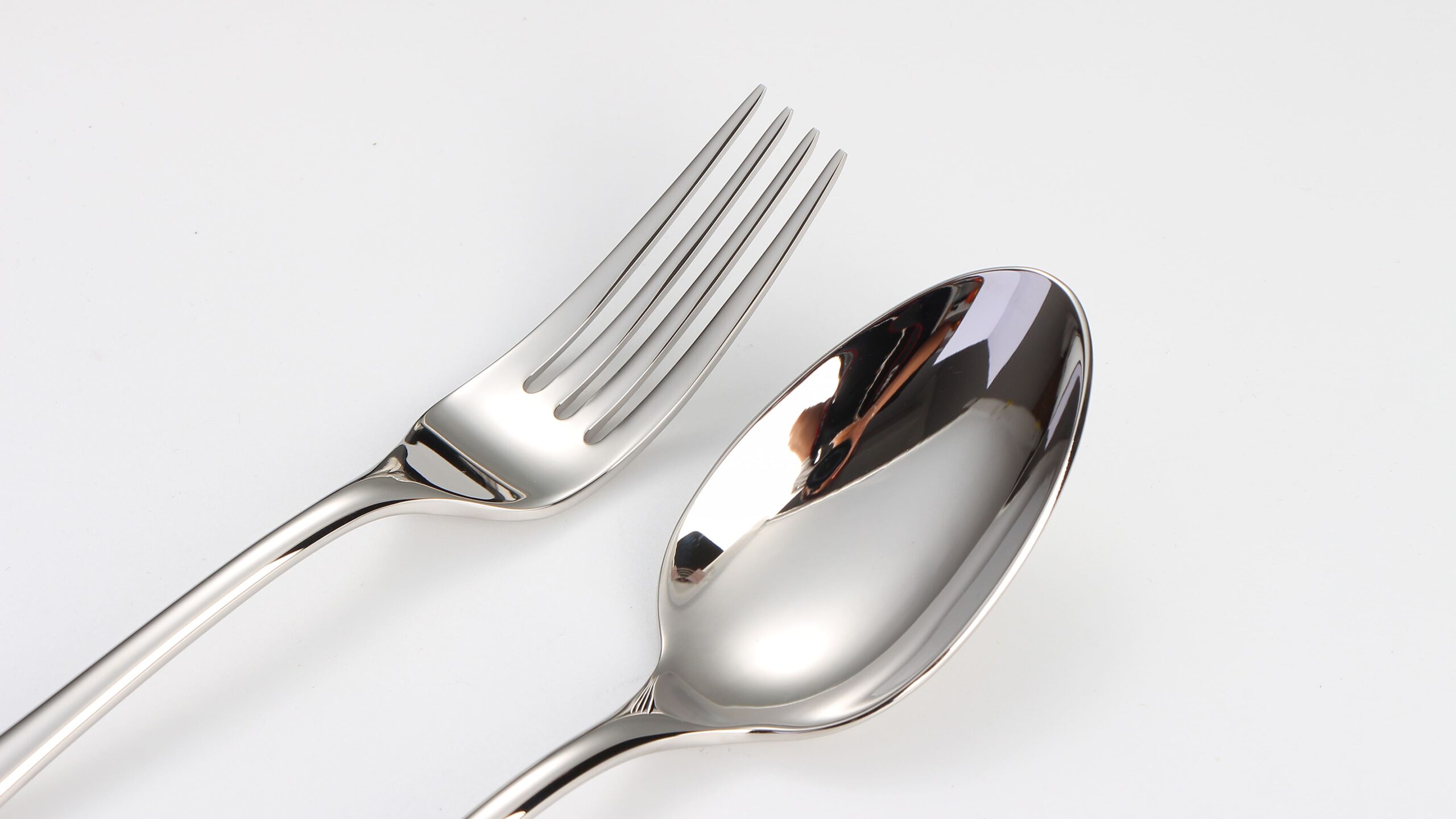
In my experience, the real distinction comes down to what I call “[R-angle precision](https://www.researchgate.net/journal/Machines-2075-1702/publication/324229366_Theoretical_and_Experimental_Studies_of_Over-Polishing_of_Silicon_Carbide_in_Annular_Polishing/links/658155d32468df72d3baafa6/Theoretical-and-Experimental-Studies-of-Over-Polishing-of-Silicon-Carbide-in-Annular-Polishing.pdf?origin=scientificContributions)” and “[light and shadow distortion](https://www.researchgate.net/publication/309382729_Colored_backgrounds_affect_the_attractiveness_of_fresh_produce_but_not_it’s_perceived_color).” A fully automated polishing line is great for high-volume production of standard items. However, on high-end pieces with complex curves, like the neck of a spoon or the handle of a knife, machines can struggle. They can sometimes over-polish edges, a problem we call “over-burning,” or fail to create a perfectly uniform surface, leading to distorted, wavy reflections.
For premium, hotel-grade flatware, a final hand-polishing step, often called “buffing,” is essential. This is where a skilled artisan takes over. They focus specifically on those tricky areas—the neck, the edges, and especially between the fork tines—to eliminate any remaining stress points and bring out a deep, clear luster. This process creates what we aim for: an 8K mirror finish with no fogginess or distortion. It’s this level of manual craftsmanship that builds a protective moat around a high-end brand, justifying its premium price.
| Feature | Machine Polishing | Hand Polishing (Buffing) |
| :— | :— | :— |
| **Best For** | High volume, simple shapes | Premium, complex shapes |
| **Precision** | Good on flat surfaces | Exceptional on all surfaces |
| **Finish Quality** | Can have “wavy” reflections | Flawless, deep 8K mirror |
| **Cost** | Lower | Higher |
| **Risk** | Edge “[over-burning](https://en.wikipedia.org/wiki/Bakelite)” | Dependent on artisan skill |
## How to Detect Hidden Scratches and ‘Pinhole’ Defects in Bulk Polished Spoons?
Are tiny, almost invisible defects like scratches and pinholes compromising your bulk flatware orders? These small flaws can cheapen your product and lead to negative customer feedback.
**To detect these defects, you need specific inspection methods. Use a strong, angled light to reveal fine scratches. For “pinholes,” which are material flaws, close visual inspection is key. Prevention is about process control: a multi-stage polish for pinholes and strict handling protocols for scratches.**
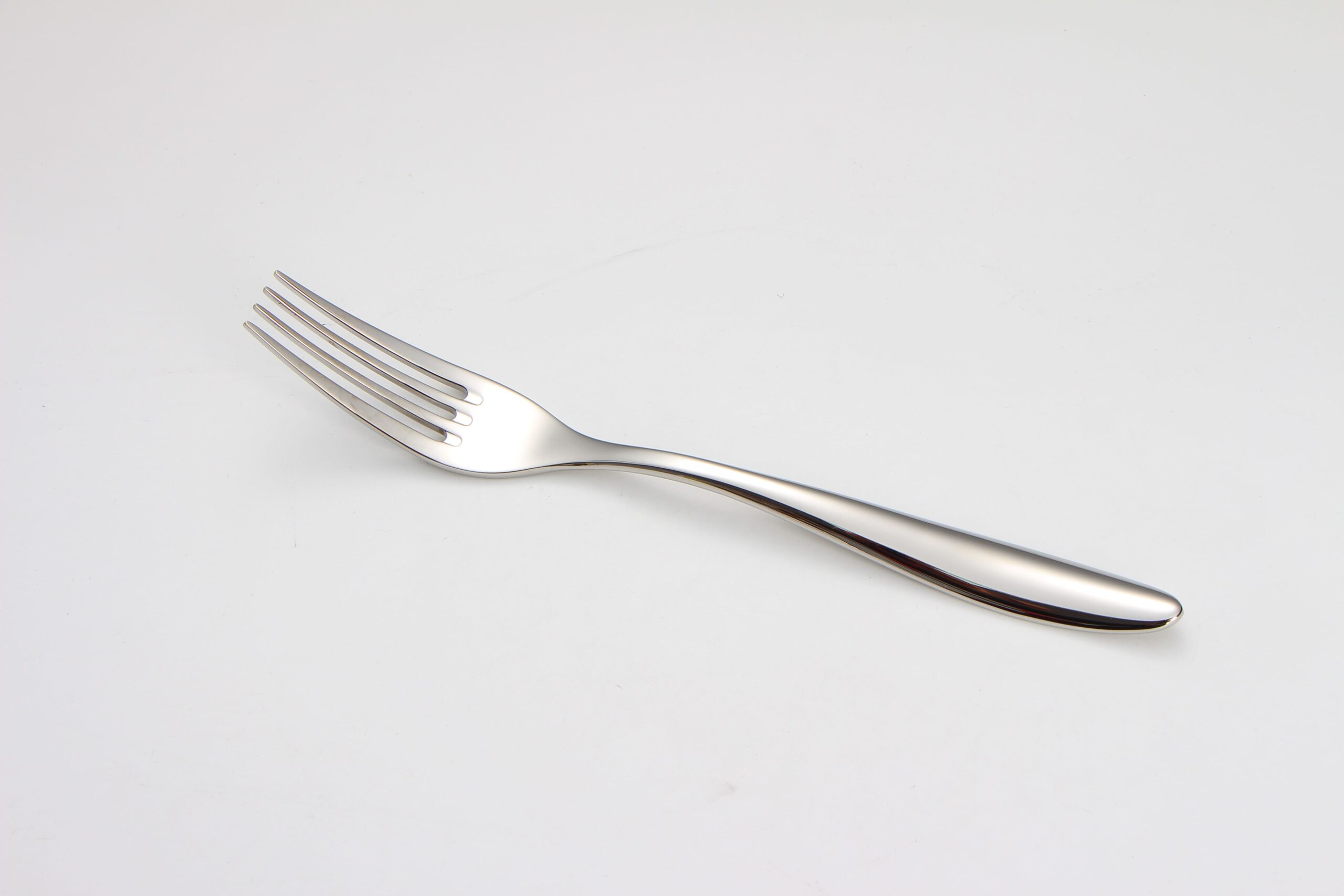
Dealing with these two issues requires different approaches because they have different origins.
### Understanding ‘Pinhole’ Defects
“Pinholes” are not actually from the polishing process itself. They are tiny imperfections in the raw stainless steel. If these aren’t addressed at the very first stage of production—when the initial spoon shape is stamped and formed—they will remain visible no matter how much you polish. The solution I insist on is a thorough initial polishing stage, what we call “skinning,” that involves at least six distinct steps. This process smooths the raw material surface enough to eliminate the vast majority of these inherent flaws before they become a problem.
### Preventing Scratches in Mass Production
Scratches, on the other hand, are almost always caused by handling errors during production. In a large-scale operation, it’s a constant challenge. A spoon can get scratched when it’s moved from the stamping machine to the polishing line, or when pieces rub against each other in a storage bin. The only way to combat this is with [rigid protocols](https://en.wikipedia.org/wiki/Austenitic_stainless_steel). We train our workers to handle each piece carefully, use soft dividers in transport containers, and, most importantly, wear soft cotton gloves during the final inspection and packaging stages. This ensures the perfect finish we worked so hard to create is the one your customer sees.
## Is machine polishing better than hand polishing?
Feeling confused about whether to specify machine or [hand polishing](https://en.wikipedia.org/wiki/Conservation_and_restoration_of_silver_objects) for your next order? Making the wrong decision can directly impact your budget, timeline, and the final quality of your product.
**Neither method is universally “better”; the right choice depends entirely on your product’s market position. Machine polishing is superior for speed and cost-effectiveness on standard items, while [hand polishing](https://en.wikipedia.org/wiki/Conservation_and_restoration_of_silver_objects) is unmatched for achieving the flawless, detailed finish required for a premium brand.**
The question isn’t about which is better, but which is appropriate for the job. I guide my clients through this decision by looking at their specific goals.
### When to Choose Machine Polishing
If you are producing a high-volume line for a mid-range market, like for a large retail chain or airline cutlery, [machine polishing](https://en.wikipedia.org/wiki/Chrome_plating) is the logical choice. The process is fast, highly repeatable, and cost-effective. It delivers a consistent, bright finish that is perfectly acceptable and meets the quality standards for this market segment. The priority here is efficiency and value, and machines deliver that.
### When to Insist on Hand Polishing
If you are developing a premium cutlery line for high-end hotels, fine dining, or a luxury retail brand, then [hand polishing](https://en.wikipedia.org/wiki/Conservation_and_restoration_of_silver_objects) is non-negotiable. The value of these products lies in their perceived perfection. A skilled artisan can achieve a level of detail and a depth of shine that a machine simply cannot replicate. They can perfectly finish every curve and corner, ensuring a flawless product that feels substantial and luxurious in the hand. In many cases, we use a hybrid approach: machines do the heavy lifting in the early stages, and artisans perform the final, critical buffing.
| Factor | Best for Machine Polishing | Best for Hand Polishing |
| :— | :— | :— |
| **Product Tier** | Mid-range, high-volume | Premium, luxury |
| **Primary Goal** | Cost-efficiency, speed | Flawless aesthetics, brand value |
| **Complexity** | Simple, flat designs | Complex curves, intricate details |
| **Outcome** | Good, bright, consistent finish | Exceptional, deep mirror finish |
## Which one is better, hand polishing or electro polishing?
You may have heard about [electropolishing](https://en.wikipedia.org/wiki/Polishing_(metalworking)), but how does it stack up against traditional [hand polishing](https://en.wikipedia.org/wiki/Conservation_and_restoration_of_silver_objects)? Choosing the wrong finishing process can negatively affect both the appearance and long-term durability of your flatware.
**They serve different purposes. Hand polishing is a mechanical process that creates a visually perfect, deep mirror shine. Electropolishing is a chemical process that smooths the surface at a microscopic level, which is excellent for hygiene and corrosion resistance but produces a different kind of luster.**
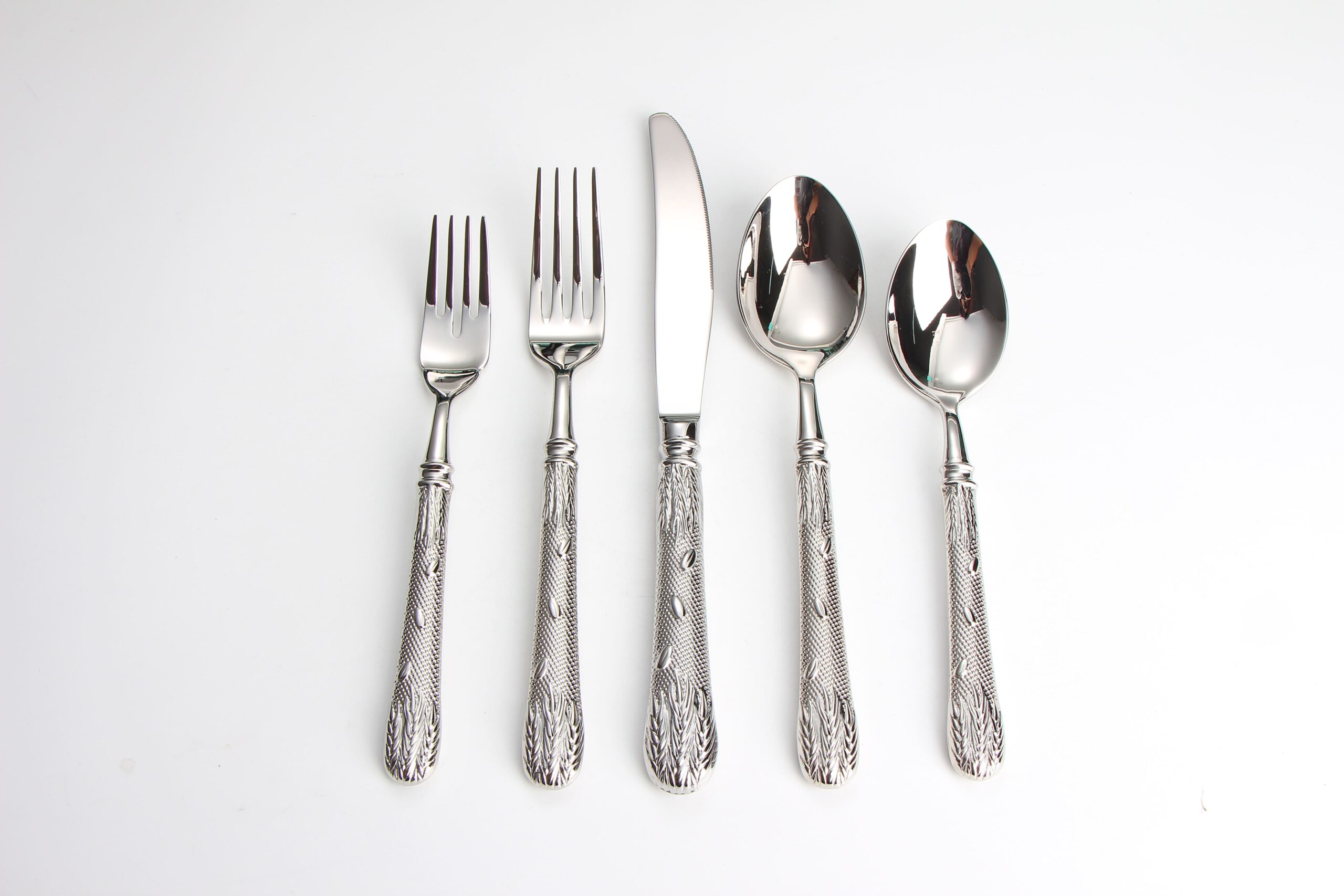
Let’s break down these two very different techniques. As a manufacturer, I’ve used both, and they are not interchangeable.
### The Mechanical Art of Hand Polishing
Hand polishing, or buffing, is a physical process. We use a series of abrasive wheels and compounds to gradually smooth the metal surface. Think of it like sanding wood with finer and finer sandpaper. The goal is to physically remove all scratches and imperfections until the surface is so smooth that it reflects light like a mirror. This method gives us maximum control over the final look, allowing us to create that deep, liquid-like shine that consumers associate with high-end cutlery.
### The Chemical Science of Electropolishing
Electropolishing is a completely different world. The cutlery is submerged in an [electrolyte bath](https://en.wikipedia.org/wiki/Electropolishing) and an electric current is passed through it. This process chemically removes a microscopic outer layer of the metal. It’s fantastic at removing burrs and creating an ultra-clean, passive surface that is more resistant to corrosion. While it makes the metal bright and shiny, the finish is more of a bright, sterile luster rather than a deep, distortion-free mirror. It’s often used for medical instruments or in applications where hygiene is the absolute top priority. For luxury tableware, the aesthetic perfection from [hand polishing](https://en.wikipedia.org/wiki/Conservation_and_restoration_of_silver_objects) is usually preferred.
## What are common polishing mistakes?
Are you concerned that your supplier might be cutting corners on the polishing process? Common mistakes can lead to inconsistent quality, customer returns, and a tarnished brand reputation.
**The most common mistakes are neglecting hard-to-reach areas like between fork tines, over-polishing with machines causing distortion, skipping polishing steps which leaves defects, and careless handling that causes scratches. Avoiding these is what separates average suppliers from expert partners.**
Having been in this business for years, I’ve seen all the shortcuts and the problems they cause. Here are the top mistakes that I ensure we never make.
### Mistake 1: The Forgotten Tines
This is the big one I mentioned at the start. Low-cost manufacturers polish the fork as a whole but ignore the inner surfaces of the tines. This leaves rough, unhygienic edges. We always add a specific manual step to pull a sanding belt through these gaps, ensuring a smooth, safe, and perfectly polished finish.
### Mistake 2: The “Wavy” Machine Finish
Relying 100% on automation for a high-end product is a mistake. Machines can be too aggressive, creating a wavy, distorted reflection on the surface of a spoon. This is a tell-tale sign of a rushed, low-quality job. A final hand-buffing is essential to smooth this out and achieve a true mirror.
### Mistake 3: Skipping Polishing Stages
A great polish isn’t a single action; it’s a process. To save time and money, some factories will jump from a coarse polish straight to a fine one. This leaves behind microscopic scratches and [pinhole defects](https://en.wikipedia.org/wiki/Lead_glass). A proper process involves multiple, gradual steps to ensure the underlying surface is perfect before the final shine is applied.
### Mistake 4: Careless Handling Scratches
A product can be perfectly polished and then ruined in the last 10 feet of the production line. Without strict protocols for handling, inspection, and packaging, pieces will inevitably get scratched. We enforce a “gloves-on” policy during final packaging to prevent this last-minute damage.
## Conclusion
From the hidden surfaces between fork tines to the final buffing process, true flatware quality lies in the details. Partner with an expert to ensure every piece reflects your brand’s excellence.