Struggling to find cutlery that truly helps seniors? This difficulty can lead to lost dignity and frustration. Thoughtfully designed [adaptive flatware](https://en.wikipedia.org/wiki/Assistive_technology)[^1] restores independence and makes mealtimes enjoyable again.
**Designing [adaptive flatware](https://en.wikipedia.org/wiki/Assistive_technology)[^1] for seniors requires a focus on ergonomics, safety, and durability. Key features include weighted, non-symmetrical handles to offset tremors, seamless construction for hygiene, and advanced material treatments to withstand institutional cleaning. This approach ensures user independence and B2B client satisfaction.**
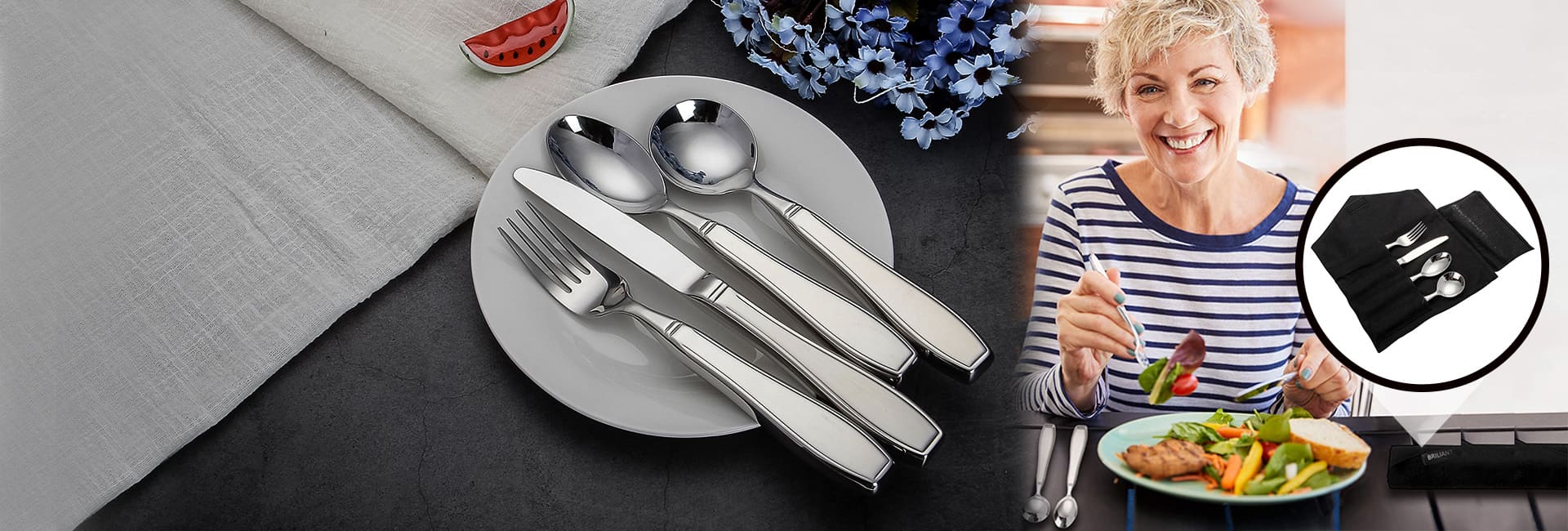
As a manufacturer, we’ve spent years working with healthcare brands and distributors. We see the growing demand for products that don’t just look helpful but are built on real science and engineering. It’s not enough to simply make a handle bigger. The real challenge is in the details that ensure safety, effectiveness, and long-term durability, especially in a professional care environment. We believe that understanding these details is crucial for any business looking to serve the senior care market effectively. Let’s explore what it takes to create truly adaptive cutlery that makes a difference.
## What is [adaptive silverware](https://en.wikipedia.org/wiki/Assistive_technology)[^1]?
Standard cutlery is unusable for many people. This robs them of their dining independence and dignity. Adaptive silverware is specially designed to restore function and make mealtimes easier.
**Adaptive silverware, also known as [adaptive flatware](https://en.wikipedia.org/wiki/Neolithic_in_the_Near_East)[^2], is cutlery specially designed for individuals with physical limitations like tremors, weak grip, or arthritis. It features modifications like weighted handles, ergonomic shapes, or built-up grips to make eating easier and more independent.**
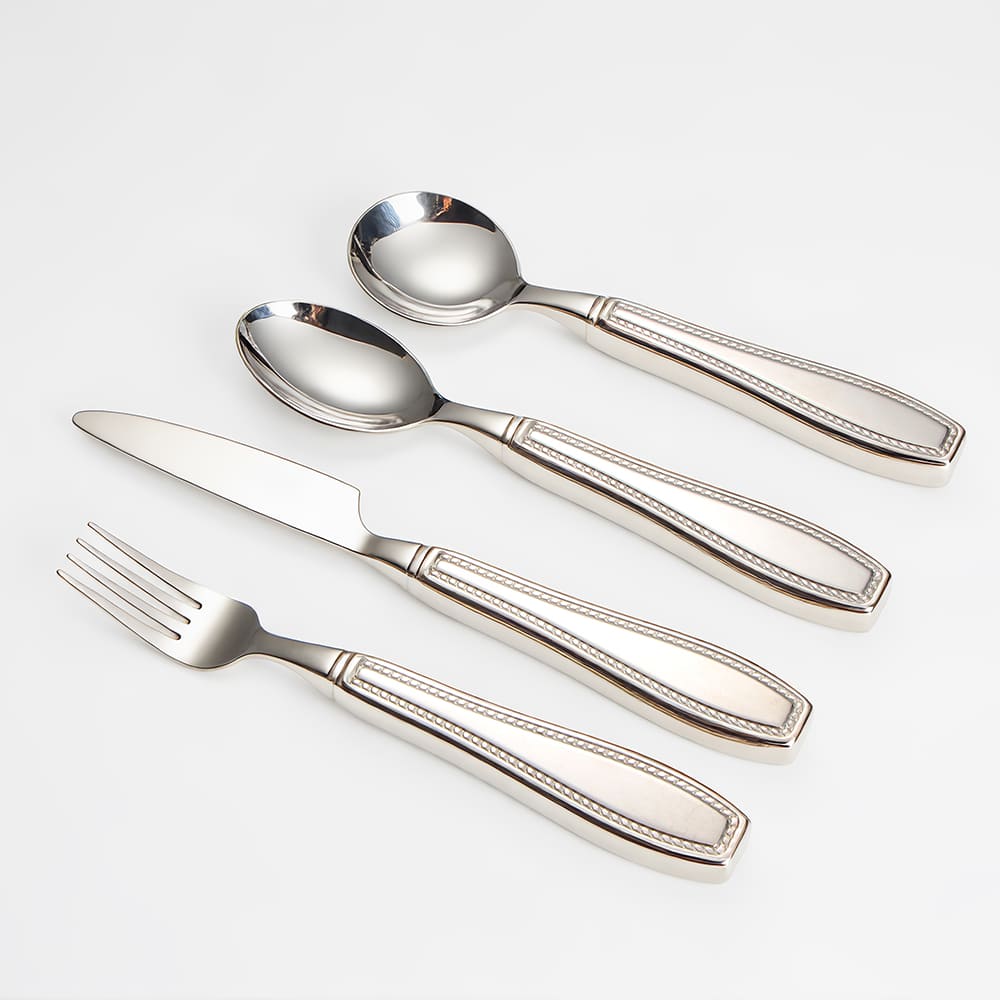
When we talk about [adaptive silverware](https://en.wikipedia.org/wiki/Assistive_technology)[^1], we are looking at a range of solutions for different needs. It’s not a one-size-fits-all category. For a business like yours, understanding the distinctions is key to serving your market effectively. The goal is always to match the right feature to the right user challenge. For example, someone with a weak grip needs a different solution than someone with a hand tremor. We help our clients navigate these choices to develop a product line that truly meets the needs of end-users.
Here’s a simple breakdown of the main types:
| Utensil Type | Primary User Challenge | Key Design Feature |
| :— | :— | :— |
| **Built-Up** | Weak grip, [arthritis](https://en.wikipedia.org/wiki/Hepatitis)[^3] | Large, soft, easy-to-hold handle |
| **Weighted** | Hand tremors (Parkinson’s) | Added weight for stability |
| **Angled** | Limited wrist motion | Bent head on spoon or fork |
| **Coated** | Bite reflex, sensitive teeth | Soft, protective spoon coating |
## What is the adapted cutlery for people with [arthritis](https://en.wikipedia.org/wiki/Hepatitis)[^3]?
Arthritis makes holding thin, standard cutlery handles painful. Every meal becomes a struggle against joint pain. Cutlery with built-up, soft-grip handles provides necessary relief and control.
**For people with arthritis, the best-adapted cutlery features large, soft, non-slip handles. These designs reduce the need for a tight grip, which minimizes stress on painful joints. The main focus is on comfort, ease of holding, and reducing physical strain during meals.**
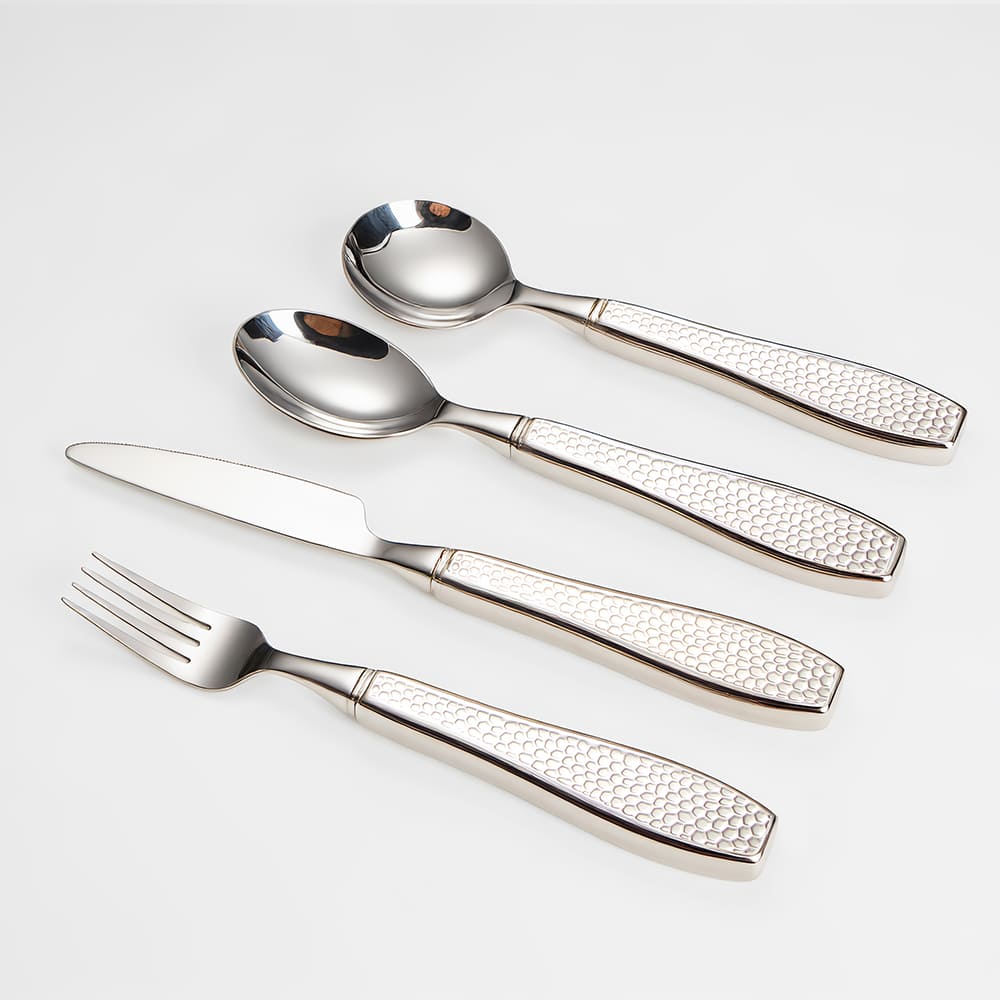
When we develop cutlery for users with arthritis, we go beyond just making the handle bigger. The material and shape are critical. A simple, hard plastic handle can still cause pressure points. We often recommend soft-touch materials like TPE or silicone that provide a secure, comfortable grip without requiring much hand strength. The shape is also important. An oval or contoured handle prevents the utensil from rolling in a weakened hand and fits more naturally in the palm. As an OEM/ODM partner, we guide our clients through these material and design choices. We know that a well-designed product leads to better user outcomes and, for you, a stronger brand reputation. It’s about creating a tool that feels like an extension of the hand, not a burden.
## How to Ensure Safety and Ergonomics in Wholesale Weighted Cutlery for Healthcare?
Healthcare settings need safe, durable cutlery. Poorly made weighted utensils can trap water, harbor bacteria, or break down under harsh cleaning, creating huge risks and liabilities for institutions.
**To ensure safety, use laser seamless welding to completely seal the weighted core, preventing water and bacteria from entering during washing. For durability, use advanced polishing to create a surface that resists harsh, high-temperature sterilization without degrading or releasing heavy metals.**
[](https://youtube.com/shorts/KuTnQiNWmAQ)
*Video: Our automated laser seamless welding process in action.*
This is a non-negotiable for the B2B market, especially for healthcare and senior living facilities. They rely on high-temperature, strong alkaline dishwashers for sanitation. A poorly made product will quickly fail. We saw this problem and engineered the solution. First, we use laser seamless welding to close the handle after the weight is inserted. This creates a perfect, microscopic seal. There are no gaps for water or food particles to get in and breed bacteria. Second, we use an ultrasonic micro-nano polishing process. This isn’t just for shine. It creates a dense, non-porous passivation film on the stainless steel surface. This film protects the metal from blackening or corroding, even after hundreds of cleaning cycles. It also ensures no metallic taste is transferred to the food. This is the core technology that reduces long-term complaints and meets strict standards like LFGB.
| Manufacturing Flaw | B2B Risk | Our Solution |
| :— | :— | :— |
| Seams or Gaps in Handle | Bacterial growth, hygiene violations | Laser Seamless Welding |
| Standard Polish | Corrosion, blackening, metal leeching | Ultrasonic Micro-Nano Polishing |
| Inconsistent Weighting | Poor user performance, complaints | Automated Precision Balancing |
## What are the benefits of weighted cutlery?
Hand tremors make the simple act of eating difficult and messy. This can lead to frustration, embarrassment, and a loss of dignity. Weighted cutlery provides stability, improving control and confidence.
**The main benefit of weighted cutlery is its ability to dampen [hand tremors](https://en.wikipedia.org/wiki/Assistive_eating_devices)[^4], which are common in conditions like Parkinson’s or essential tremor. The added weight gives feedback to the hand, helping to stabilize movements, reduce spills, and increase dining independence.**
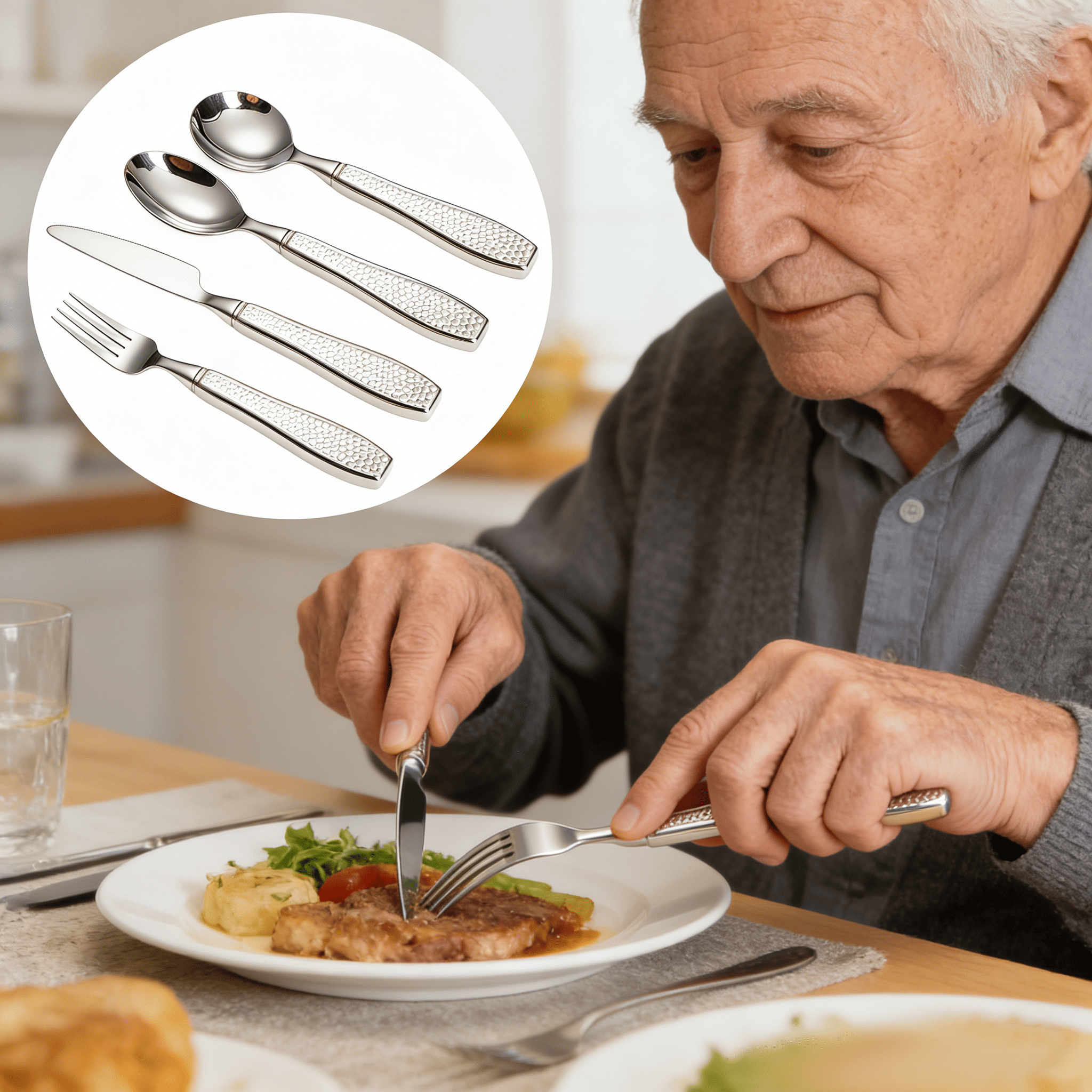
The benefits go beyond the physical act of eating. When someone can feed themselves again, it’s a huge boost to their mental and emotional well-being. It restores a sense of normalcy and independence that may have been lost. For caregivers, it can reduce their workload and stress during mealtimes. From a business perspective, a product that delivers such a profound benefit is powerful. It creates strong customer loyalty and generates positive word-of-mouth. When you are sourcing weighted cutlery for your brand, you need to ensure it actually works. The weight itself, and where it’s placed, must be precise. This is what turns a simple utensil into a life-changing tool. A happy end-user means fewer returns, better reviews, and a more successful product line for you.
## What are [ergonomic utensils](https://en.wikipedia.org/wiki/Ergonomics_for_manual_material_handling)[^5]?
“One size fits all” utensils simply don’t work for everyone. Using them can cause discomfort, strain, and inefficiency, especially for those with physical challenges. Ergonomic utensils are shaped to fix this.
**Ergonomic utensils are designed to fit the user’s hand comfortably and reduce physical strain. They often feature curved handles, specific angles, or textured grips. The goal is to align with the natural posture of the hand and wrist, making eating less work.**
True ergonomic design is more than just a comfortable shape. It’s about physics. One of our core innovations is [Center of Gravity (CG) Offset design](https://www.researchgate.net/figure/CG-measurement-being-made-of-VAS-and-Helmet_fig3_235076934)[^6]. Instead of just adding a thick, uniform handle, we use a specialized asymmetric forging process. This technique allows us to shift the solid stainless steel’s center of gravity, moving it toward the palm’s main pressure point. This uses the principle of leverage to help counteract [hand tremors](https://en.wikipedia.org/wiki/Assistive_eating_devices)[^4]. The utensil feels more balanced and easier to control because it works with the user’s hand, not against it. This is a hard-core technology that separates professional-grade [adaptive flatware](https://en.wikipedia.org/wiki/Neolithic_in_the_Near_East)[^2] from simple, bulky alternatives. It’s this deep engineering that makes a product truly effective and reduces long-term complaints from your B2B customers.
## How do weighted utensils work?
It seems strange to add weight to a utensil to help someone with a weak or shaky hand. Many buyers and users don’t understand the science. The weight provides a stabilizing force against tremors.
**Weighted utensils work by using the principle of inertia. The added mass requires more force to move, which helps to counteract and dampen the small, involuntary movements of a hand tremor. This gives the user more control over the utensil’s path to their mouth.**
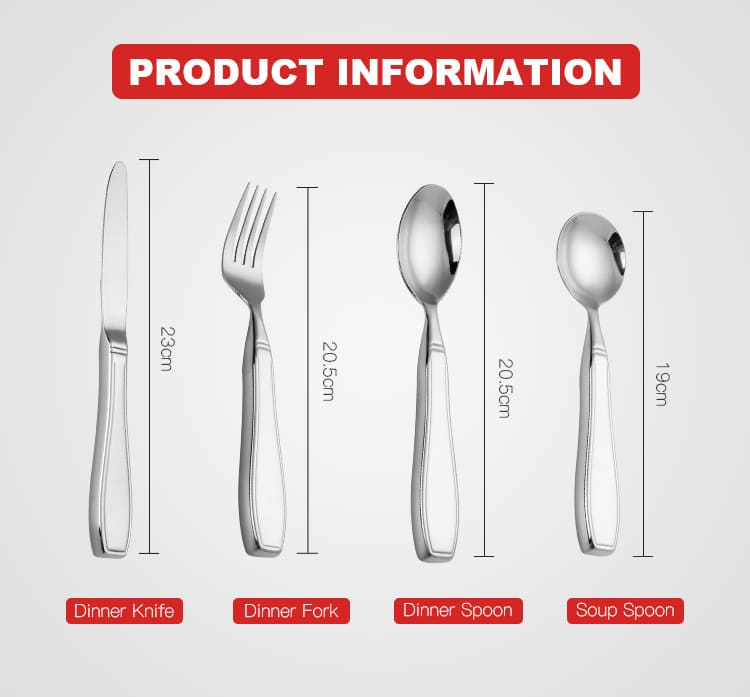
We take this principle a step further with our Center of Gravity (CG) design. It’s not just about adding weight; it’s about where you put it. We use a rear-weighted design that shifts the CG back into the user’s palm. This creates a physical leverage effect that actively cancels out much of the tremor’s force. Think of it like a seesaw. By putting the weight in the right spot, we can stabilize the other end. This is far more effective than just making a handle heavy. This is the technical core of our medical-grade weighted cutlery.
| Design Approach | How it Works | User Experience |
| :— | :— | :— |
| **Simple Heavy Handle** | General inertia. | Feels clumsy and heavy. |
| **CG-Offset Design** | Strategic leverage and inertia. | Feels balanced and stable. |
This advanced approach is what makes our products reliable and effective, directly addressing the core problem for the user. For our B2B clients, this means they are buying a product based on sound physics, not guesswork.
## Are weighted utensils good for Parkinson’s?
Finding effective, non-medicinal aids for people with Parkinson’s is a top priority. Many products make big promises but fail to deliver, causing disappointment. Weighted utensils are a proven, effective tool.
**Yes, weighted utensils are highly beneficial for many people with [Parkinson’s disease](https://en.wikipedia.org/wiki/List_of_In_Living_Color_sketches)[^7]. The added weight helps to significantly reduce action tremors, allowing for steadier hand movements. This can make self-feeding possible again, greatly improving quality of life and independence.**
We have extensive experience in this area. I remember one client who was stuck. They had a great brand but relied on manual, workshop-style production. Their capacity was low, quality was inconsistent, and they couldn’t take on large orders. They were missing out on huge opportunities. We partnered with them to overhaul their production. We replaced their old methods with our industrial-grade automated production line. This guaranteed 100% consistency in the two most critical areas: the airtight seal and the precise center of gravity. Production capacity grew exponentially. They could now reliably deliver container-level orders every month, all meeting medical-grade safety standards. The result? Their sales exploded by 1400%. They quickly secured large contracts with Amazon and global healthcare distributors. This story shows that to go from a small player to a global leader, you need both technology and scalable production. We provide that power.
## Conclusion
Designing truly effective [adaptive flatware](https://en.wikipedia.org/wiki/Neolithic_in_the_Near_East)[^2] requires deep engineering, not just simple changes. We provide the manufacturing power and technical expertise to help your brand succeed in this demanding market.