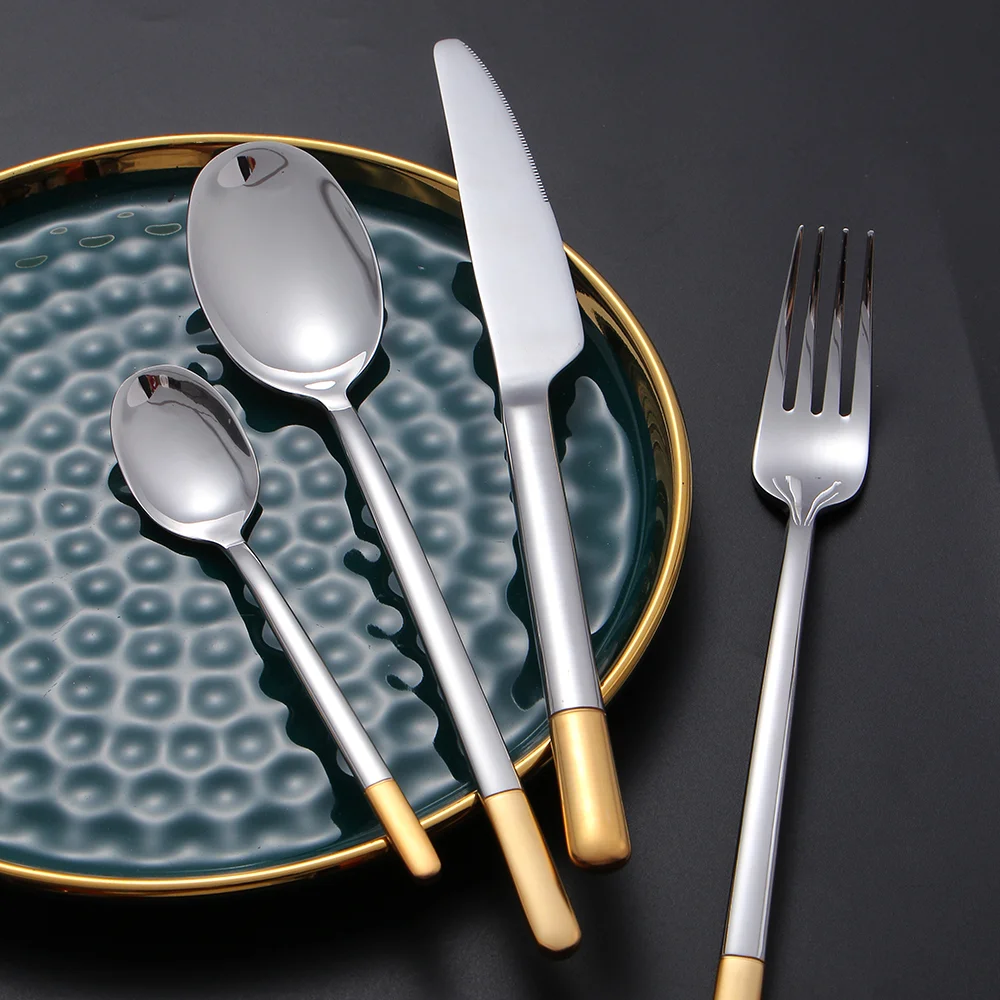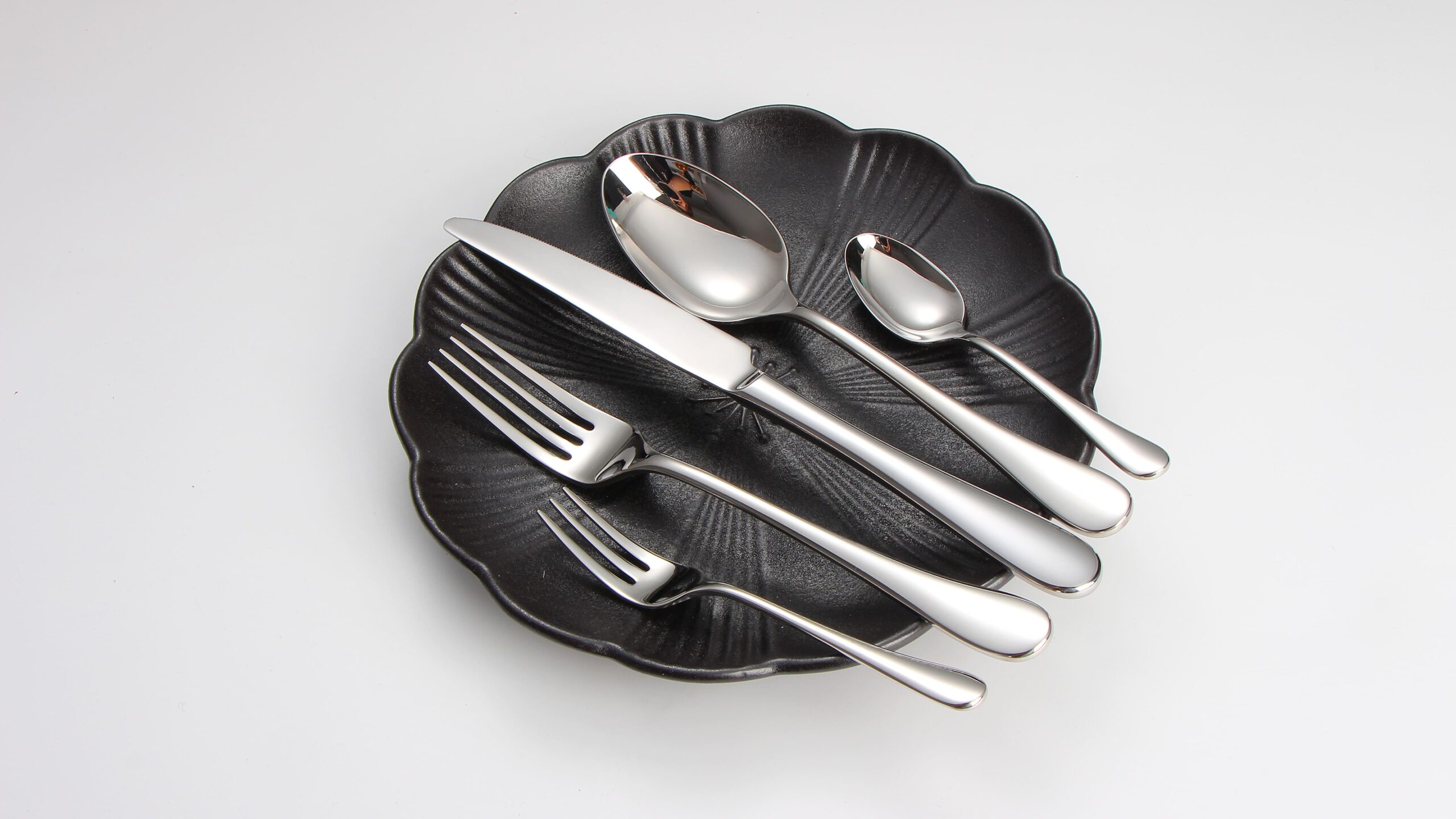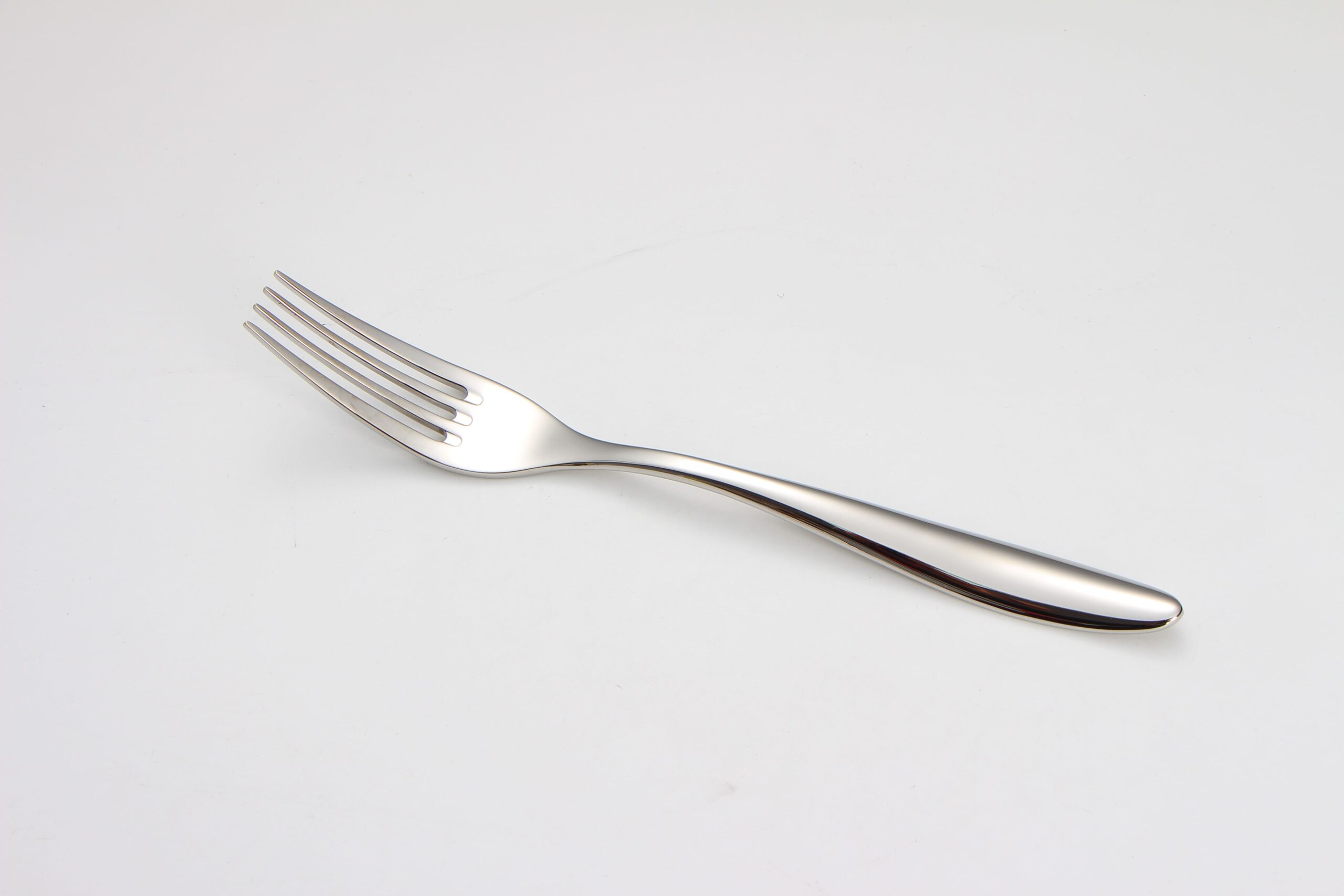
Tired of cutlery that rusts, bends, or loses its shine? Your hotel’s reputation rests on details, and choosing the right flatware is a critical, long-term investment.
**High-end hotels mandate [18/10 stainless steel](https://en.wikipedia.org/wiki/Stainless_steel)[^1] for its superior long-term performance. The “18/10” signifies 18% chromium for rust resistance and 10% nickel for a brilliant shine and enhanced durability. This composition ensures longevity, guest safety, a premium feel, and lower maintenance costs over time.**

As a manufacturer, I’ve seen many procurement managers focus only on the initial price. But the real cost of cutlery isn’t just the purchase price; it’s the total cost of ownership. This includes [replacement frequency](https://en.wikipedia.org/wiki/2009_Icelandic_financial_crisis_protests)[^2], maintenance labor, and even the impact on your guest’s dining experience. A decision that seems cost-effective today can lead to spiraling expenses and negative reviews tomorrow. Let’s break down the technical details that separate truly premium hotel cutlery from the rest, so you can make a decision that benefits your bottom line for years to come.
## Why Does Your “18/10” Hotel Cutlery Still Develop Rust Spots in Industrial Washers?
Seeing rust on your expensive 18/10 cutlery is frustrating. You invested in quality, yet spots appear, making you question the material. This issue can tarnish your brand’s image.
**Stainless steel is rust-resistant, not rust-proof. The spots are often surface contamination, not a material flaw. Common causes in industrial washers include harsh detergent residue, contact with iron particles from other items, hard water mineral deposits, or improper drying, leading to surface oxidation.**
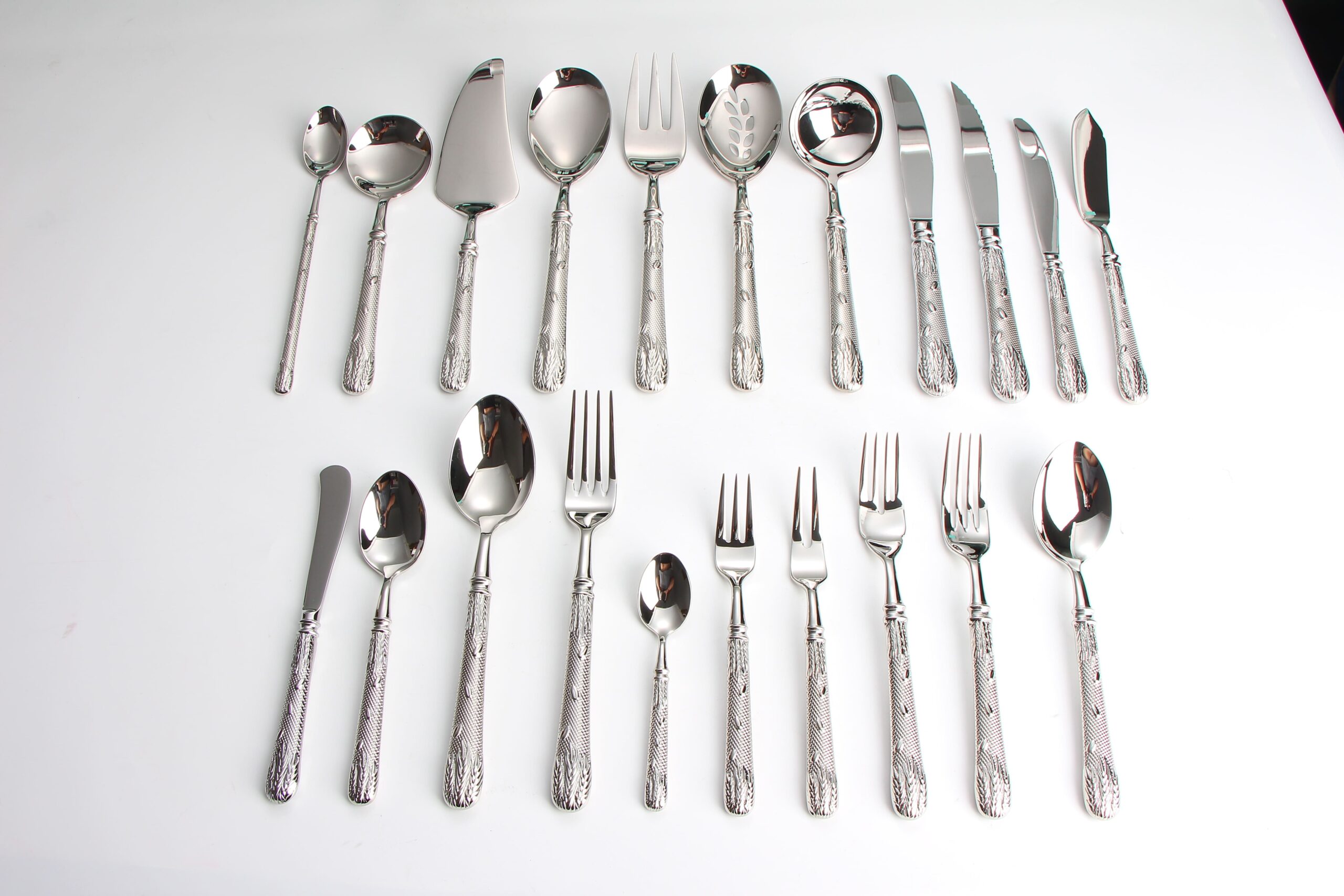
In my experience working with hotel clients, this is a common but misunderstood problem. The high-volume, high-temperature environment of an industrial dishwasher is tough on everything. While [18/10 stainless steel](https://en.wikipedia.org/wiki/Stainless_steel)[^1] has a protective passive layer of chromium oxide, this layer can be compromised. Let’s look at the specific culprits and how to manage them.
| Cause | Technical Explanation | Solution |
| :— | :— | :— |
| **Chemical Residue** | Highly concentrated or chlorinated detergents can be too aggressive, chemically attacking the steel’s passive layer and causing pitting or spotting. | Use manufacturer-recommended detergent concentrations. Implement a final clear water rinse cycle. |
| **Iron Contamination** | Washing steel cutlery with items like old baking pans or cheap kitchen tools can cause tiny iron particles to transfer and rust on the cutlery’s surface ([galvanic corrosion](https://en.wikipedia.org/wiki/Stainless_steel)[^3]). | Wash cutlery in separate, dedicated racks. Avoid mixing different types of metals in the same wash cycle. |
| **Hard Water Deposits** | Minerals like calcium and magnesium in hard water can bake onto the surface during the heat-dry cycle, creating spots that can trap moisture and lead to corrosion. | Use a [water softener](https://en.wikipedia.org/wiki/Dishwasher)[^4] for your dishwasher. Ensure a rinse aid is used to help water sheet off the cutlery. |
| **Moisture** | Leaving cutlery wet for extended periods, especially in a humid, closed environment, prevents the [chromium oxide layer](https://en.wikipedia.org/wiki/Stainless_steel)[^5] from self-healing and invites oxidation. | Ensure the dishwasher’s drying cycle is functioning correctly. If needed, towel-dry cutlery immediately after washing. |
By understanding that these rust spots are usually a process issue, not a product failure, your team can adjust its washing procedures to keep your 18/10 cutlery looking perfect.
## How Can You Maintain That 5-Star Mirror Shine and Avoid Water Spots?
A beautifully set table is ruined by dull, spotty cutlery. Water spots make premium flatware look cheap and unhygienic, forcing staff to spend extra time hand-polishing each piece.
**Water spots are mineral deposits (calcium and magnesium) left behind after water evaporates. To maintain a mirror shine, you must tackle the problem at its source: use softened water for washing and ensure cutlery is dried quickly and completely, leaving no time for mineral residue to form.**
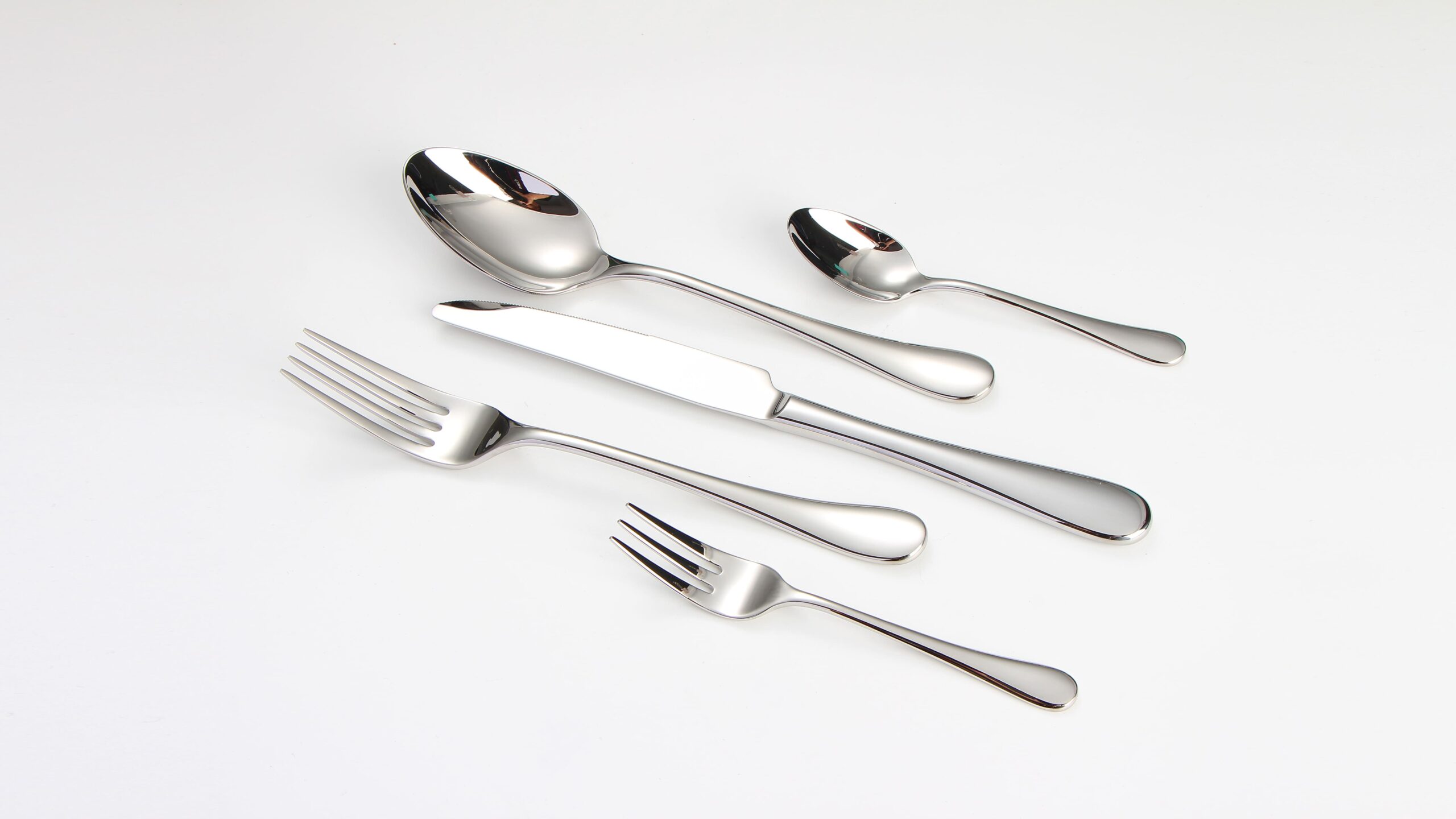
The “mirror shine” on high-end cutlery, especially pieces with a PVD coating or a high-polish finish, is a key part of the luxury dining experience. As a manufacturer, we put a lot of effort into achieving that finish. Preserving it is all about controlling the final stage of the washing process. The enemy here isn’t dirt; it’s the water itself. When a droplet of hard water sits on a fork and evaporates, it leaves behind a tiny, crystalline circle of calcium and magnesium. That’s your water spot. Multiply that by thousands of pieces a day, and you have a major operational headache. The solution is a two-step process that hotels I work with have found highly effective. First, address the water chemistry. Second, eliminate drying time. This combination prevents the mineral deposits from ever forming, saving countless hours of manual labor and ensuring every piece meets 5-star standards.
## Forged vs. Stamped Cutlery: Which One Truly Lowers Replacement Costs for 5-Star Hotels?
You’re constantly replacing bent forks and snapped spoons. Stamped cutlery seems cheaper upfront, but the high replacement rate is killing your budget and creating service inconsistencies.
**Forged cutlery delivers a much lower total cost of ownership. Stamping creates micro-stresses that fail under industrial washing, while forging realigns the metal’s grain flow, making it denser and far more durable. This dramatically reduces long-term replacement costs, justifying the higher initial investment.**
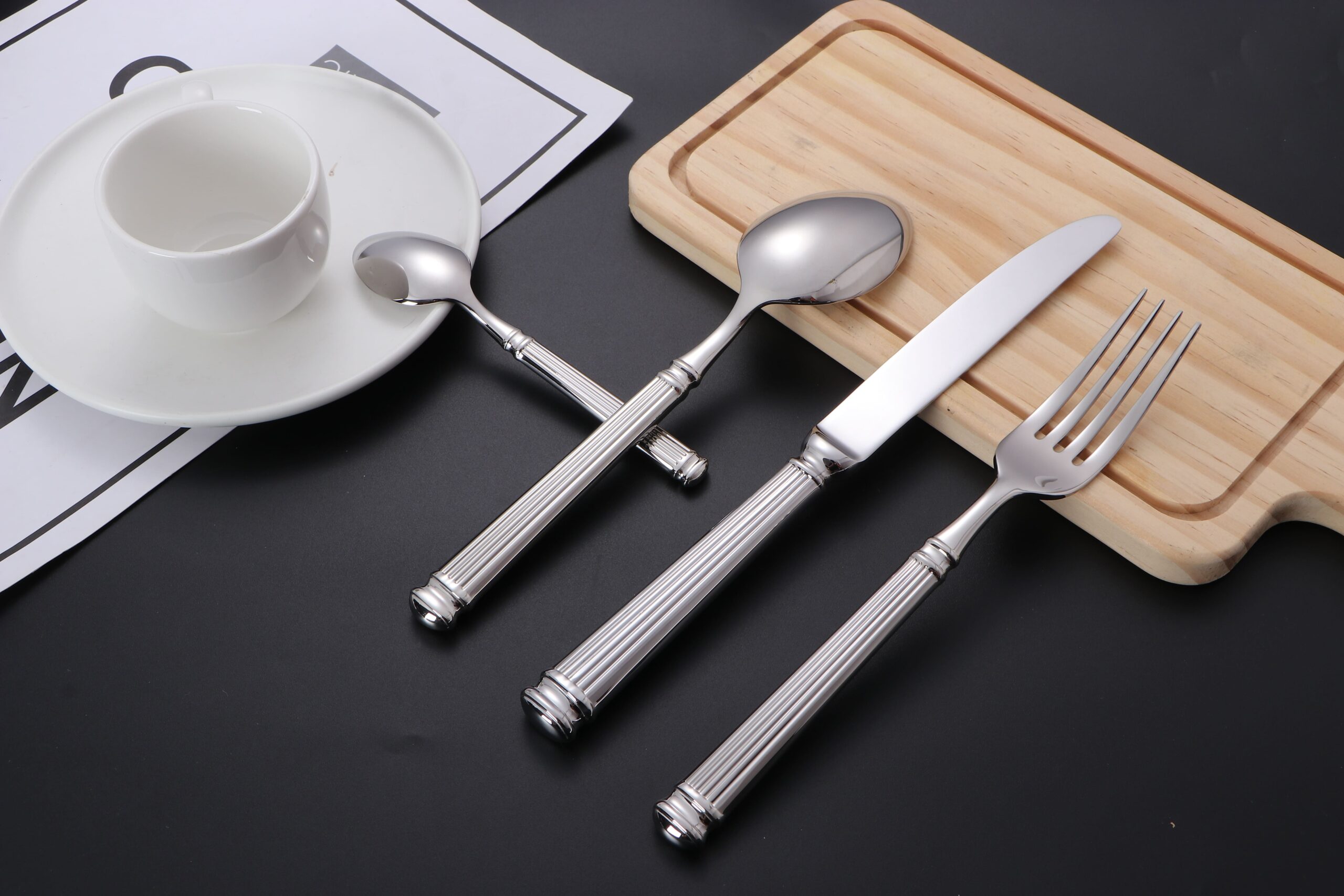
When I talk to procurement managers, the forged vs. stamped debate is always a hot topic. The cost difference is obvious, but the performance difference is where the real ROI is hidden. A stamped piece is essentially “punched out” from a sheet of steel. This process is fast and cheap, but it shears the metal’s internal structure, or “grain flow.” It leaves microscopic stress points, especially at the thinnest part of the cutlery—the neck. In a hotel’s high-temperature dishwasher, these stress points are where corrosion and fractures begin.
Forging, on the other hand, is about reshaping, not cutting. We take a heated rod of steel and hammer it into shape. This process forces the metal’s molecules to align and become denser, especially at the neck. The [grain flow](https://en.wikipedia.org/wiki/Forging)[^6] follows the contour of the piece, creating a continuous, unbroken internal structure. This is why a forged fork is so much harder to bend than a stamped one. For a 5-star hotel, this means fewer replacements. Based on data from our long-term clients, switching to forged cutlery can lower annual breakage and loss rates by over 40%. The upfront cost is higher, but it’s an investment that pays for itself.
## Is “Heavier” Always Better When Sourcing Hotel Cutlery?
Many buyers believe heavier cutlery equals higher quality. This leads them to source overly heavy pieces, unknowingly increasing shipping costs and operational burdens without a real return on investment.
**No, “Dynamic Balance” is far more important than raw gram weight. Excessive weight adds hidden costs. The best ROI comes from forged cutlery with smart thickness distribution—a [reinforced neck](https://en.wikipedia.org/wiki/The_Dorchester)[^7] for durability and a balanced head for a superior guest feel. This design optimizes both quality perception and durability.**
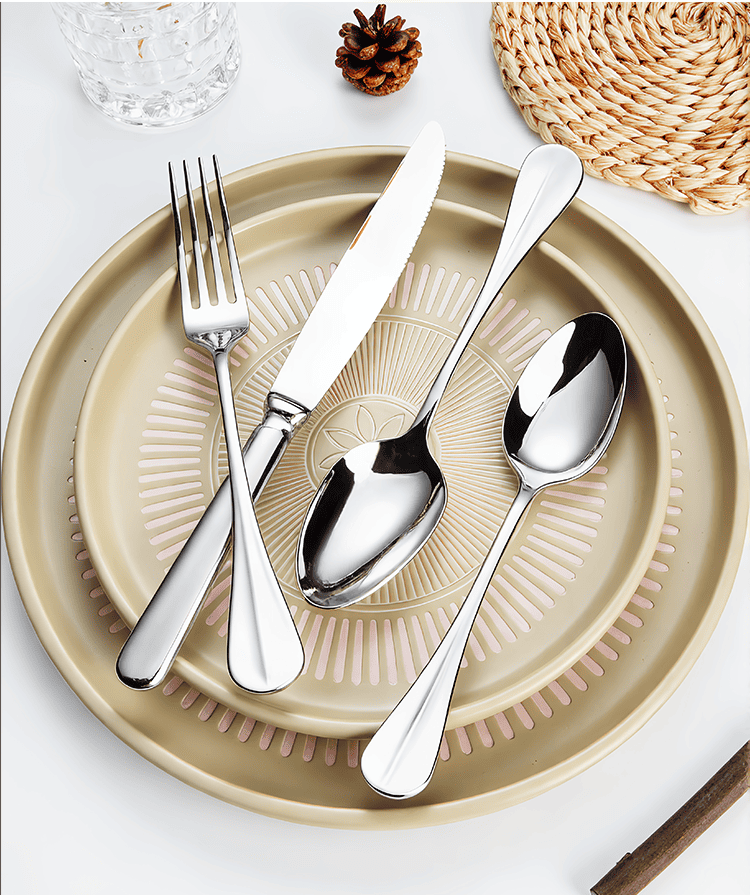
There’s a persistent myth in B2B sourcing that “weight equals quality.” I’ve had clients request extreme gram weights, thinking it guarantees a premium product. But this is a misunderstanding of what makes cutlery great. Blindly increasing weight leads to significant hidden costs in logistics, shipping, and even the energy used to wash and handle the heavier items. The real secret to premium cutlery is not weight, but its distribution. We call this “Dynamic Balance.”
Through the forging process, we can strategically control the thickness. We add mass to the neck, the piece’s primary stress point, to make it incredibly resistant to bending. At the same time, we can keep the handle and head (the tines of the fork or the bowl of the spoon) perfectly balanced. This not only feels more sophisticated and comfortable in the guest’s hand but also enhances durability where it matters most. This intelligent design approach, focusing on balance over brute weight, can reduce breakage rates by around 25% while simultaneously elevating the perceived value. It’s about working smarter, not heavier, to achieve the best possible return on investment.
## Conclusion
Choosing the right cutlery is an investment in durability, guest experience, and your brand’s reputation. Focus on material, construction, and balance—not just the initial price—for the best long-term value.