Sourcing children’s flatware is risky. Sharp edges can lead to recalls and harm your brand. Strict edge-rounding standards are the solution to ensure product safety and compliance.
**The critical edge-rounding standard for OEM children’s flatware is an [R-angle of ≥0.5mm](https://www.researchgate.net/publication/227856661_The_influence_of_maxillary_central_incisor_height-to-width_ratio_on_perceived_smile_aesthetics), as required by the [EN 14372 standard](https://www.researchgate.net/publication/331410191_Screening_analysis_of_RoHS_directive_hazardous_substances_phthalate_esters_and_bromodiphenyl_ethers_by_novel_mass_spectrometry_using_soft_ionization). This ensures all edges and points are thoroughly blunted, preventing any risk of cuts or injuries and guaranteeing product safety for young users.**
This R-angle is just the beginning. As a manufacturer, I’ve seen how true safety in children’s cutlery involves a combination of design, materials, and rigorous testing. These details not only protect children but also safeguard your business from costly recalls and brand damage. Let’s explore the key features that you, as a buyer, must look for.
## What Key Safety Features Should You Look for When Sourcing Stainless Steel Baby Spoons in Bulk?
Bulk orders of baby spoons carry huge risks. A single defect can lead to massive recalls. You need to focus on physical blunting, structural integrity, and chemical safety.
**When sourcing in bulk, prioritize physical blunting with an R-angle over 0.5mm and handles that pass a 90N pull test to prevent choking. Also, ensure strict compliance with nickel and manganese migration limits. These features are non-negotiable to avoid costly export returns.**
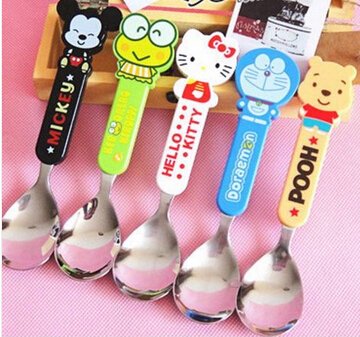
For B2B buyers, especially those sourcing large volumes, overlooking these details is not an option. A product recall can wipe out profits and damage your market reputation for years. We build our production process around three core pillars of safety to mitigate these risks for our clients.
### Physical Safety: Beyond a Smooth Feel
A “smooth” edge is not enough. We use a process called centrifugal finishing to guarantee that every edge R-angle is precisely controlled to be above 0.5mm. This removes any potential for burrs, even at a microscopic level. It’s a measurable standard, not a subjective feeling.
### Structural Integrity: The 90N Pull Test
Many children’s spoons have plastic or decorative handle components. If these detach, they become a serious choking hazard. That’s why every batch we produce must pass a 90N pull test. This test ensures that the handle and any decorative parts can withstand more than enough force, preventing detachment during use.
### Chemical Safety: The Invisible Threat
The stainless steel itself must be safe. For bulk exports, this means locking down the migration limits for nickel (Ni) and manganese (Mn). This is a red line. Failing this test leads to immediate rejection in markets like the EU and US.
| Feature | Standard Approach | Our Enhanced Method |
| :— | :— | :— |
| **Edge Finish** | Basic tumbling/polishing | Centrifugal finishing (R-angle >0.5mm) |
| **Handle Strength** | Visual inspection | Mandatory [90N pull test](https://www.gestertester.com/why-button-pull-test-is-important_n101) |
| **Material Safety** | Basic material certificate | Strict Ni/Mn migration testing |
## When Should Toddlers Start Using Cutlery?
Designing cutlery without understanding child development can lead to products that are difficult or unsafe. You may wonder when toddlers are ready, so you can source designs that match them.
**Toddlers typically show interest in using cutlery between 12 and 18 months as their fine motor skills and pincer grasp develop. Sourcing age-appropriate designs with short, wide handles is crucial for their safety and success, making mealtime a positive learning experience.**
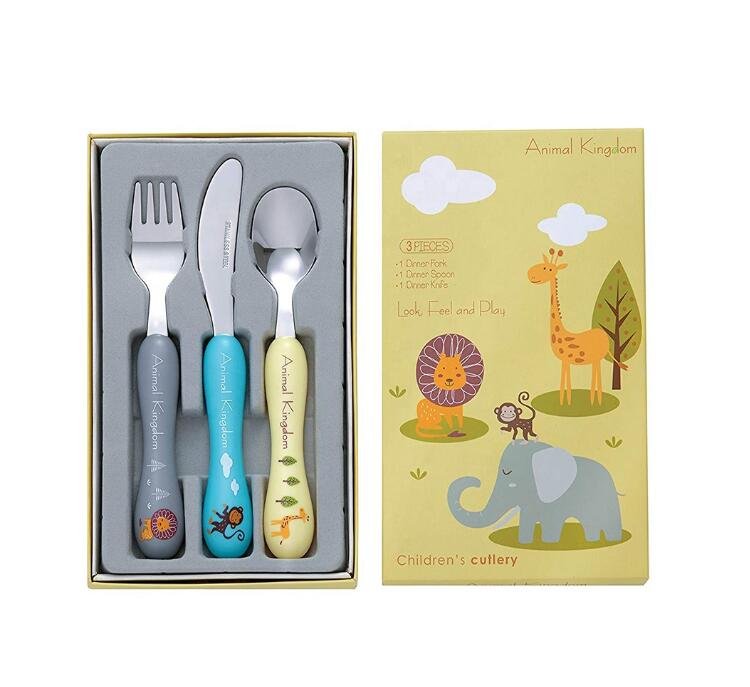
From a manufacturing perspective, “age-appropriate” translates directly into specific design and production choices. The transition from finger feeding to using utensils is a major developmental milestone. The right cutlery can either help or hinder this process. I always advise my clients to consider the specific age group they are targeting, as this influences everything from mold design to material choice.
### Matching Design to Developmental Stages
Between 12-18 months, a toddler develops the “[pincer grasp](https://en.wikipedia.org/wiki/Wikipedia:Reference_desk/Archives/July_2004),” allowing them to hold an object between their thumb and forefinger. However, their wrist control is still limited. This is why long, thin spoons are frustrating and ineffective. They need short, stout handles that they can grip with their whole fist. As they move towards 24 months, their coordination improves, but the need for a stable, easy-to-hold utensil remains.
### Manufacturing for Toddler Hands
Creating cutlery for toddlers means investing in specific molds. The handles must be wider and shorter than standard cutlery. This might seem like a small change, but it requires entirely different tooling. A good manufacturer understands this and can provide guidance on designs that are not only safe but also developmentally appropriate.
| Age Group | Key Motor Skill | Recommended Cutlery Feature |
| :— | :— | :— |
| **12-18 Months** | Pincer grasp, whole-hand grip | Short, wide, non-slip handle |
| **18-24 Months** | Developing wrist rotation | Spoon with a slightly deeper bowl |
| **2-3 Years** | Improved coordination | Fork with blunted but functional tines |
## Why Is Ergonomic Handle Design Crucial for Children’s Cutlery Safety and Brand Reputation?
A poorly designed handle is not just awkward; it is a safety hazard that can damage your brand. You worry that a simple flaw could lead to injuries and lost customer trust.
**Ergonomic handles are crucial because they prevent the utensil from rotating in a child’s weak grip, which can cause injury. We use an “anti-self-rotation” design. This structural safety feature builds brand authority, justifies a premium price, and protects your reputation.**

I’ve worked with many brands, and the ones that succeed in the premium children’s market are those that understand that ergonomics is a safety feature. It’s about more than just comfort. For a child learning to eat, a stable and predictable tool is essential. We have invested heavily in R&D to solve this specific problem.
### The Physics of a Child’s Grip: “Anti-Self-Rotation”
A young child’s grip is not strong or stable. A standard round handle can easily spin or flip, causing the spoon to spill or, worse, the fork to poke their mouth. Our solution is an **asymmetric, wide handle**. By carefully designing the shape based on the grip patterns of 3-6 year olds, we create a handle that resists this “self-rotation” torque. It naturally stays in the correct orientation in their hand.
### A Real-World Example: Solving the Peeling Print Problem
A German client of ours was struggling. The cute patterns on their stainless steel children’s cutlery were peeling and scratching off, leading to customer complaints. This is a common industry problem. After eight months of intensive R&D, we developed a [high-temperature sublimation transfer process](https://en.wikipedia.org/wiki/Wikipedia:Vital_articles/data/S.json) using Korean decal technology. The patterns are now deeply fused into the handle. They survive violent scraping with a knife and over 200 dishwasher cycles without fading. This solution, which combines ergonomic safety with industrial-grade durability, helped our client dominate the premium gift and children’s cutlery market in their region.
## What Are the Sharpness Standards for Exporting Children’s Cutlery to the US?
Exporting to the US is complex. A CPSC recall can destroy your product line and your partnership. You are likely unsure about the specific sharpness tests required for compliance.
**For US exports, children’s cutlery must pass the physical safety tests under [16 CFR 1500.48/49](https://www.ecfr.gov/current/title-16/chapter-II/subchapter-C/part-1500/section-1500.49), which regulate sharp points and edges. We achieve this by controlling fork tine R-angles to over 0.5mm and using testers to ensure no micro-burrs, guaranteeing CPSC compliance.**
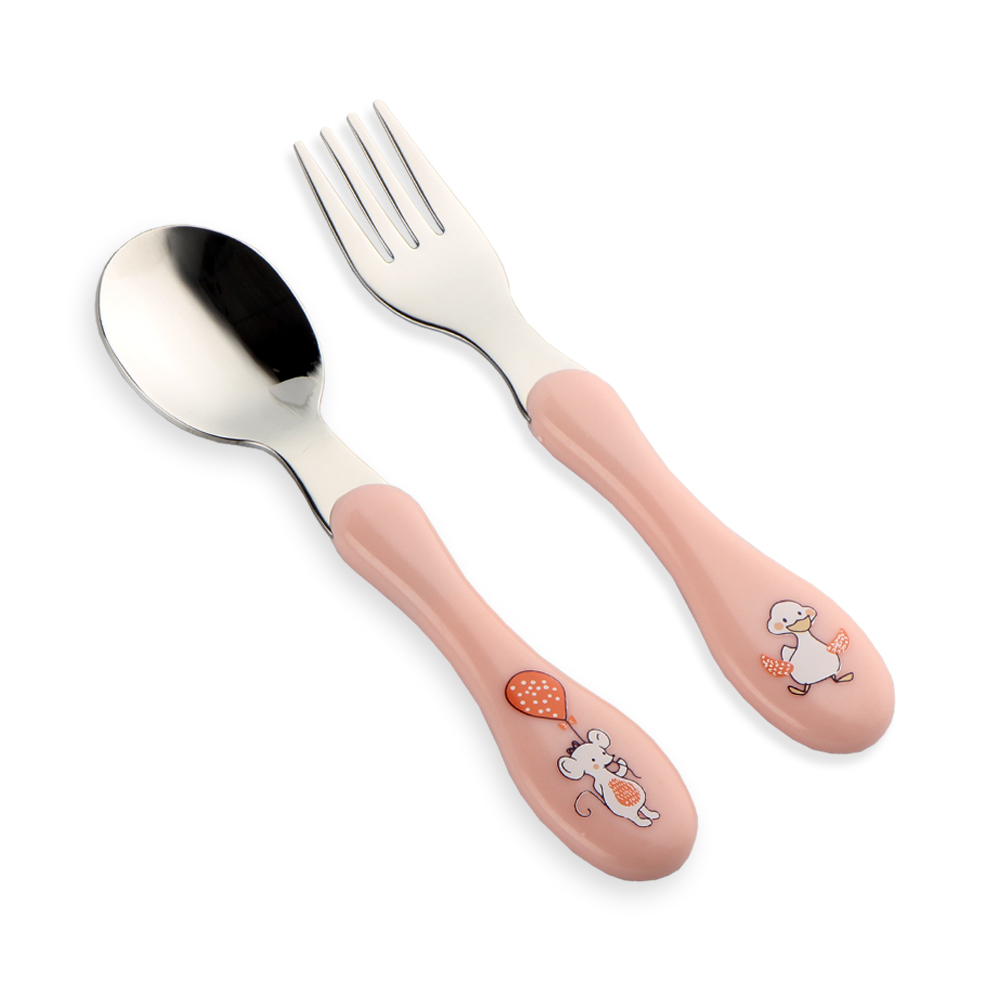
For any of my clients targeting the US market, I immediately bring up the [Consumer Product Safety Commission (CPSC)](https://en.wikipedia.org/wiki/Neodymium_magnet). Their regulations are strict, and enforcement is active. Passing these tests is not about a single “golden sample”; it’s about ensuring high consistency across a mass production run of thousands of units. This is where a manufacturer’s process control becomes critical.
### Understanding [16 CFR 1500.48/49](https://www.ecfr.gov/current/title-16/chapter-II/subchapter-C/part-1500/section-1500.49)
These regulations define what constitutes a “sharp point” and a “sharp edge” on a product intended for children. A specialized testing device is used to apply a specific force. If the device is punctured (for points) or if the testing tape is cut (for edges), the product fails. It is an objective, pass/fail test. There is no room for interpretation.
### Our Process for Guaranteed Compliance
We don’t leave this to chance at the final inspection. Our compliance strategy is built into the manufacturing process.
1. **Process Control:** We use a centrifugal rounding process to precisely shape fork tines, ensuring the R-angle is consistently above the 0.5mm minimum.
2. **Verification:** We use official sharp point and sharp edge testing equipment to check products throughout the production run, not just at the end. We pay special attention to the gaps between fork tines, an area where tiny, sharp burrs can often form.
This technical approach is the foundation of long-term B2B trust. It gives our clients the confidence that every unit in their shipment meets US legal standards.
| CPSC Requirement | Common Failure Point | Our Manufacturing Control |
| :— | :— | :— |
| **No Sharp Points** | Fork tine tips are too sharp | Centrifugal rounding (R-angle >0.5mm) |
| **No Sharp Edges** | Micro-burrs from stamping | Multi-stage polishing & edge testing |
## What Are the Crucial Dimensions for Safe Children’s Stainless Steel Sets?
A few millimeters can be the difference between a safe product and a deadly choking hazard. You are right to be worried about “small parts” regulations and how to ensure compliance.
**Crucial dimensions are designed to prevent choking. The handle must be too large to fit into a 31.7mm test cylinder. Additionally, fork tines should be under 30mm long, and the spoon bowl depth between 4-6mm. These precise measurements are essential for passing [EN 14372 physical tests](https://www.researchgate.net/publication/266251817_Determination_of_the_Banned_Phthalates_in_PVC_Plastic_of_Toys_by_the_Soxhlet_Extraction-Gas_ChromatographyMass_Spectrometry_Method).**

When we design a new children’s cutlery set, the first thing we do is pull out our testing gauges. Safety dimensions are non-negotiable. These rules are primarily designed to prevent two major risks: choking from a small part and injury from a utensil that is too large or deep for a child’s mouth. Achieving this level of precision consistently across thousands of pieces depends entirely on the quality of the production molds.
### The Small Parts Cylinder Test
This is a fundamental test for almost all children’s products. Any object that can fit completely inside a cylinder with a diameter of 31.7mm is considered a “small part” and a choking hazard. For cutlery, this means the handle, especially on smaller baby spoons, must be designed to be wide enough or long enough that it cannot possibly pass this test.
### Fork and Spoon Specifics
Beyond the general small parts test, there are dimensions specific to the function of the cutlery:
– **Fork Tine Length:** Must be controlled to under 30mm to reduce the risk of poking the back of the throat.
– **Spoon Bowl Depth:** We lock this dimension in at 4-6mm. Too shallow, and the food falls off. Too deep, and it’s difficult for a child to get all the food out.
| Component | Critical Dimension | Safety Rationale |
| :— | :— | :— |
| **Handle** | Must not fit in 31.7mm cylinder | Prevents choking hazard |
| **Fork Tines** | Length < 30mm | Prevents injury to throat |
| **Spoon Bowl** | Depth between 4-6mm | Ensures safe and effective portion size |## What are the mandatory safety testing requirements for children's cutlery export?Navigating international safety standards is confusing. A failed test can halt your shipment. You need to know which tests are the absolute deal-breakers for export.**Mandatory requirements for export include [mechanical and chemical tests](https://en.wikipedia.org/wiki/Plastic) under standards like EN 14372 and CPSIA. Key tests are the [90N pull test](https://www.gestertester.com/why-button-pull-test-is-important_n101) for structural integrity and repeated migration tests for heavy metals like nickel and manganese, ensuring both physical and [chemical safety](https://en.wikipedia.org/wiki/Heavy_metals).**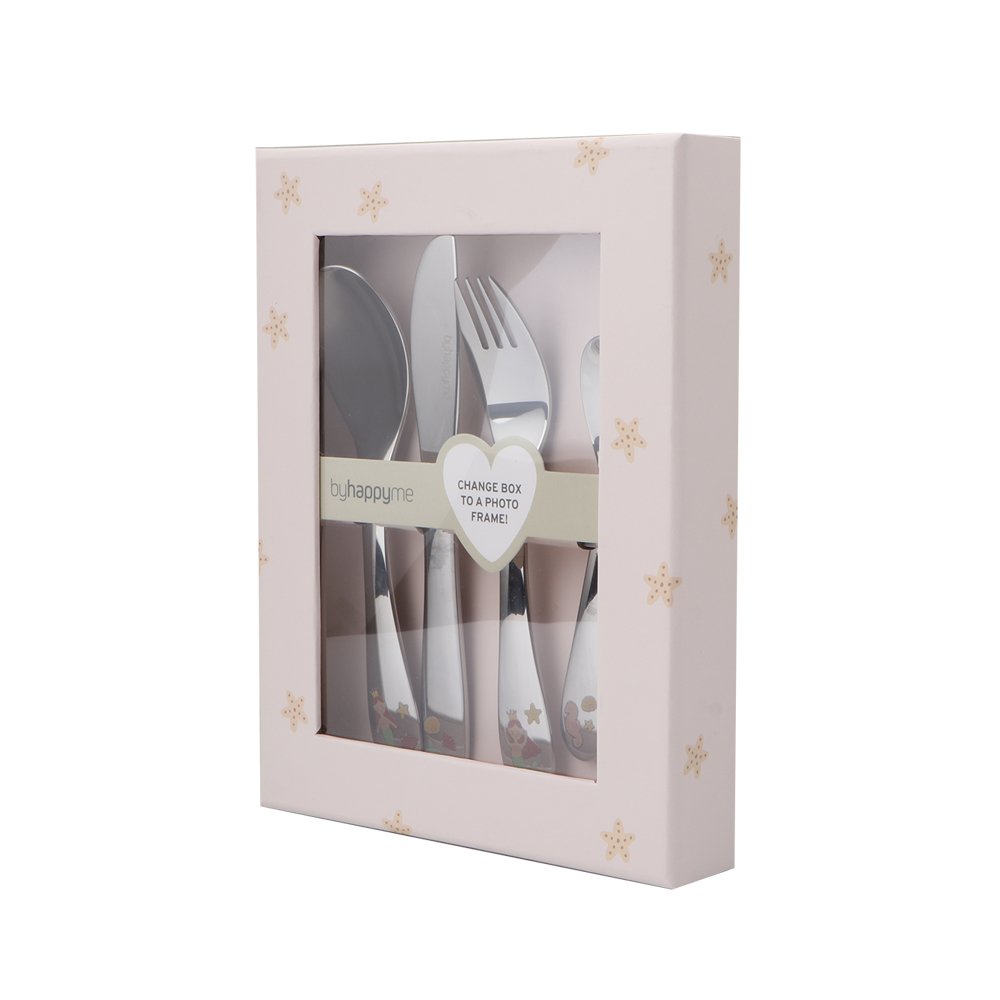For my B2B clients, compliance is not just a certificate; it's a shield against risk. The core of children's cutlery compliance rests on two pillars: mechanical safety and [chemical safety](https://en.wikipedia.org/wiki/Heavy_metals). While many suppliers can pass one, passing both consistently on large orders is what separates the experts from the rest. Experienced importers know to ask about specific tests that go beyond the basics.### Mechanical vs. Chemical Compliance
- **Mechanical/Physical (e.g., EN 14372):** This covers things you can see and touch. It includes the sharpness tests, the small parts test, and structural integrity tests.
- **Chemical (e.g., CPSIA, LFGB):** This covers the invisible dangers, like lead, cadmium, and heavy metal migration from the steel itself.### The Insider's Focus: Pull Tests and Migration
While many tests are important, seasoned buyers focus on two:
1. **The 90N Pull Test:** As mentioned before, this test is critical for any cutlery with multiple components. It directly addresses a major choking risk.
2. **4% Acetic Acid Migration Test:** This is a tough chemical test. The product is soaked in a 4% acetic acid solution (simulating acidic foods) three consecutive times. We then measure the amount of nickel and manganese that has leached into the solution. Passing this test repeatedly shows that the material is stable.### Our Technical Advantage: Vacuum Solution Treatment
To ensure our products consistently pass the stringent chemical migration tests, we use a process called [vacuum solution treatment](https://en.wikipedia.org/wiki/Glass-to-metal_seal). This strengthens the passive layer on the surface of the stainless steel, making it much more resistant to corrosion from acidic foods. This is our technical "moat" that protects our clients from the massive financial and reputational risk of a [chemical safety](https://en.wikipedia.org/wiki/Heavy_metals) recall.## ConclusionSourcing safe children's cutlery requires focusing on edge round