Sourcing children’s cutlery but worried about safety? Sharp tines can cause injury, and poor finishing can harbor bacteria. This creates a huge liability for your brand.
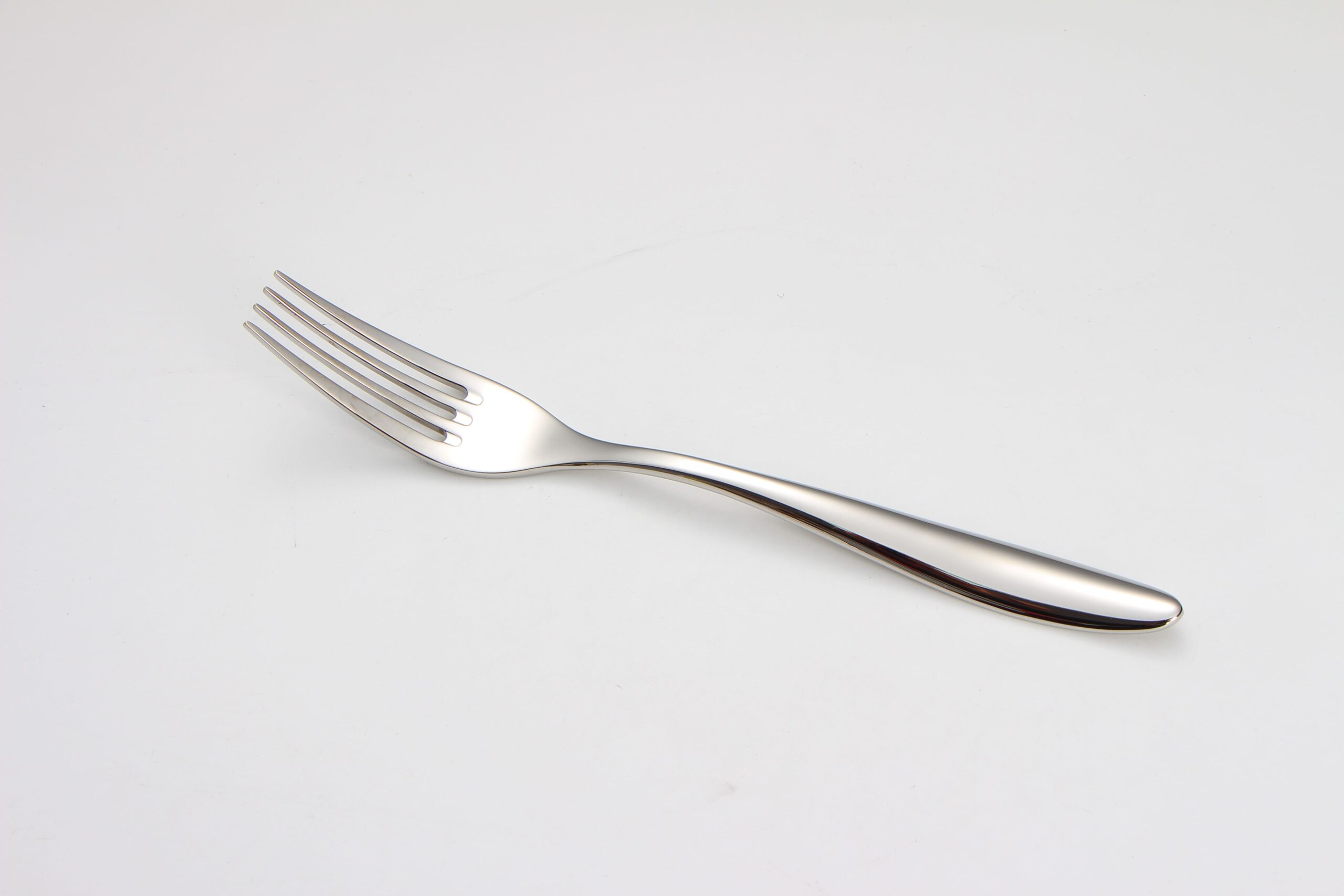
**The key safety standard is the R-angle and smoothness of the fork tines. We use [centrifugal tumble polishing](https://en.wikipedia.org/wiki/Wikipedia:GLAM/NHMandSM/SM_Galleries/Making_the_Modern_World)[^1] to ensure every tine is perfectly rounded and free of micro-burrs, meeting [EN14372 standards](https://www.researchgate.net/publication/266251817_Determination_of_the_Banned_Phthalates_in_PVC_Plastic_of_Toys_by_the_Soxhlet_Extraction-Gas_ChromatographyMass_Spectrometry_Method)[^2]. This prevents mouth scratches and bacteria buildup, guaranteeing compliance for your bulk orders.**
This seems simple, but getting it right for every piece in a massive order is a big challenge. As a manufacturer, I’ve seen where things go wrong. Let’s look at the details that protect your brand and your customers.
## What cutlery should a 4 year old use?
Is your 4-year-old struggling with adult-sized cutlery? It’s clumsy and can make mealtimes frustrating. You need a solution that builds their confidence and skills safely.
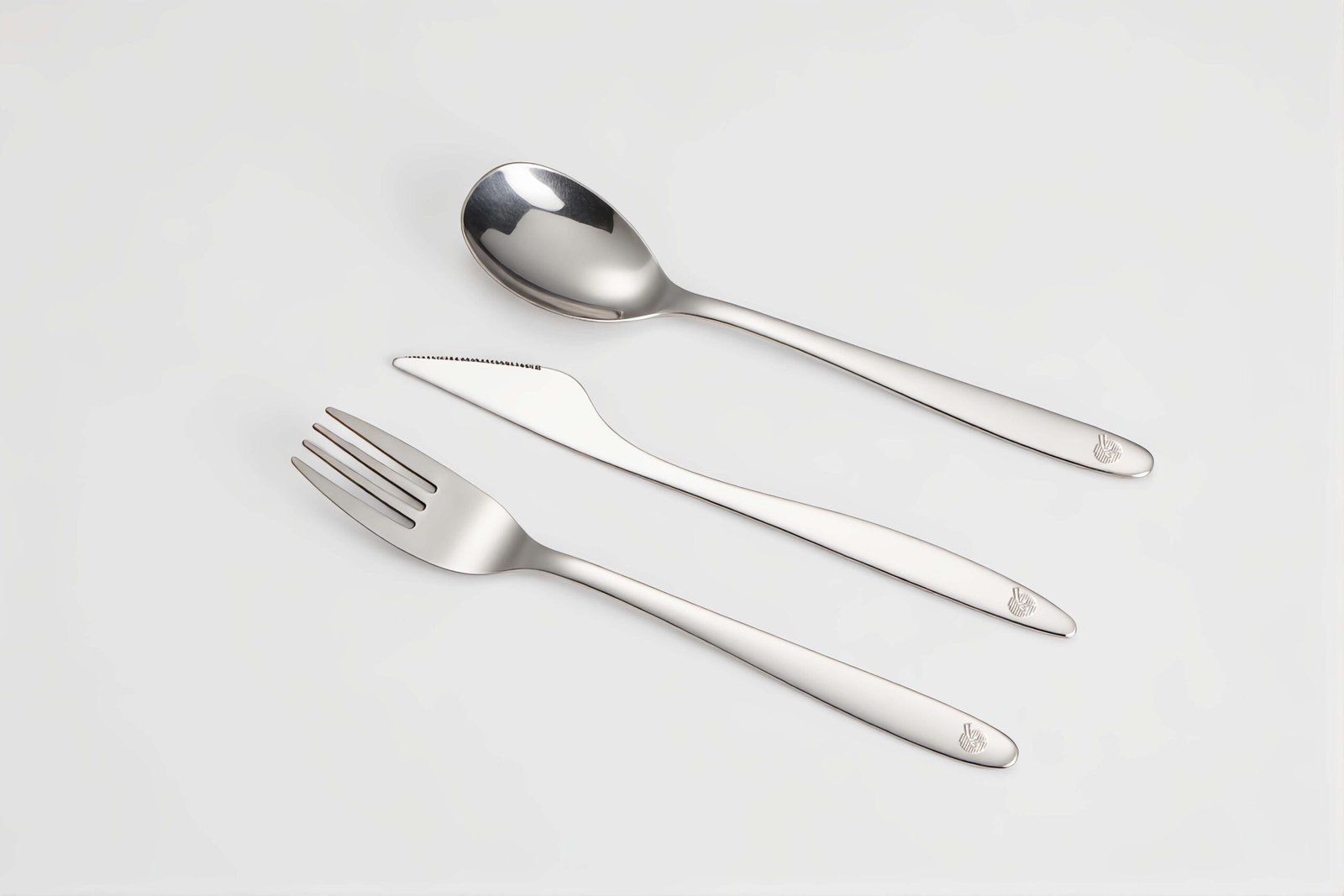
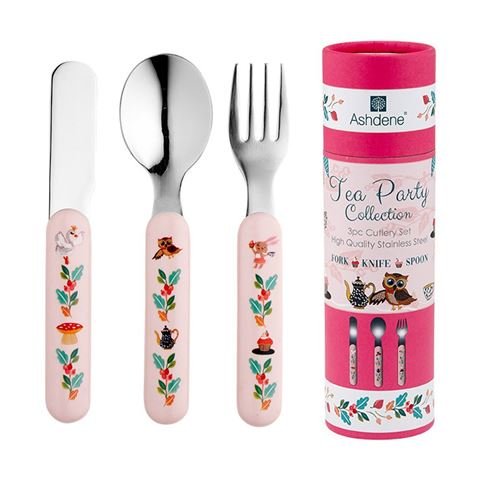
**A 4-year-old should use cutlery designed for their transition phase. This means stainless steel heads for durability, but with kid-sized proportions and easy-grip handles. Safety features like [blunted fork tines](https://www.researchgate.net/publication/258163995_Comparing_the_Products_and_the_Processes_of_Creating_Sign_Language_Poetry_and_Pantomimic_Improvisations)[^3] and a dull-edged knife are essential for their developing coordination.**
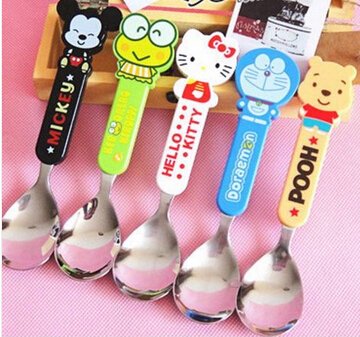
At four years old, a child is eager for independence. They want to do things “like a grown-up,” and mealtime is a big part of that. Giving them the right tools is crucial. The goal is to bridge the gap between chunky toddler utensils and adult flatware. The fork tines should be effective enough to spear food like cooked vegetables, but blunted and rounded so there’s no risk of injury. The spoon bowl should be deep enough to hold soup but not so large that it’s difficult for a small mouth to handle.
The knife is often the biggest concern. A 4-year-old’s “first knife” should not be sharp. Its purpose is to teach the motion of cutting, not to actually slice through tough food. We design our children’s knives with a dull, rounded edge that can push through soft foods like a banana or mashed potatoes. This builds the motor skills and confidence they’ll need later.
Here’s a quick breakdown of what to look for:
| Feature | Ideal for a 4-Year-Old | Why It Matters |
| :— | :— | :— |
| **Material** | [304 Stainless Steel](https://en.wikipedia.org/wiki/Sheffield)[^4] Head | Durable, easy to clean, and doesn’t hold flavors. |
| **Handle** | Ergonomic, non-slip grip | Sized for small hands to hold correctly and securely. |
| **Fork Tines** | Blunted and rounded | Prevents accidental pokes to the mouth or gums. |
| **Knife Edge** | Dull and wide | Teaches the cutting motion without the risk of cuts. |
| **Weight** | Balanced and lightweight | Easy for a child to control and maneuver. |
Choosing the right set helps turn mealtime from a struggle into a successful learning experience.
## When to give a toddler metal cutlery?
Wondering if your toddler is ready for “real” cutlery? Plastic utensils bend and don’t work well. But you worry metal forks and spoons might be unsafe for them.
**You can introduce metal cutlery around 18-24 months, once they show a good pincer grasp and interest in self-feeding. The key is to choose specially designed toddler sets with short, chunky handles for an easy grip and blunted, rounded tines for maximum safety.**
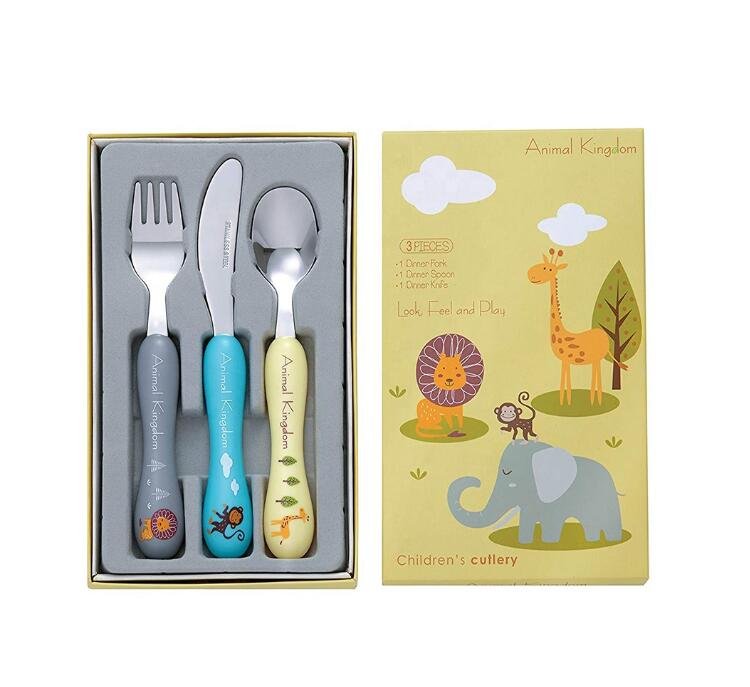
Switching from plastic to metal is a key developmental milestone for a toddler. It helps them feel more capable and makes self-feeding much less frustrating. Plastic forks often can’t spear food properly, and plastic spoons can be flimsy. Metal cutlery is simply more effective. However, you can’t just hand them a smaller version of an adult fork. Safety and design are everything at this stage.
As a manufacturer, we focus on several key areas for a toddler’s first metal cutlery:
* **Handle Design:** The handle must be short and stout. Toddlers use a palmar grasp (fisting the handle), not the delicate pincer grip of older children. A thick, textured handle gives them the control they need.
* **Tine & Bowl Safety:** The fork tines are blunted, and the spoon bowl is shallow. We ensure there are absolutely no sharp edges. Our workers run their fingers over every single piece to guarantee it’s smooth and safe.
* **Material Quality:** We use high-quality 304 stainless steel. This is important because toddlers will chew on everything. You need to be certain that the material is food-grade and won’t leach harmful substances.
Introducing metal cutlery early helps develop fine motor skills and hand-eye coordination. It also encourages them to participate more actively in family meals. Look for signs of readiness, like showing strong interest in your utensils, having a decent [pincer grasp](https://www.researchgate.net/publication/13582831_Effects_of_shape_and_operation_of_chopsticks_on_food-serving_performance)[^5], and being able to bring a spoon to their mouth successfully.
## What Are the Specific Migration Limits for Mn and Ni in Kids’ Cutlery?
Selling stainless steel cutlery for kids? You might not know about hidden risks from manganese (Mn) and nickel (Ni). Exceeding migration limits can lead to recalls and damage your brand’s reputation.
**For kids’ cutlery, the EU’s CM/Res(2013)9 regulation is key. It sets the [Specific Migration Limit (SML)](https://www.researchgate.net/publication/7724641_Survey_of_the_migration_of_melamine_and_formaldehyde_from_melamine_food_contact_articles_available_on_the_UK_market)[^6] for manganese (Mn) at 0.6 mg/kg and nickel (Ni) at just 0.14 mg/kg. Compliance requires using the right steel and advanced processing techniques.**
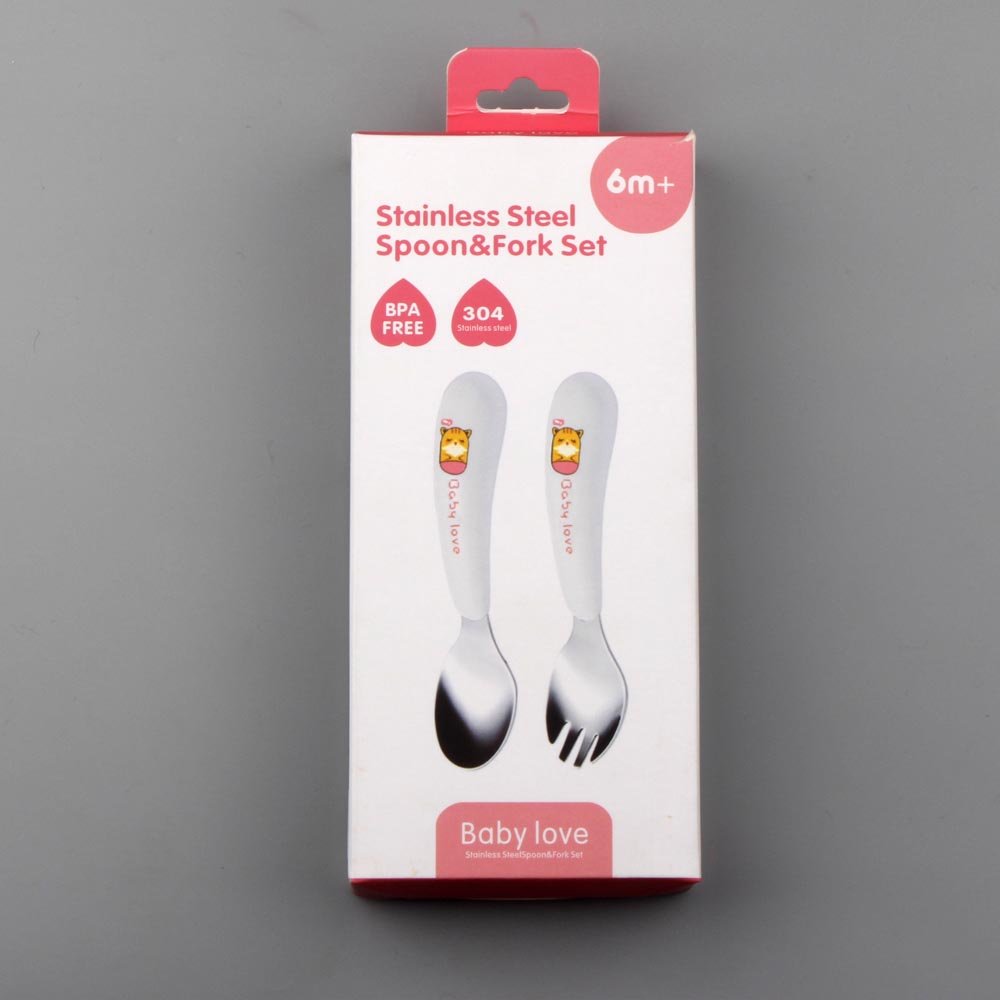
For clients like Lisa, who are smart business people but not technical experts, this is a critical detail that can make or break a product line. It’s not enough to just use “stainless steel.” The type and treatment of that steel are what matter. Many low-cost factories use 200-series stainless steel, which has a high manganese content. While cheaper, it has a much higher risk of leaching Mn, especially when in contact with acidic foods.
We strictly use 304 stainless steel (also known as 18/8 or 18/10), which has a stable, low-manganese composition. But even that isn’t enough. The real technical challenge is ensuring the metal’s surface is stable enough to pass the rigorous EU tests.
### Our Technical Solution
To guarantee compliance, we use a process called **[vacuum solution heat treatment](https://en.wikipedia.org/wiki/Physical_vapor_deposition)[^7]**. This process heats the steel in a vacuum and then cools it rapidly. It creates a very dense and stable passive layer on the surface of the cutlery. This layer acts as a strong barrier, preventing metal ions like Mn and Ni from migrating into food, even under the [4% acetic acid test](https://en.wikipedia.org/wiki/Glaze_defects)[^8] conditions that simulate acidic foods. It’s an extra step, but it’s the only way to confidently ensure every piece in a 100,000-unit order meets these strict safety limits.
| Metal | EU SML (CM/Res(2013)9) | Common Source of Risk |
| :— | :— | :— |
| **Nickel (Ni)** | 0.14 mg/kg | Inherent in 304 stainless steel. |
| **Manganese (Mn)** | 0.6 mg/kg | High content in cheaper 200-series steel. |
## Navigating CPSIA and REACH for Wholesale Children’s Flatware Sets?
Importing children’s flatware is complex. Regulations like CPSIA and REACH are confusing and strict. A single compliance failure in a large shipment can mean total financial loss.
**To comply with CPSIA (lead limits) and REACH (SVHCs), batch consistency is everything. We go beyond single-sample testing by tracking the steel’s “[original furnace number](https://www.researchgate.net/publication/233576294_Stainless_steel_slag_fundamentals_From_furnace_to_tundish)[^9]” and using XRF scanners on all components. This ensures every single piece in your wholesale order is compliant.**
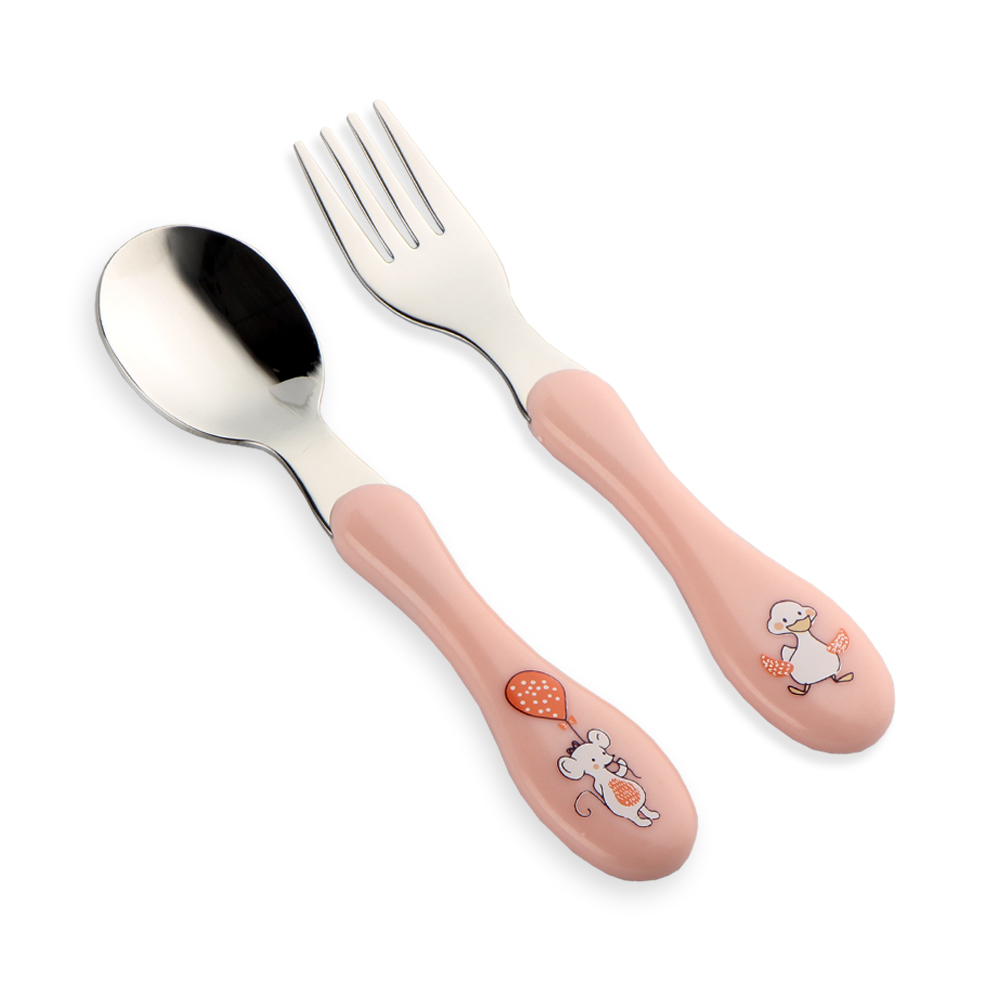
The biggest nightmare for an importer is having a shipment seized or recalled because a random sample failed testing, even if the pre-production sample passed. This happens when there’s no consistency in the raw materials. This is a major pain point for customers like Lisa, who worry about uncontrollable production technology.
Here’s how we solve this problem at the factory level:
1. **Raw Material Tracking:** We don’t just buy “304 steel.” We track the **”original furnace number”** for every coil of steel we purchase. This means we have a complete [traceability](https://en.wikipedia.org/wiki/IKEA)[^10] record from the moment the steel was melted. If any issue ever arises, we can trace it back to the exact source.
2. **Component Screening:** For cutlery with plastic or coated handles, the risk is higher. These components can contain lead, phthalates (plasticizers), or other [Substances of Very High Concern (SVHCs)](https://www.researchgate.net/publication/328343465_Toxic_Loophole_Recycling_Hazardous_Waste_into_New_Products)[^11] listed under REACH. We don’t leave this to chance. We use an **[X-ray fluorescence (XRF) spectrometer](https://en.wikipedia.org/wiki/Hallmark)[^12]** to perform initial screening on batches of incoming raw materials. This handheld device gives us an instant chemical breakdown, allowing us to reject non-compliant materials *before* they ever enter production.
This two-step process moves quality control from the end of the line to the very beginning. It’s about preventing problems, not just catching them. For our B2B clients, this means peace of mind and the assurance that their entire order, not just one golden sample, meets the strict requirements of CPSIA and REACH.
## What is CPSIA section 103 tracking labels for children’s products?
Have you considered product recalls? Without proper tracking, a small issue can become a huge problem. U.S. law requires a way to trace every children’s product back to its source.
**[CPSIA Section 103](https://www.researchgate.net/publication/291446717_CPSIA_compliance_for_apparel_and_textile_companies)[^13] mandates permanent tracking labels on children’s products and their packaging. These labels must include the manufacturer’s name, production date, and a unique batch code. This system is crucial for enabling targeted and efficient recalls if a safety issue ever arises.**

For any brand selling children’s products in the United States, this is not optional. The tracking label is a legal requirement of the Consumer Product Safety Improvement Act (CPSIA). The goal is traceability. If a safety concern is discovered, the label allows the CPSC and the company to identify exactly which batch of products is affected and recall them quickly.
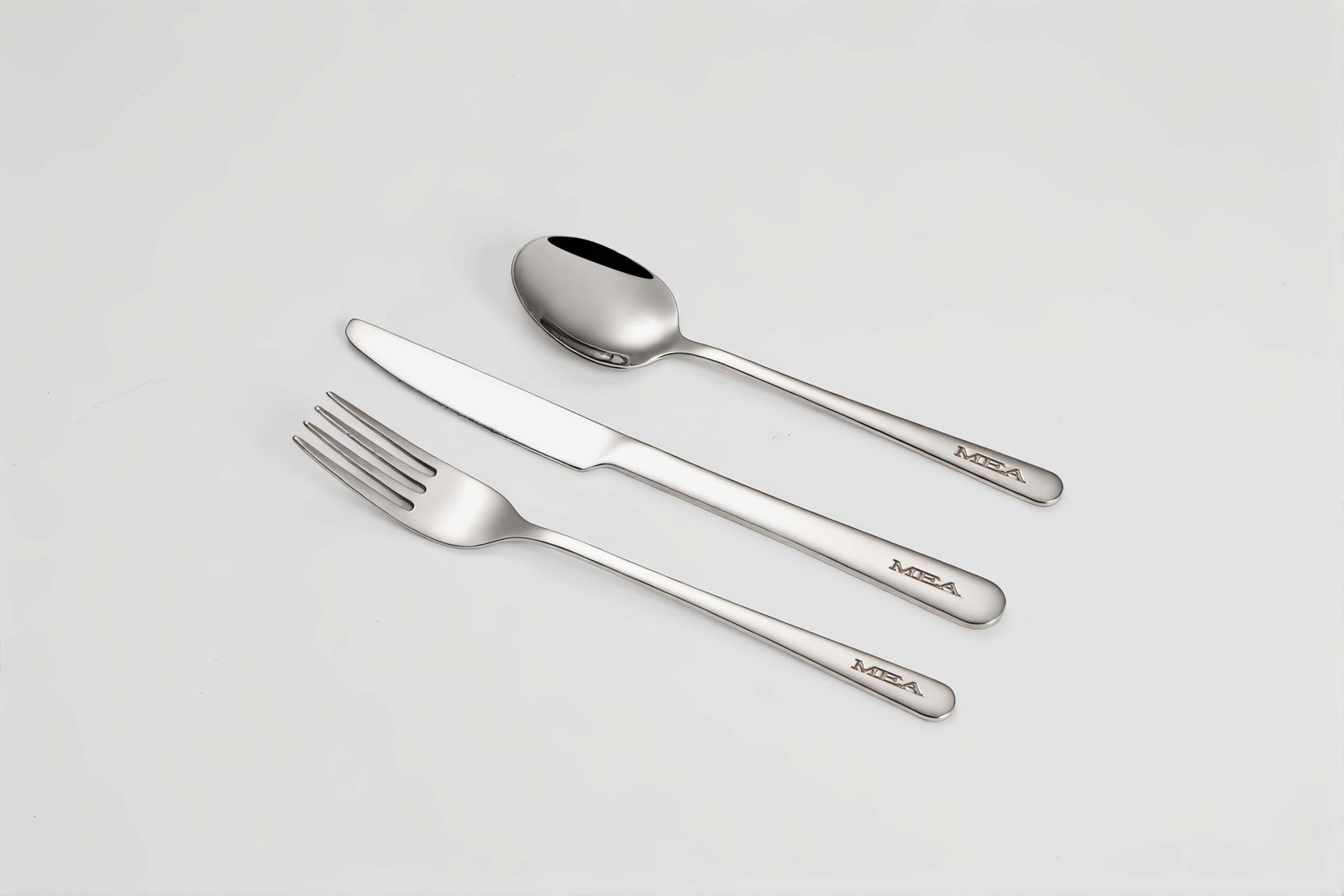
As the manufacturer for our clients, we take on this responsibility. It’s a core part of our service for anyone exporting to the U.S. market. We have a system to generate and apply these labels correctly. The label must be “permanent,” meaning it should be reasonably expected to remain on the product for its useful life. For cutlery, this often means laser-engraving the information discreetly on the handle.
The label must contain specific information:
| Required Information | Our Implementation Example |
| :— | :— |
| **Manufacturer/Importer Name** | Brilliant Innovate |
| **Location of Production** | Shenzhen, China |
| **Date of Production** | Month and Year (e.g., 10/2024) |
| **Batch/Lot Number** | A unique code (e.g., SZ2410-A) |
This information must also be on the packaging. This system protects the end consumer, but it also protects our client’s brand. In the event of a recall, it allows for a precise, surgical removal of specific products from the market, rather than a costly and brand-damaging recall of everything. It’s a fundamental part of professional, large-scale manufacturing.
## What Are the Specific Migration Limits for Heavy Metals in Children’s Bulk Cutlery Orders?
You assume your stainless steel cutlery is safe. But specific heavy metals can leach into food. Failing these migration tests on a bulk order is a costly B2B export disaster.
**The core of compliance is passing the [4% acetic acid test](https://en.wikipedia.org/wiki/Glaze_defects)[^8], repeated three times. Insiders know that controlling the migration of Nickel (Ni) at 0.14mg/kg and Manganese (Mn) at 0.6mg/kg is the hardest part. This is the technical line between a safe and a rejected shipment.**

When a third-party lab tests your cutlery for heavy metal migration, they follow a very specific procedure designed to simulate real-world use. They don’t just dip the fork in water. They use a 4% acetic acid solution, which mimics acidic foods like tomato sauce or orange juice. The cutlery is submerged in this solution at a high temperature for a set period.
But here’s the part many people miss: they do it **three times**. They test the migration on the first exposure, then clean the utensil and test it a second time, and then a third. The limits must not be exceeded on any of these three tests. The third test is often the most important, as it shows how the material behaves over its lifetime.
Our job as a manufacturer is to make sure our products pass this tough test every time. The key is the stability of the steel’s surface. As I mentioned before, our **[high-temperature vacuum solution treatment](https://en.wikipedia.org/wiki/List_of_blade_materials)[^14]** is what makes the difference. This process creates an extremely robust passive film on the steel. This film is what stands up to the repeated acid tests, ensuring that the migration of Ni and Mn remains well below the legal limits. It’s a technical solution for a technical problem, and it’s how we protect our clients from the huge risk of a failed compliance test on a bulk order.
## Conclusion
Ensuring children’s cutlery safety goes beyond looks. It involves precise engineering, material science, and strict adherence to global standards. We manage these details so you can sell with confidence.
—
[^1]: Learn how this polishing technique ensures cutlery is free of micro-burrs, enhancing safety and compliance with standards.
[^2]: Explore the EN14372 standards to ensure your children’s cutlery meets essential safety and quality requirements.
[^3]: Blunted fork tines prevent injuries, making them a crucial feature in safe children’s cutlery.
[^4]: 304 Stainless Steel is durable and safe, making it ideal for children’s cutlery.
[^5]: A strong pincer grasp indicates readiness for metal cutlery, aiding in safe self-feeding.
[^6]: Understanding SML is vital to ensure cutlery does not leach harmful metals into food.
[^7]: This treatment creates a stable surface on cutlery, preventing harmful metal migration.
[^8]: The 4% acetic acid test is crucial for ensuring cutlery does not leach harmful metals into food.
[^9]: Tracking the original furnace number ensures traceability and consistency in material quality.
[^10]: Traceability allows for precise recalls, protecting brands from widespread product issues.
[^11]: Knowing about SVHCs helps ensure cutlery is free from harmful chemicals, ensuring safety.
[^12]: XRF spectrometers ensure raw materials meet safety standards, preventing non-compliance.
[^13]: Learn about the legal requirements for tracking labels to ensure compliance and safety.
[^14]: This treatment enhances the durability and safety of cutlery by creating a robust surface.