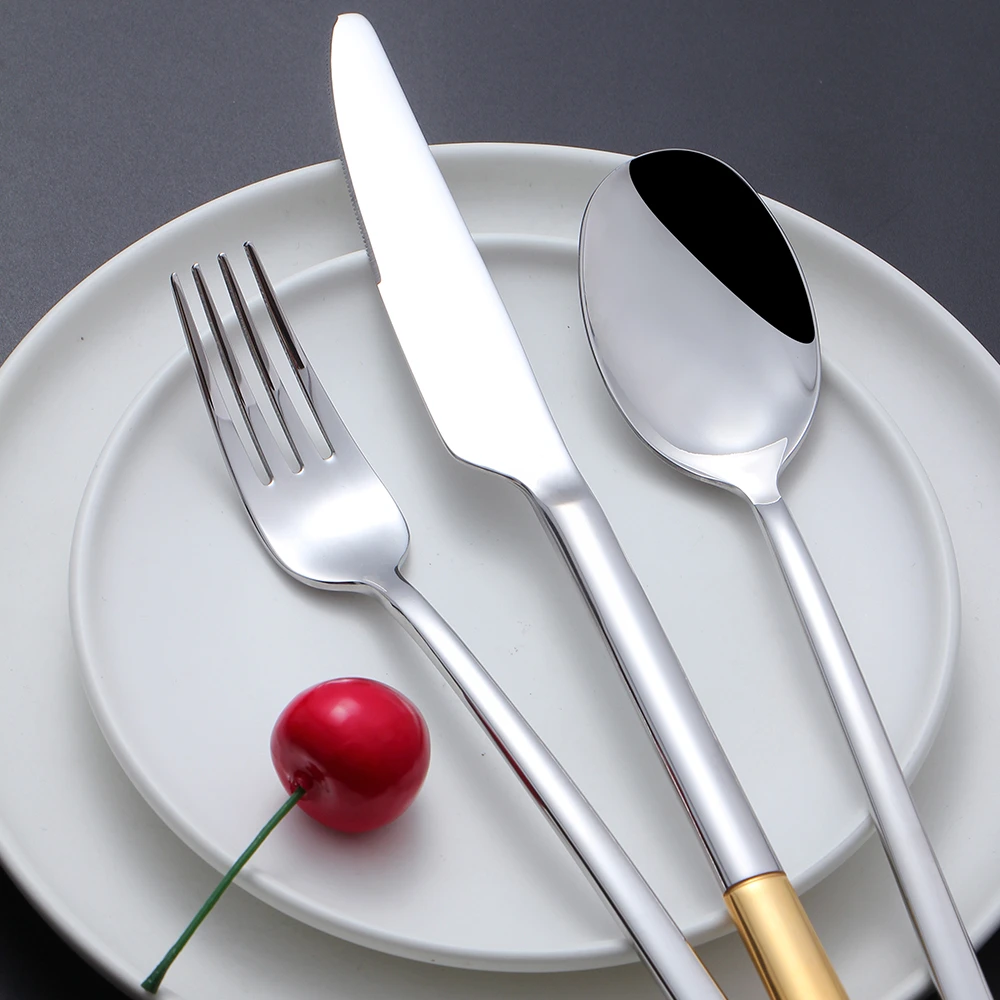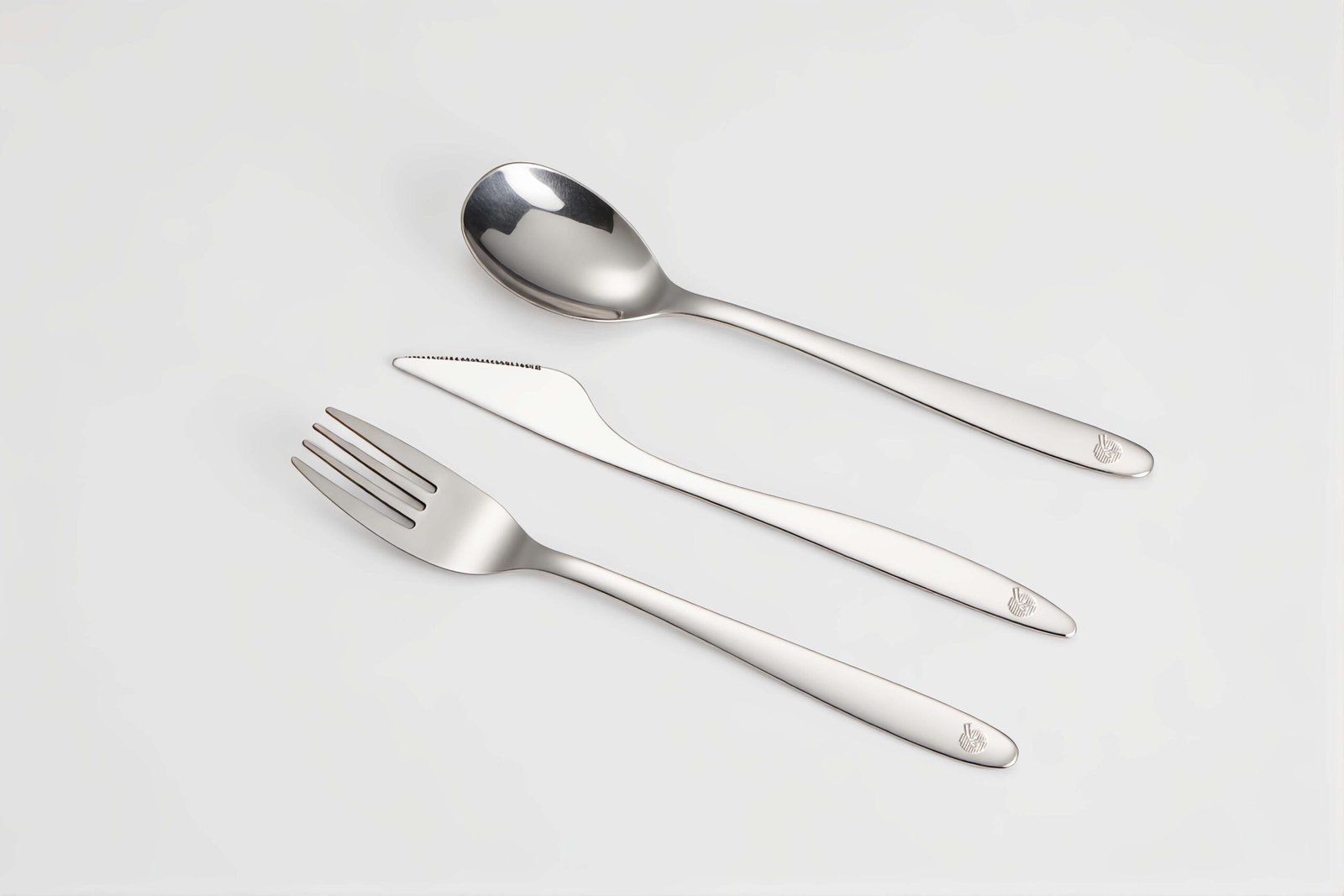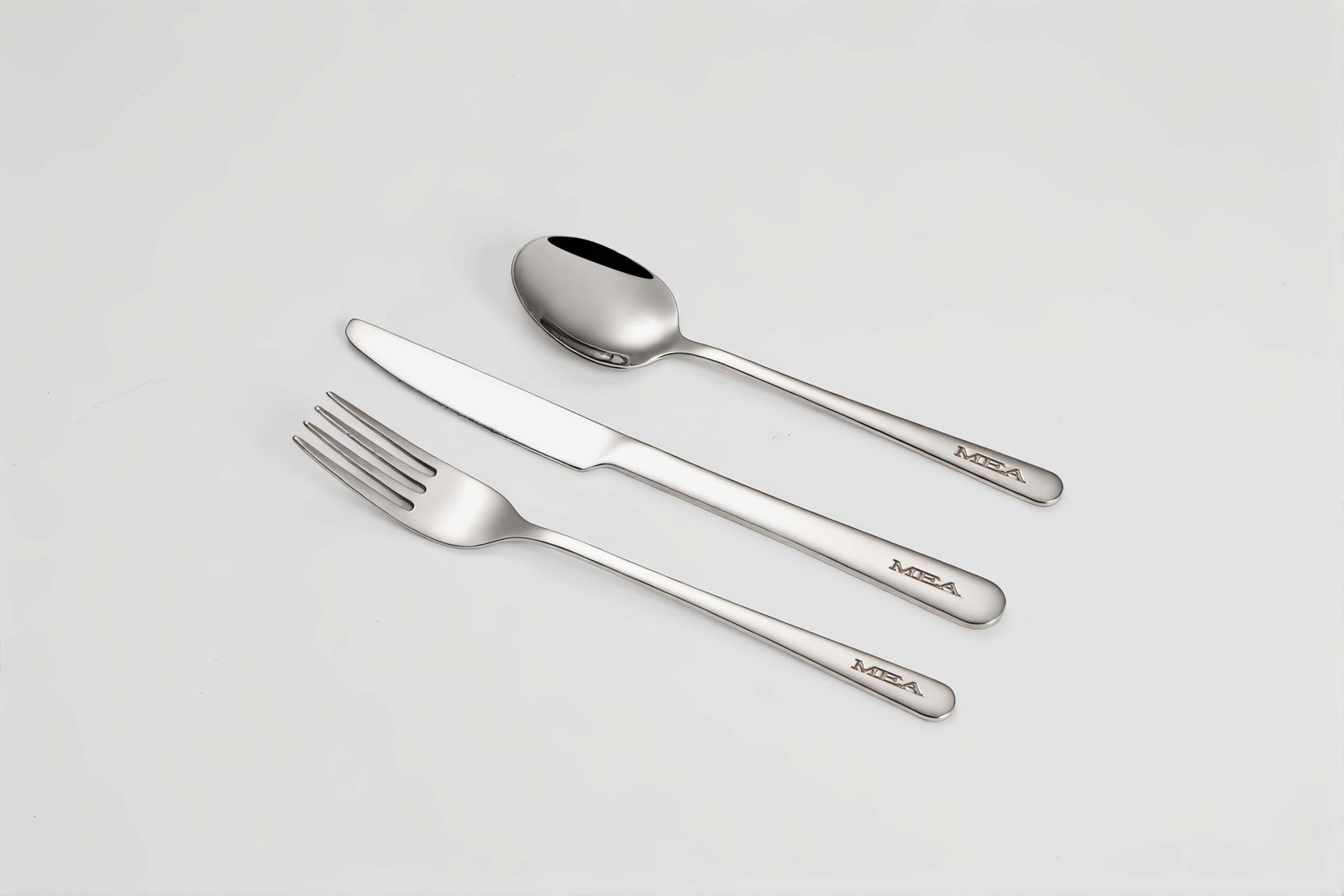
Choosing hotel cutlery is challenging. The wrong choice looks cheap and wears out fast, frustrating guests and your budget. [18/10 stainless steel](https://en.wikipedia.org/wiki/Stainless_steel) [^1] is the trusted standard that ensures lasting quality.
**[18/10 stainless steel](https://en.wikipedia.org/wiki/Stainless_steel)[^1] is the standard for five-star hotels because of its unmatched durability against harsh commercial dishwashing, its luxurious weight and silver-like shine, and its superior long-term return on investment. It simply performs better and lasts longer, upholding a premium brand image.**
You might wonder what makes this specific grade of steel so special. It’s not just about the numbers on paper; it’s about the science that delivers real-world performance in a demanding hotel environment. The choice impacts everything from your operational budget to your guests’ dining experience. Let’s break down why this decision is so critical for any serious hospitality procurement manager and why 18/10 consistently comes out on top.
## Is 18-10 the best stainless steel for cutlery?
You hear that 18/10 is the best, but is that just marketing hype? You need cutlery that performs without question. For high-end applications, 18/10 consistently delivers on its promise.
**Yes, for high-end dining and hospitality, 18/10 is considered the best stainless steel for cutlery. Its [10% nickel content](https://en.wikipedia.org/wiki/Chromium)[^2] provides superior rust resistance, a brighter polish, and a heavier, more substantial feel that communicates quality directly to your guests.**
The designation “18/10” is a simple code for the metal’s composition. It tells you about the two most important elements added to the steel to give it its special properties.
* **[18% Chromium](https://en.wikipedia.org/wiki/Stainless_steel)[^3]:** This is the key ingredient for fighting rust and corrosion. The chromium creates a passive, invisible layer on the surface of the steel. This layer protects the iron in the steel from oxidizing, which is what we see as rust or stains.
* **10% Nickel:** This is the magic ingredient for luxury cutlery. Nickel significantly boosts corrosion resistance, especially against acids found in food and strong detergents used in commercial dishwashers. It is also responsible for the beautiful, silver-like shine and luster. It adds a warmth to the color that nickel-free steel lacks.
This combination makes 18/10 steel not just durable, but also beautiful. It feels solid and balanced in the hand, a small but crucial detail in a fine dining experience.
## What is the best grade of stainless steel cutlery?
With so many grades available, choosing the “best” one can be confusing. Picking the wrong one can lead to rusty, stained cutlery and frequent, costly replacements.
**The best grade of stainless steel cutlery depends entirely on the use case. For five-star hotels and fine dining where quality is paramount, 18/10 is the top choice. For everyday casual use or budget-conscious businesses, 18/0 can be a practical option.**
There is no single “best” for everyone, but there is a best for a specific purpose. As a manufacturer, we produce cutlery from various grades to meet different market needs. Understanding their differences is key to making a smart procurement decision.
### Cutlery Grade Comparison
| Grade | Composition | Corrosion Resistance | Luster & Feel | Best Use Case |
| :— | :— | :— | :— | :— |
| **18/10** | [18% Chromium](https://en.wikipedia.org/wiki/Stainless_steel)[^3], 10% Nickel | Highest | Bright, silver-like, heavy | Fine Dining, 5-Star Hotels |
| **18/8** | [18% Chromium](https://en.wikipedia.org/wiki/Stainless_steel)[^3], 8% Nickel | Very High | Bright, substantial | Quality Home Use, Upscale Casual |
| **18/0** | [18% Chromium](https://en.wikipedia.org/wiki/Stainless_steel)[^3], 0% Nickel | Good | Less shine, lighter | Cafeterias, Budget Eateries |
| **13/0** | 13% Chromium, 0% Nickel | Moderate | Basic | Knives, budget flatware |
As you can see, [18/10 stainless steel](https://en.wikipedia.org/wiki/Stainless_steel)[^1] offers the highest performance across the board. The nickel content is the main differentiator, directly impacting both the long-term durability and the aesthetic quality of the flatware. For a business whose brand is built on luxury and excellence, 18/10 is the only grade that aligns with those values.
## Which is better, 18 0 or 18 10 stainless flatware?
Deciding between 18/0 and 18/10 can feel like a simple cost choice. But the long-term implications of this decision are huge. The key difference comes down to a single element: nickel.
**18/10 stainless flatware is significantly better than 18/0 for durability and appearance. The 10% nickel in 18/10 provides excellent protection against rust and corrosion from food acids and detergents. 18/0, lacking nickel, is much more prone to staining and pitting over time.**
The absence of nickel in 18/0 steel has several practical consequences for a hospitality business. First, it is far more susceptible to chemical attack. In a five-star hotel, cutlery goes through a high-temperature commercial dishwasher multiple times a day. The detergents used are highly alkaline and aggressive. Without the protective qualities of nickel, 18/0 steel will quickly develop small rust spots, or “pitting,” and can take on a dull, blackened appearance. This means pieces must be discarded and replaced constantly.
Second, there is a noticeable difference in the look and feel. 18/10 steel can be polished to a brilliant, soft luster that closely resembles silver. 18/0 has a colder, more industrial look. Furthermore, 18/0 is less dense, so it feels lighter and less substantial in the hand. For a guest paying a premium, these small sensory details add up to define the overall experience.
## Why Should B2B Buyers Choose 18/10 Over 18/0 for High-End Hotel Cutlery?
As a B2B buyer, you face constant pressure on both budget and quality. Choosing 18/0 seems cheaper upfront, but it can damage your brand’s reputation in the long run. 18/10 protects your investment and your image.
**B2B buyers should choose 18/10 for high-end hotels because it upholds the brand’s luxury image. It offers a superior guest experience through its weight and finish, and its durability means lower long-term replacement costs, protecting the hotel’s operational budget.**
A high-end hotel is not just selling a room; it’s selling an experience. Every single detail matters. We recently worked on a project that perfectly illustrates this principle. In late 2024, we were contacted by a new five-star resort in the Cook Islands, set to open in 2026. This was a long-term, high-stakes project. Over the next year, we acted as consultants, helping them select and coordinate over 30 different cutlery items for every part of their resort.
The client understood that to command a premium price, every touchpoint had to feel premium. They chose [18/10 stainless steel](https://en.wikipedia.org/wiki/Stainless_steel)[^1] for its compliance with strict international standards like LFGB/DGCCRF and for its undeniable quality. In 2025, they visited our factory in Shenzhen. They saw firsthand our full OEM/ODM process, from initial design to the creation of precision molds. Seeing our commitment to quality gave them the confidence to place a large, multi-year order. For a project of this scale, [supply chain stability](https://en.wikipedia.org/wiki/Fast-food_restaurant)[^4] is everything. Our 13 years of experience and BSCI-certified facility guaranteed we could deliver. This project proves that for B2B buyers building a luxury brand, 18/10 isn’t an expense; it’s a foundational investment.
## Why Should Hospitality Wholesalers Prioritize 18/10 Stainless Steel for High-Frequency Use?
Wholesalers need to stock reliable products that their clients can trust. Selling low-quality cutlery leads to returns, complaints, and unhappy clients. Prioritizing 18/10 builds your reputation for quality and dependability.
**Hospitality wholesalers should prioritize 18/10 because it withstands the extreme demands of high-frequency commercial use. It resists damage from industrial dishwashers and constant handling, leading to fewer complaints and replacements for your hotel and restaurant clients.**
The daily life of hotel cutlery is brutal. It’s a continuous cycle of use, collection, and washing. This high-frequency environment exposes flatware to three main enemies:
### Challenges in a Commercial Environment
* **Harsh Chemicals:** Commercial dishwashing detergents are far more concentrated and alkaline than household versions. They are designed to strip away grease and sanitize effectively, but they can also attack lower-grade steel, causing discoloration and pitting.
* **High Temperatures:** The rinse cycles in commercial machines reach very high temperatures to ensure sanitation. This thermal stress, repeated multiple times a day, can weaken inferior materials over time.
* **Physical Wear:** Cutlery is constantly being bundled, dropped into bus tubs, and sorted. This leads to scratches and dings. The inherent hardness and durability of 18/10 steel make it much more resistant to this daily physical abuse.
By stocking and recommending [18/10 stainless steel](https://en.wikipedia.org/wiki/Stainless_steel)[^1], a wholesaler provides a solution that solves these problems for their clients. This builds trust and positions the wholesaler as an expert partner, not just a supplier.
## Is 18/10 Stainless Steel Always Worth the Premium for High-End Hotel Procurement?
The higher initial price of [18/10 stainless steel](https://en.wikipedia.org/wiki/Stainless_steel)[^1] can be a concern for procurement managers. Is the extra cost really justified? A short-term saving can often lead to long-term financial headaches.
**Yes, for high-end hotels, the premium for [18/10 stainless steel](https://en.wikipedia.org/wiki/Stainless_steel)[^1] is always worth it. The initial extra cost is easily offset by its extended lifespan, reduced need for replacements, and the immense value it adds to the guest’s perception of luxury.**
The best way to understand the value is to look at the [Total Cost of Ownership (TCO)](https://en.wikipedia.org/wiki/Knife_legislation)[^5], not just the upfront purchase price. Let’s consider a simple, hypothetical scenario for a hotel needing 1,000 sets of flatware.
### 10-Year Cost of Ownership Example
| Cost Factor | Scenario A: 18/0 Steel | Scenario B: 18/10 Steel |
| :— | :— | :— |
| **Unit Cost** | $5 | $8 |
| **Initial Purchase**| $5,000 | $8,000 |
| **Lifespan** | 2 Years | 8 Years |
| **Replacements (in 10 yrs)** | 4 times | 1 time |
| **Replacement Cost**| 4 x $5,000 = $20,000 | 1 x $8,000 = $8,000 |
| **Total 10-Year Cost** | **$25,000** | **$16,000** |
This simplified table doesn’t even include the labor costs of constantly inspecting and replacing the 18/0 cutlery, or the intangible cost of a guest being handed a stained fork. When you look at the entire lifecycle, the more durable, premium product is actually the more financially sound choice. The initial premium is not a cost; it’s a down payment on future savings.
## 18/10 vs 18/0: Which Stainless Steel Grade Maximizes Your Hotel’s ROI?
Maximizing [Return on Investment (ROI)](https://www.researchgate.net/publication/359296341_Future_Aspects_of_Digital_Sustainability_in_Hotels_A_Study_on_Digital_Marketing_Challenges_with_Proposed_Solutions_Opportunities_during_and_Post_COVID_Era)[^6] is the ultimate goal for every business manager. Cutlery might seem like a small operational detail, but your choice directly impacts your bottom line.
**[18/10 stainless steel](https://en.wikipedia.org/wiki/Stainless_steel)[^1] unequivocally maximizes a hotel’s ROI. Its exceptional durability drastically reduces replacement frequency and associated costs. This longevity, combined with its positive impact on guest satisfaction, makes it a more profitable long-term investment than cheaper 18/0 alternatives.**
The ROI from choosing 18/10 stainless steel comes from two primary areas: cost savings and revenue protection.
#### 1. Direct Cost Savings (Reducing Outgoings)
The most obvious return comes from buying less cutlery over time. As shown in the cost of ownership example, the need for frequent re-purchasing of 18/0 steel adds up to a significant expense. 18/10 steel is an asset that retains its value and function for years. This reduces your operational expenditure and frees up capital for other investments. It also saves on labor costs associated with managing inventory, inspecting for damaged pieces, and processing new orders.
#### 2. Revenue Protection (Maintaining Incomings)
This is the less obvious, but perhaps more important, part of the ROI calculation. A luxury hotel justifies its high room and dining prices by providing a flawless experience. A stained fork, a flimsy knife, or a dull spoon can shatter that illusion of quality. This can lead to poor online reviews and damage to the brand’s reputation, which directly impacts future bookings and revenue. By investing in 18/10 cutlery, you are protecting the premium image that allows you to charge premium prices. It’s a small investment to safeguard your main source of revenue.
## Is 316 Stainless Steel Worth the Extra Cost for Your High-End Hotel Flatware Project?
You may hear about [316 stainless steel](https://en.wikipedia.org/wiki/Stainless_steel)[^7], often called “marine grade” or “surgical grade.” It sounds impressive, so is it an even better choice for your hotel? Sometimes, the best material is not the most extreme one.
**For most high-end hotel flatware, [316 stainless steel](https://en.wikipedia.org/wiki/Stainless_steel)[^7] is not worth the significant extra cost. While its corrosion resistance is even higher due to an element called [molybdenum](https://en.wikipedia.org/wiki/Stainless_steel)[^8], 18/10 already far exceeds the requirements for food service. The added expense of 316 provides no noticeable benefit in a dining setting.**
[316 stainless steel](https://en.wikipedia.org/wiki/Stainless_steel)[^7] is a phenomenal material designed for the most extreme environments. It’s used for boat fittings exposed to saltwater, for chemical processing equipment, and for medical implants inside the human body. The addition of [molybdenum](https://en.wikipedia.org/wiki/Stainless_steel)[^8] gives it superior resistance to chlorides and other highly corrosive agents.
However, this level of protection is simply overkill for cutlery. The acids found in food and the chemicals in dishwashing detergent are challenging, but they are well within the capabilities of 18/10 steel to handle for decades. You would be paying a substantial premium for a performance benefit that you would never actually see or need in a dining room. It’s like buying a deep-sea diving watch just to wash your hands. For the hospitality industry, [18/10 stainless steel](https://en.wikipedia.org/wiki/Stainless_steel)[^1] represents the perfect intersection of performance, aesthetics, and cost-effectiveness. It is the right tool for the job.
## Conclusion
For lasting elegance, operational savings, and an unmatched guest experience, [18/10 stainless steel](https://en.wikipedia.org/wiki/Stainless_steel)[^1] is the definitive choice for any serious high-end hotel cutlery procurement.